
1.0 Executive Summary
The purpose of this business plan is to showcase the continued development and expansion of a premium Japanese cuisine (Omakase and sushi) restaurant based in Seattle, Washington, Sakura LLC (“the Company”) will provide both private dining experiences (guided by the Company’s executive chef) as well as a wide range of standard Japanese fare. The business will be located in an extremely wealthy area of Seattle, which will foster repeat patronage. The Company’s private dining experience, known as Omakase, will be the signature feature of the restaurant. The Founder, Matthew Deutsch, is seeking $750,000 to establish the location. Full scale revenue generating operations will start in the third quarter of this year.
Operations
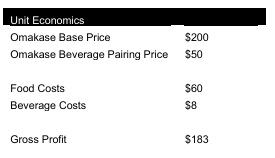
The primary driver of revenue will come from the ongoing sale of premium Japanese cuisine. For the Company’s private dining experiences, up to eight people will be seated where the executive chef will prepare a multi-course meal. This will occur twice per evening. Each private dining guest will incur a cost of $200 which will include paired alcoholic beverages with each dish.
The second segment of operations are the general operations of the restaurant that will feature sit down dining as well as a full sushi bar. Although the business is operating in a high-end capacity, the Company will offer take-away and delivery options for standard Japanese fare and sushi.
The business will acquire a full liquor license so that beer, wine, signature, cocktails, and sake can be served on site.
The third section of the business plan will further document the operations of Sakura.
Market Overview
The Financing
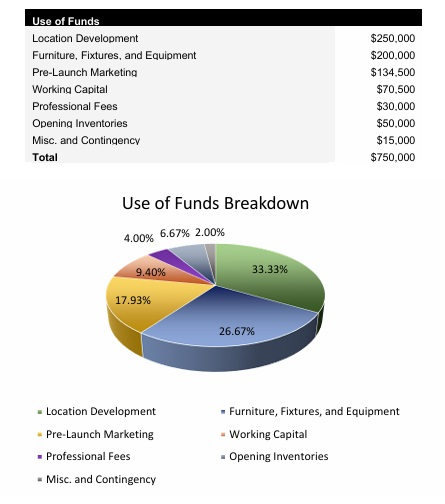
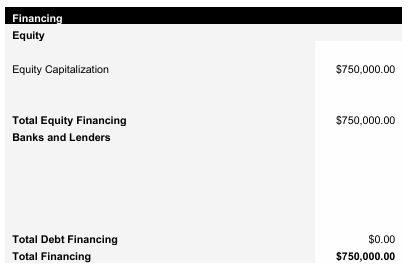
As noted above, the company is currently seeking $750,000 in order to establish operations. The terms of this investment will be determined during negotiation. The funding will be principal used for the following:
• Location development in Seattle
• Furniture, fixtures, and equipment
• Initial marketing
• Working capital
Given the substantial revenue produced, as well as the significant contribution margins, the Company could easily acquire additional capital should the business decide to open a second location. This event is not expected to occur within the next five years.
The Future
Moving forward, the business will further expand the scope of its marketing operations so that Sakura becomes one of the preeminent restaurants within the greater Seattle metropolitan area. At the center of this growth will come from the continued expansion of its private dining operations (Omakase), which provide a major differentiating factor. After the fifth year of operations, the business may establish an additional location within Seattle or major metropolitan area within the United States.
Revenue Forecasts
2.0 The Financing
2.1 Funds Required
An investment of $750,000 is required to launch operations. The funds will be allocated as follows:
2.2 Management and Investor Equity
This will be further discussed during negotiation.
2.3 Exit Strategies
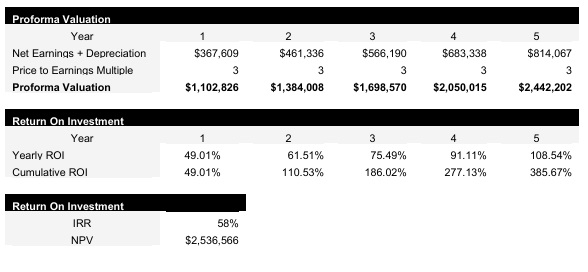
If it is financially prudent to do so, the company will coordinate with a business broker that has a specialty in restaurants. Given the unique nature of Sakura, it is expected that it would take up to one year to sell the business to a third-party. However, the Founder has no intention of selling this business for at least ten years.
2.4 Proforma Valuation
3.0 Operations
As noted in the executive summary, Sakura will be a preeminent restaurant within Seattle that specializes in providing curated, private dining experiences known as Omakase. This type of dining methodology will find an immense audience among the wealthy people within Seattle as well as for corporate gatherings. The Company is currently in the process of sourcing an executive chef that will provide these private dining experiences while currently developing the businesses overall menu. It is fully expected that individuals and businesses will book the Omakase experience at least six months in advance.
As it relates to inventory sourcing, as Seattle is located on the Pacific Ocean – the Company will have access to fresh seafood on a daily basis. The Company’s executive chef and sous chef will frequently purchase goods from purveyors that operate within the greater Seattle market. For specialty types of fish, the Company will import these inventory inputs from Japan, which will be flown in overnight.
As it relates to the Company’s standard fare operations, the business will provide a wide range of sushi and sashimi coupled with traditional Japanese cuisine. Seafood and fish dishes will always remain as Sakura’s signature ingredient.
The Company will acquire a full liquor license so that the business is able to provide a wide range of beer, wine, sake, and signature cocktails. The business will retain a qualified mixologist that will create a number of unique cocktails that will further create a differentiating factor for the business.
4.0 Overview of the Organization
4.1 Registered Name
Sakura LLC. The business is registered as a limited liability company in the State of Washington.
4.2 Commencement of Operations
Revenue generating operations will commence in the third quarter of this year.
4.3 Mission Statement
To provide an elegant and exceptional Japanese dining experience for patrons.
4.4 Vision Statement
To become the preeminent Japanese restaurant that provides Omakase dining within the greater Seattle market area.
4.5 Organizational Objectives
• Properly engage in a wide range of pre-launch marketing activities to create a well-regarded brand name.
• Remain within the letter of the law as it relates to the sale of food and beverages.
• Establish ongoing relationship with domestic and international purveyors in order to acquire fresh inventories on a daily basis.
• Potential development of additional locations in major markets in the United States that have a substantial amount of wealth.
• Provide a stable working environment for the Company’s staff and chefs.
• Hire exceptionally qualified chefs that will provide an incredible Omakase experience for clients.
• Continually engage in a wide range of public relations that will position the Sakura brand name as a premium restaurant in Seattle.
• Continually expand the scope of the Company’s marketing operations.
• Enroll among numerous delivery applications to further increase take-away orders.
5.0 Market and Industry Analysis
5.1 External Environmental Analysis
This section of the analysis will document the current economic climate, the ongoing competition that the business will face moving forward, and the restaurant industry.
At this time, the economic climate in the United States is moderate. There has been a degree of volatility introduced into the market as a result of changing trade policies. It should be noted at the US Federal Reserve as well as major central banks are taking the appropriate measures to ensure that the global economy continues to grow well also addressing issues related to inflation.
However, any issues regarding inflation, will only have a modest impact on Sakura’s abilities to generate revenue. As noted throughout this document, this will be a very high-end restaurant that will draw a significantly wealthy audience from within the greater Seattle metropolitan area. This area is home to numerous major corporations, including Amazon and Microsoft. This will substantially the reduce the economic risks associated with the business.
5.2 Industry Analysis
Currently, there are over 700,000 businesses that own and operate one or more restaurant locations with the United States. The industry generates $1.1 trillion of revenue. Total estimated employment for the industry is approximately 15.7 million people.
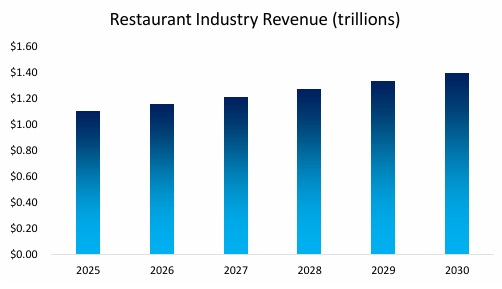
The growth rate of this industry is expected to remain on par with that at the general economy as a whole. In high inflationary periods, like the one that is currently being experience with the United States, industry revenue tends to grow at a rate equal to inflation plus the general population growth. The company will implement an automatic markup policy in regards to adjusting for inflation.
5.3 Customer Profile
The following demographic profile will be used during the course of marketing operations:
• Household income of $150,000+
• Will spend $75 to $200 per visit (per person)
• Lives within 5 miles of the Sakura location
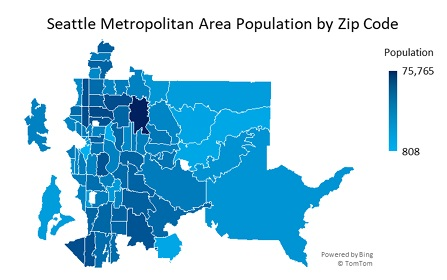
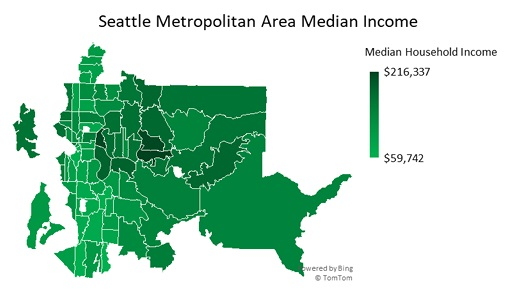
As of this year, the estimated population of Seattle is four million people. The median household income is $106,000. As has been one of the central themes throughout this document, the wealth of this market will substantially contribute to the economic stability of the business.
5.4 Competitive Analysis
The ongoing competition that the business will face as it develops its operations is modest. The Omakase experience offer by the Company will provide a major differentiating factor that will set the business apart from other Japanese restaurants in the greater Seattle market area. It should be noted that this business plan is being written solely as a sample. As such, no formal competitive analysis was completed. If this business plan was done specifically as an engagement for a Japanese restaurant for a client, a full analysis of all competitors within the market would be completed.
6.0 Key Strategic Issues
6.1 Sustainable Operations
Sakura will have sustainable operations as a result of the following:
• Immense demand for Omakase experiences among the wealthy population of Seattle.
• The operations of the business are highly scalable.
• A highly experienced Founder/CEO (Matthew Deutsh) who will be able to effectively launch the operations of the business.
• The business will have highly structured supply chain management so that fresh fish can be acquired on a daily basis.
• Immense profits from the Company’s Omakase service.
• Limited competition among locations that provide Omakase as well as standard sushi and Japanese fare.
• The business will produce significant profits from alcoholic beverage sales.
6.2 Basis of Growth
The Company will expand via the following methods:
• Continued expansion of the Company’s marketing operations.
• Development of additional locations in population dense markets in the United States.
• Increases in pricing to match the prevailing inflationary rate.
• Expansion of operations to include lunch hours.
7.0 Marketing Plan
7.1 Marketing Objectives
• Engage in a wide-ranging pre-launch marketing campaign.
• Use multiple forms of online advertising (pre-launch and throughout the life of the business).
• Engage in public relations on an ongoing basis.
7.2 Revenue Forecasts
7.2.1 Unit Economics (Omakase)
7.3 Revenue Assumptions
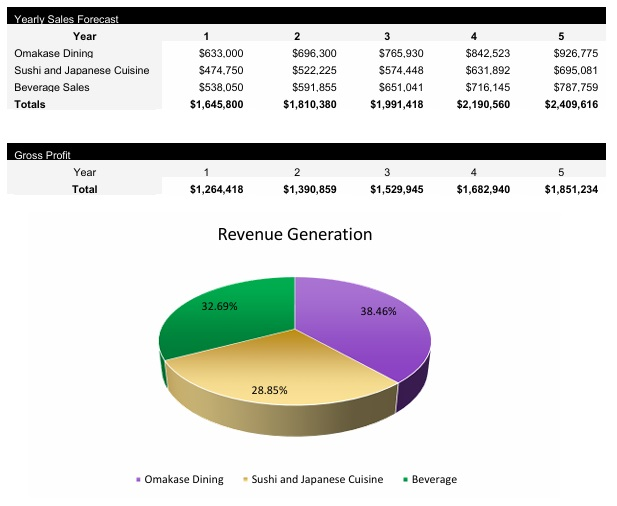
Year 1
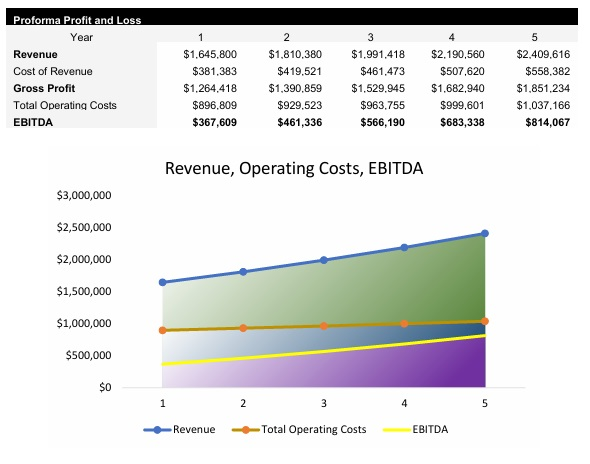
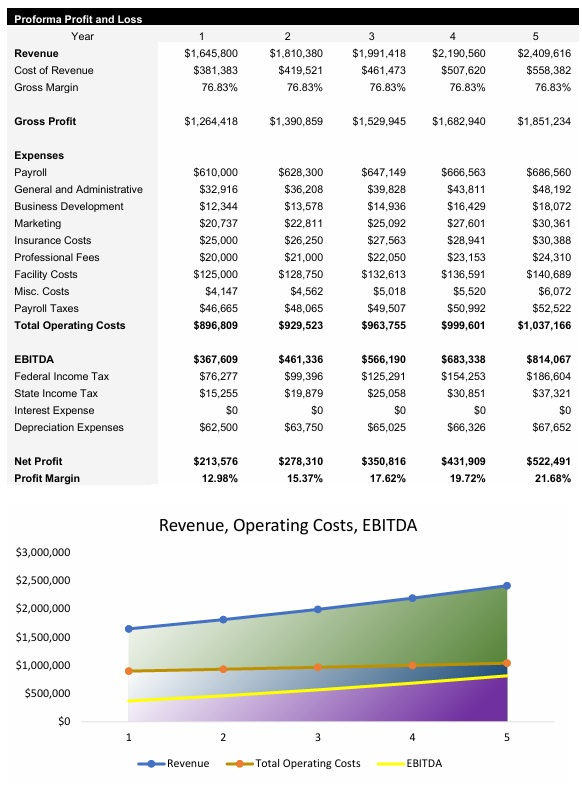
• First year revenue will reach $1.6 million
• Gross profits will reach $1.2 million.
Year 2
• Through greater marketing efforts, revenue will reach $1.8 million.
• Gross profits will reach $1.39 million.
• Total income will increase by 10%.
Years 3-5
• By the fifth year of operation, total revenue will reach $2.4 million.
• Gross profits will reach $1.8 million.
7.4 Marketing Strategies
The business will use a wide range of marketing strategies to create a premium brand name for Sakura. Most importantly, the business will engage in a wide-ranging pre-launch marketing campaign in order to inform the general public of the Omakase experiences as well as the standard Japanese fare offered by the business. This will include the launch of the website, as soon as the capital this document is acquired, which will give the business a substantial headstart on it certain engine optimization campaigns. During the course of the development, images and content related to the development of the restaurant will be uploaded on ongoing basis.
This will run concurrent to the Company’ social media strategies. The business will upload ongoing images and videos of the location to Facebook, Instagram, X, and TikTok. This will further create brand-name awareness among Seattle residents while also contributing to the efficacy of the Company’s other marketing operations.
During the first year of operation, is expected that the business will benefit substantially as reviewers from major restaurant publications are expected to try the location. When positive reviews are written about the business, these will be shared among all social media platforms, and showcased on the Company’s website.
The business, given his premium nature, will also conduct direct outreach with corporate event specialists they will make reservations for private parties related to the Omakase experience. This will further drive a greater degree of engagement while currently boosting the brand name visibility of Sakura.
Given the wealth and substantial population density of the greater Seattle area, the business will focus heavily on engaging and ongoing marketing that will continually position Sakura as a preeminent, luxury restaurant within the Seattle market area that provides an exceptional culinary experience.
8.0 Organizational Plan
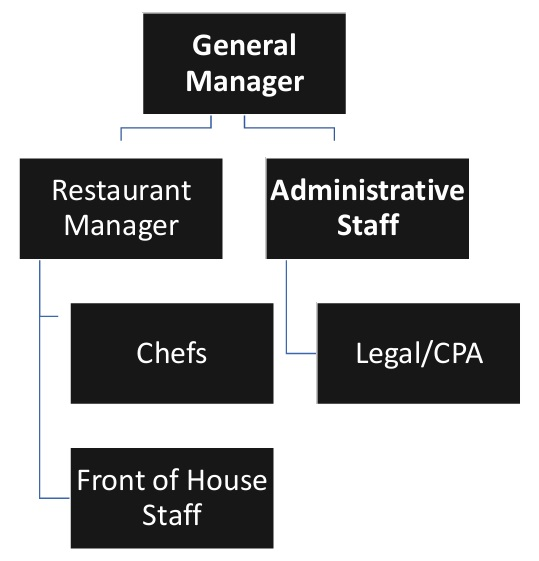
8.1 Organizational Hierarchy
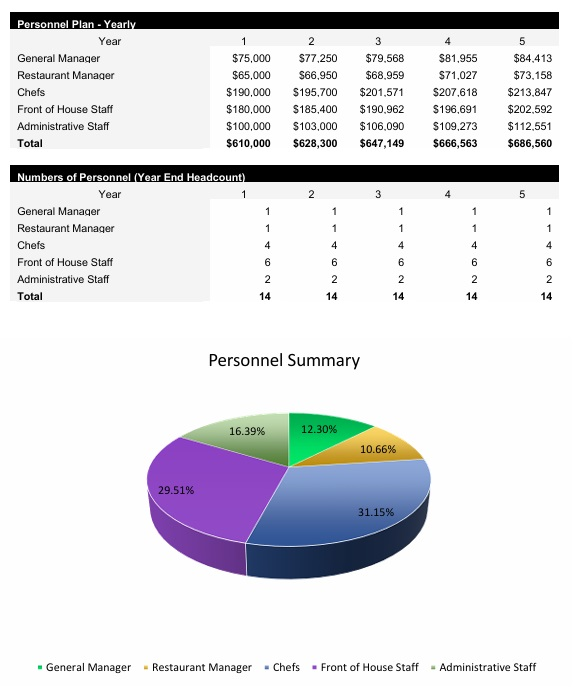
8.2 Personnel Costs
9.0 Financial Plan
9.1 Underlying Assumptions
• The business will have a compounded annual growth rate of 10%.
• Sakura will acquire $750,000 to commence operations.
• The business will only maintain one location in the first five years of operation.
9.2 Financial Highlights
• The operations of Sakura are highly scalable.
• Immense profits from Omakase engagements.
• Substantial contribution margins from beverage sales.
9.3 Sensitivity Analysis
Sakura will be able to generate substantial revenues in any economic climate given the population density and wealth of the greater Seattle metropolitan area. Furthermore, the business will produce substantial gross profits through its Omakase operations, standard Japanese fare, sushi, and beverages. The business is catering to a wealthier client base which has substantial economic staying power.
9.4 Source of Funds
9.5 Financial Proformas
A) Profit and Loss Statement
B) Common Size Income Statement
C) Cash Flow Analysis
D) Balance Sheet
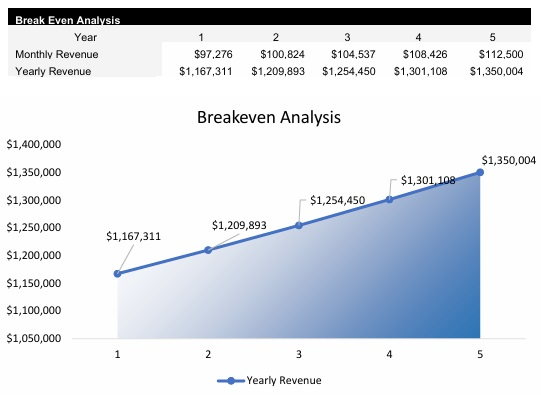
9.6 Breakeven Analysis
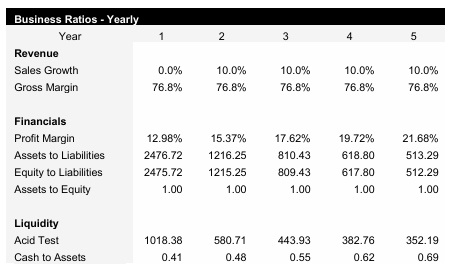
9.7 Business Ratios
Appendix A – SWOT Analysis
Strengths
• The Company will operate in a wealthy area of Seattle.
• The Omakase experience will set the business apart from other Japanese restaurants.
• Limited competition among entities that provide Omakase service coupled with traditional Japanese fare.
• The Company will position itself as a premium restaurant in Seattle.
Weaknesses
• Moderately high costs related to location rent.
• Operational complexities given that inventories need to be acquired on a daily basis.
Opportunities
• Continued expansion of the Company’s marketing campaigns that will brand Sakura as the preeminent Omakase location in Seattle.
• Development of additional locations.
• Expansion of event operations for corporate gatherings.
• Expansion of operating hours to include lunch.
Threats
• Inflation could cause the operating costs of the business to increase.
• Tariffs may impact inventory prices.
Appendix B – Critical Risks
Development Risk – Low
At this time, the primary development risk faced by the business is Management‘s ability to secure the funding so in this document so that operations can commence in the third quarter of this year. The marketing plan has been developed and management is in the process of sourcing the executive chef.
Financing Risk – Low/Moderate
The $750,000 required to launch the operations of Sakura will be principally used for the build out of the location, as well as for furniture, fixtures, and equipment. The risks related to this investment are offset by the fact that the business is catering to a very high-end clientele while currently generating substantial contribution margins.
Marketing Risk – Low
The business will use an expand upon the marketing strategies discussed in this document. A significant portion of the Company’s marketing risk will be mitigated by the extensive pre-launch marketing. There will be undertaken by the business which will include aggressive use of social media.
Management Risk – Low
Matthew Deutsch is a highly experienced restauranteur will be able to properly develop and position Sakura in the coming years. He will concurrently focus on ensuring that the business is considered when the pre-eminent restaurants within the Seattle area.
Valuation Risk – Low
The valuation risk is offset by:
• Substantial contribution margins on all sales.
• The Company can scale into new markets leveraging its reputation that will be established in Seattle.
• Limited competition among restaurants that provide an Omakase experience.
Exit Risk – Low
As noted earlier, there are no short term or intermediate term plans to sell the business to a third-party. If it is financially prudent to do so, a formal valuation will be completed, and a business broker will be hired. This event is not expected to occur for at least ten years.