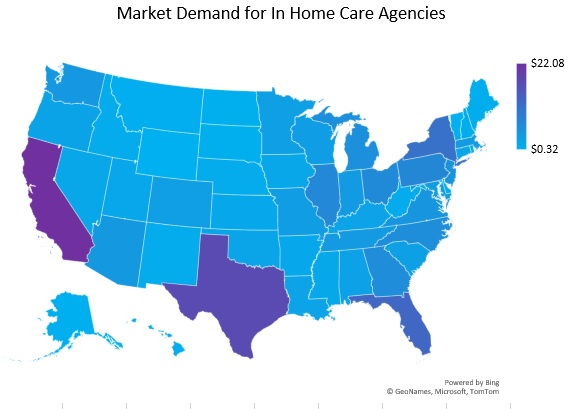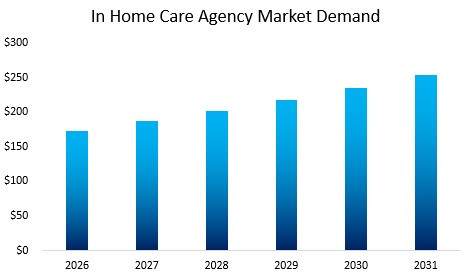
Developing a business plan specific for an in-home care agency can be a complicated process given the amount of market research that is required in order to determine the total market size. Over the past 20 years, we have focused heavily on developing plans that are driven by market analytics. Most importantly, when we develop an in-home care agency business plan, we focus very heavily on the number of people that are over the age of 65. Through numerous research sources, we determine the total addressable market (TAM) based on the number of individuals that fall into this demographic profile as well as the percentage of people that require in-home care at any given time. Once we determine the total addressable market, we then move into determining the service obtainable market (SOM). Here, we focus on the number of individuals that will contact an in-home care agency within any given year in order to receive service. It should be noted that one of the other things that we do is also determine individuals have fall outside of the demographic profile, but may require in-home care due to a specific procedure that was completed.
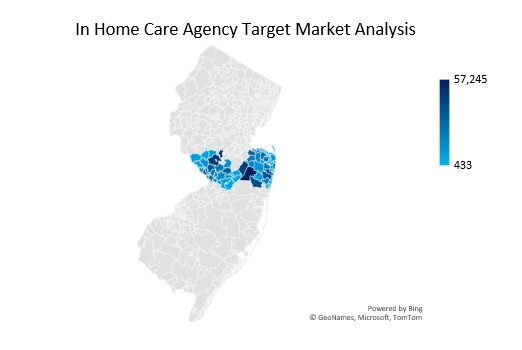
Once we determine the service obtainable market, within do a deep analysis of competitors within the market. This allows us to understand what percentage of the target market can be acquired among people seeking in-home care services. This also provides an insight into the viability of the market given the number of service providers that are present.
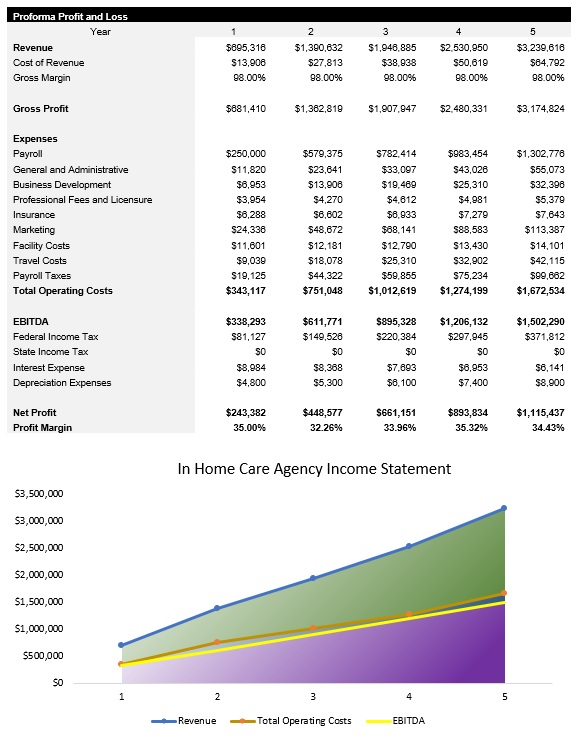
Once this is completed, we then move on to developing the in-home care agency financial model. This includes developing a profit and loss statement, common size income statement, breakeven analysis, business ratios, DSCR analysis, proforma valuation, and balance sheet. The entirety of the financial model is driven on the market analytics in regards to the percentage of the market that can be effectively captured. This provides a reasonable and assumptions driven approach for the financial model, which is valued by people reviewing the document.
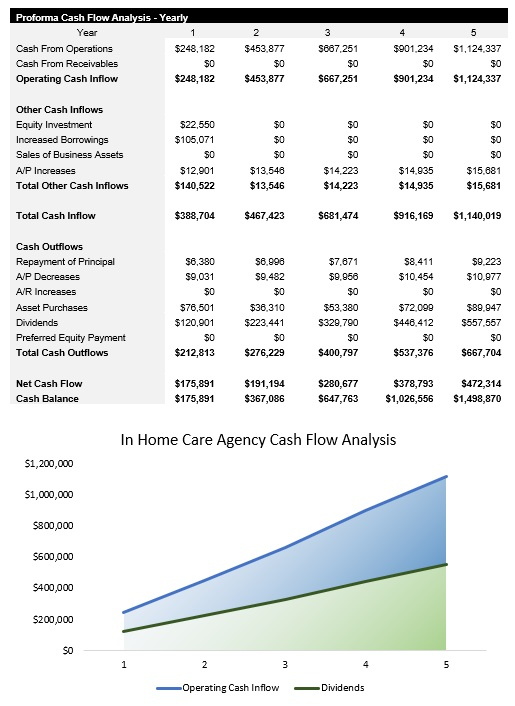
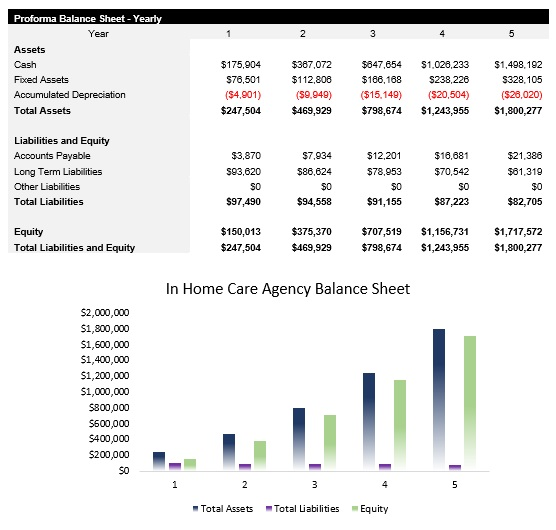
We then move on into developing the in-home care agency marketing plan. Given the level of competition that these businesses face in any area, we focus very heavily on developing marketing messages that will resonate with people that are seeking in-home care services. Most importantly, we focus on discussing affordability as well as the ability to provide round-the-clock service for clients. The scope of this discussion includes the implementation of search engine optimization, PPC, direct outreach with healthcare professionals, as well as use of traditional marketing strategies such as print advertisements. One of the things that we also include in our analysis when developing the in-home care agency marketing plan is to discuss the return on investment. A significant portion of any business of this nature’s startup cost is typically allocated towards marketing.
We then move onto the operation section of the business plan, which discusses the scope of the in-home care agency services offered. This includes an analysis of the type of employees that need to be hired in order to effectively render care to clients in their homes. This aspect of the business plan also discusses the cost of payroll and how much revenue the company will generate as a function of the number of in-home care aides on staff.
Last but not least, we develop the executive summary. The approach we take when developing an in-home care agency executive summary is to have this aspect of the document operate as a roadmap for the rest of the business plan. This allows the reader to understand exactly which chapters cover which topics, as well as providing a deep overview of the business itself. It also includes a discussion about how the business will expand its operations on a year-on-year basis.
It should be noted that the scope of the market research that we conduct is not limited solely to the target market area. We also conduct extensive market research in regards to the industry in order to determine growth trends and new opportunities for growth. Specifically for the in-home care agency market, there is going to be a significant demand as more people that are from the generation born in the 1950s and 1960s will require a greater degree of in-home care. This presents an enormous opportunity for entrepreneurs that are looking to get into a highly economically stable enterprise. One of the common trends that has become prevalent over the past 20 years has been the integration of both skilled care and non-medical care through one specific agency. This allow allows for horizontal integration so that any aspect related to in-home care can be covered by one company.