
Unlike traditional businesses, developing a business plan specific for a hot shot trucking business operates in a very different manner. This is due to the fact that these businesses typically operate on a local and regional level by providing freight transportation services through the use of heavy-duty trucks. Additionally, unlike traditional freight transportation, businesses, the regulatory requirements for a hot shot trucking business are quite different given that they fall well under the 26-foot range for the vehicles.
As such, a significant focus of the hot shot trucking business plan is on the per mile fees that are generated from rendering services. Whenever we develop a business plan specific for a hot shot trucking enterprise, we focus heavily on the local and regional market as well as number of people and enterprises that require short distance, freight transportation. One of the best things about these businesses is that they have relatively low operating cost as a function of revenue.
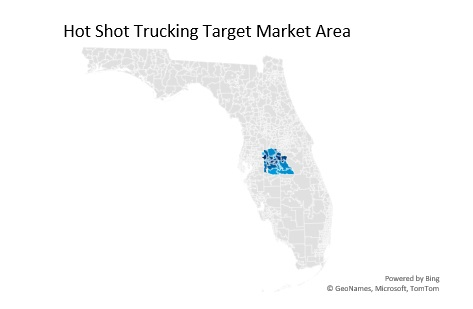
As it relates to the market research, we focus heavily on the number of construction businesses, retail stores, and product focused companies within the target market. Hot trucking is not something that is typically used by individual customers so we take a commercial-first approach whenever we develop this type of business plan. Once we have an understanding of the number of commercial enterprises that require hot shot trucking, we then do a thorough competitive analysis. This includes other hotshot trucking businesses, and also among box truck operators as well. This allows us to understand the market share that can be acquired by the individual starting a hot shot trucking business.
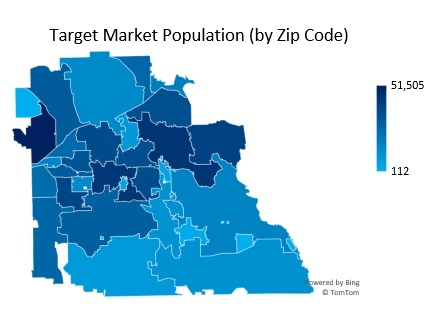
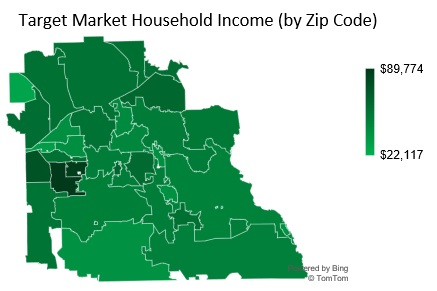
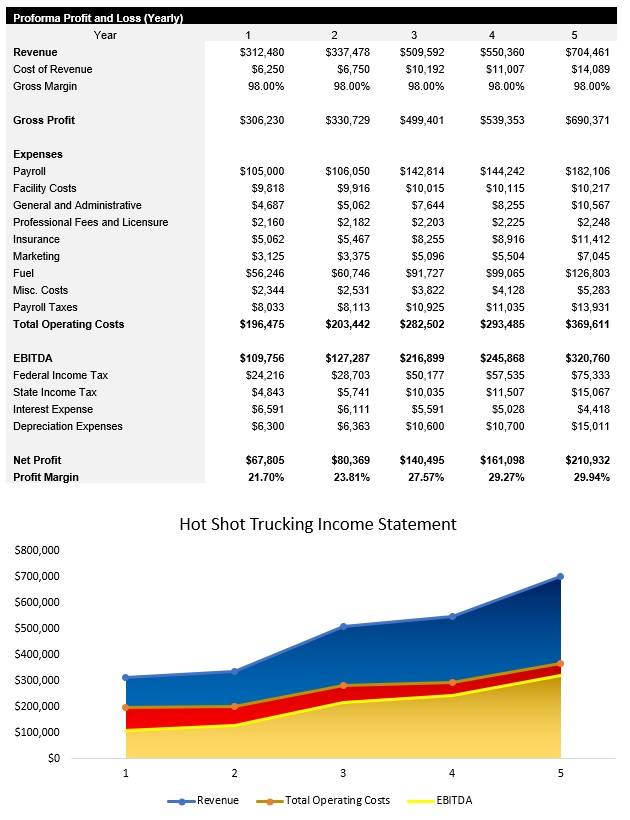
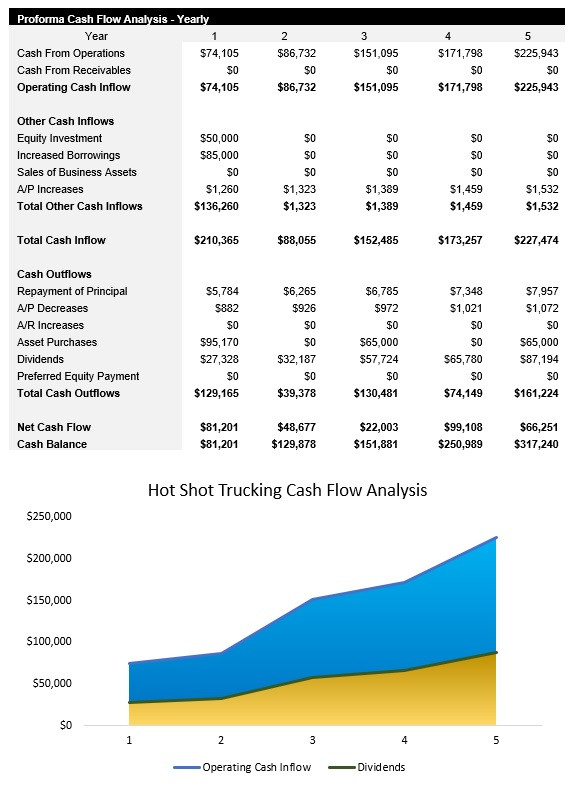
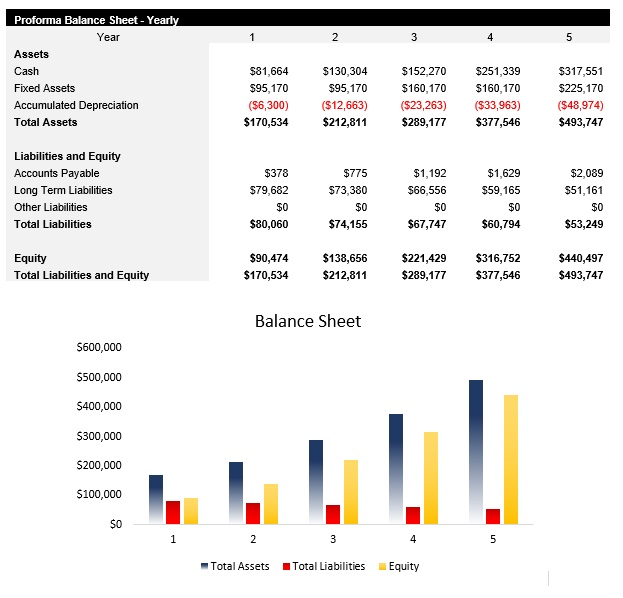
Once the market size determination is made, we then focus on developing the hot shot trucking financial model. On a five-year basis, we always develop a profit and loss statement, cash flow analysis, and balance sheet. These are the three primary statements that are required. We also develop a DSCR analysis, business ratios page, and breakeven analysis as complementary to the three primary financial statements.
The next section that we develop is the marketing plan. For a hot shot trucking business, we discussed the use of direct outreach initiatives with companies that have ongoing needs for local and regional freight transportation. This is typically the quickest and most cost-effective way of establishing an ongoing client base. We also discussed the use of online marketing strategies, including a proprietary website, use of third-party service arrangement, platforms, search engine, optimization, PPC marketing, as well as specialized targeted social media that can increase the brand in visibility of the hot shot trucking business.
Once these three primary chapters are completed, we then move into developing the remainder of the business plan. This includes a section discussing the operations of the business, key strategic issues, a SWOT analysis, as well as an overview of the risks that are faced by a hot shot trucking enterprise. One of the key things that we address when looking at the risks are the issues pertaining to volatility in the energy market. However, for a hot shot trucking business is risk is usually abated by the fact that the per mile rate will increase in lock up with the underlying cost of energy.
Beyond this focus throughout the business plan, we also create a section that discusses the industry at large. This allows us to demonstrate the trends within the industry, the compounded annual growth rate of the industry as well as the condition of the economy. These businesses typically are able to remain profitable given that they are able to provide a service that is in demand among product based and construction-based enterprises within the local market.
Once all of this is completed, we then move into developing the hot shot trucking executive summary. The approach we take when developing this portion of the document is to have an act as a roadmap that showcases the expected financial results, an overview of the target market, an overview of ongoing demand, as well as a brief discussion regarding the operations of the business as this provides very quick yet clear insight to any reader that is reviewing the business plan.