
Although they are relatively straightforward businesses to operate, the development of a pack and ship store business plan does have some challenges and complexity. The primary issue is developing a financial model that showcases the numerous revenue streams that are enjoyed by these types of businesses. Pack and ship stores are able to produce income from the shipment of parcels, packaging, business services, printing, copy, and notary services. These companies are also able to produce highly recurring revenue from the ongoing rental of mailboxes. This is one of the primary reasons why pack and ship stores are able for a remain economically viable even during an economic recession. It should be noted that many financing sources have a strong proclivity towards providing necessary capital four pack and ship sources given their economic stability.
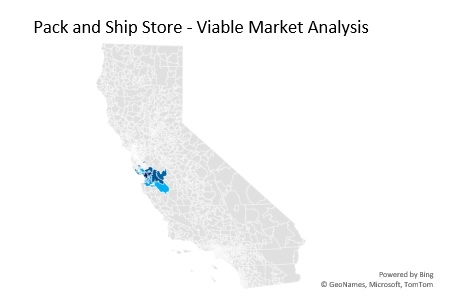
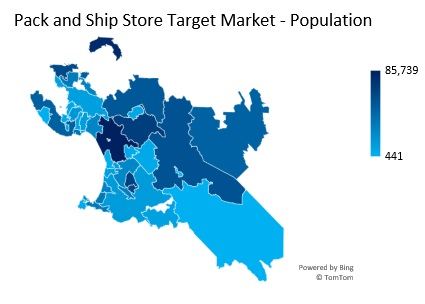
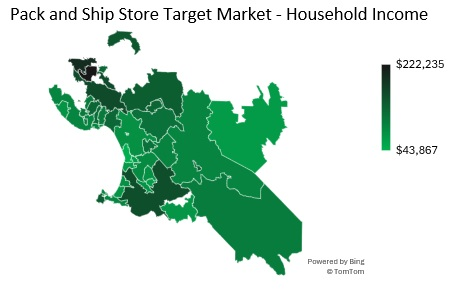
The first step we always take when developing a pack and ship store business plan is to complete the market research. This includes a deep examination of the number of competitors in the market, both independent and franchised, as well as the size of the target market. This allows us to create the necessary assumptions that are then applied to the pack and ship store financial model. We always take a total addressable market (TAM) approach when examining the total amount of demand in the target market radius. This is done by applying national level of statistics to the population size as well as making adjustments based on the prevailing median household income. From here, we then take a look at the number of competitors in the market to understand their anticipated revenues, and how much a new entrance can reasonably expect to generate. This forms the basis of the service obtainable market (SOM), which is the foundation of how we develop the financial model.
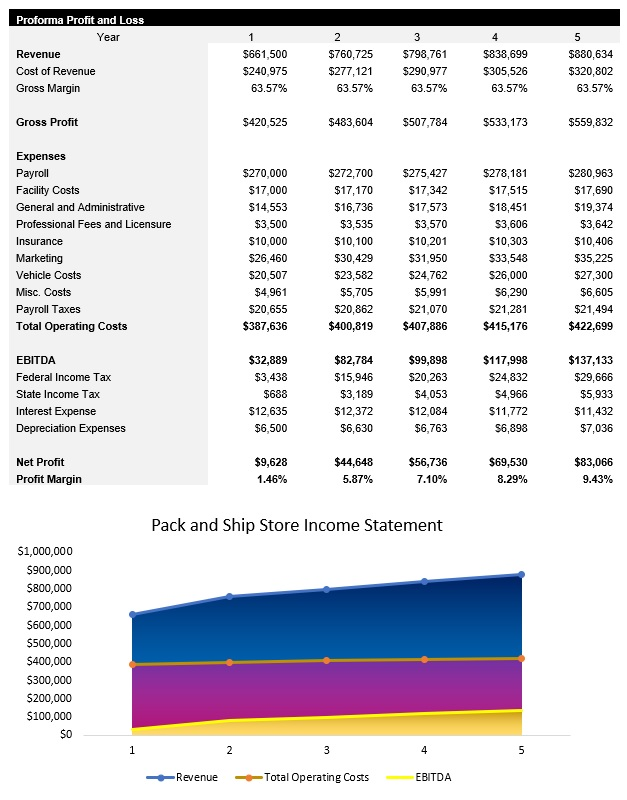
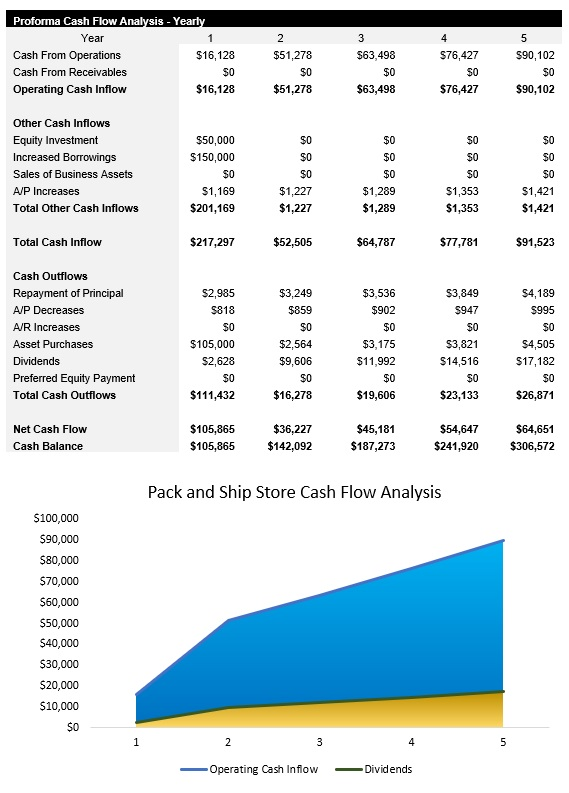
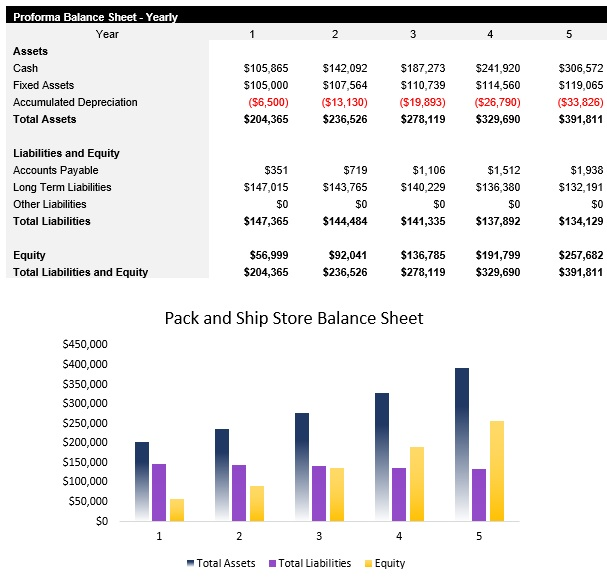
The second step of this process is the development of the pack and ship store financial plan. We always include a profit and loss statement, cash flow analysis, and balance sheet. To complement these statements, we also develop a DSCR analysis, breakeven analysis, and business ratios overview. This allows a potential funding source to understand the potential profitability of your business and the ability to provide a significant return on investment.
The third part of the business development process is the creation of the pack and ship store marketing plan. Here we discussed the numerous strategies that will be applied both during the development of business as well as through the grand opening. Of utmost importance is the distribution of advertisements, not only the individuals with the target market radius, but also to businesses as well. As noted above, one of the significant up sides of this industry is that it is able to generate highly recurring reams of revenue from the ongoing rental of mailboxes that provide business owners with a street address for their operations. In addition to using traditional marketing strategies, we also discussed the application of online marketing, including regionally based search engine optimization, the use of social media, as well as leveraging the power of LinkedIn to establish relationships with businesses within the target market area. We always include a return on investment table that showcases the efficacy of each marketing channel.
Now that the foundation of the pack and ship store business plan has been developed, we now move into the secondary chapters. We first addressed the operation section of business plan that outlines the scope of services offered as well as the human resources needs. In this section, we discuss the multiple carriers of the pack and ship store will use in order to provide parcel transportation service services to clients. We also discussed the packaging services that are offered given at this produces significant contribution margins. These days, most pack and ship stores to maintain a notary on site, which is an important secondary stream of revenue that also boosts the visibility of these businesses.
From here, we developed the SWOT analysis. This provides an overview of the strengths, weaknesses, opportunities, and threats that face this type of enterprise. As it relates to strengths, we focus very heavily on the economically secure nature of these businesses, as well as ability to scale relatively easily. As it relates to the weaknesses, the primary issue that is faced is from national level franchised competition. Opportunities and threats are also thoroughly discussed based on the attributes to the target market area.
We then round out this section of the analysis by discussing risk. This includes addressing issues that may occur during the development, financing related risks, issues that need to be addressed during the course of pre-launch marketing, as well as the potential for divesting the business in the future.
Finally, we move into completing the packing ships that were executive summary. Here, we provide a deep overview of the business that typically spans two to three pages. This includes a snapshot of the anticipated financial results over a five year period, an overview of the target market area, management overview, and other matters related to establishing this type of business.