
Arcades have been a modern staple of entertainment over the past one hundred years. These businesses are popular across the entirety of the socioeconomic spectrum. Over the past 20 years, the use of arcades has grown in popularity, especially as younger people in have grown up with video games and have a deep love and nostalgia of this type of entertainment. These businesses have also evolved their business model in regards to not only providing access to premium arcade games and entertainment insulations, but also by providing a wide range of food and beverage service as well. This trend has allowed for much larger scale arcades to be developed.
When we develop an arcade business plan, we always take a market-research first approach in order to understand the local and regional market. Initially, we start with an examination of the population size, the median household income, median home value, population density, as well as other important metrics that showcase the potential viability of the development of the arcade. We also take a deep analysis into competitive matters to ensure that the market is not oversaturated.
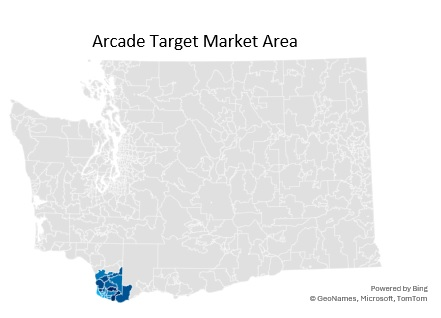
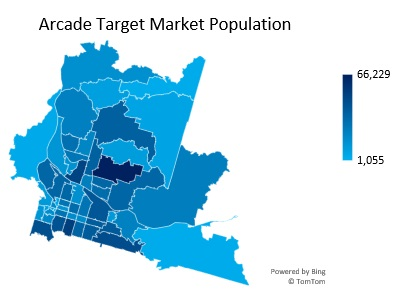
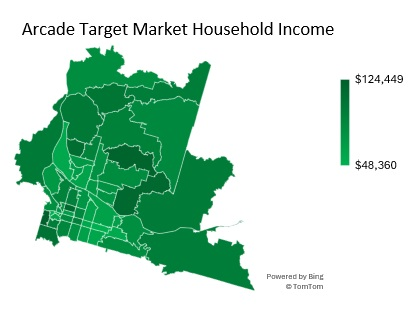
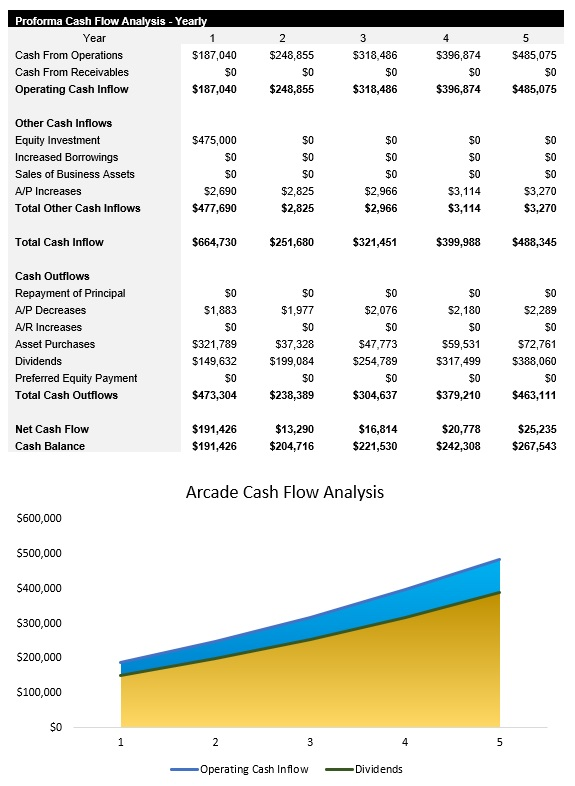
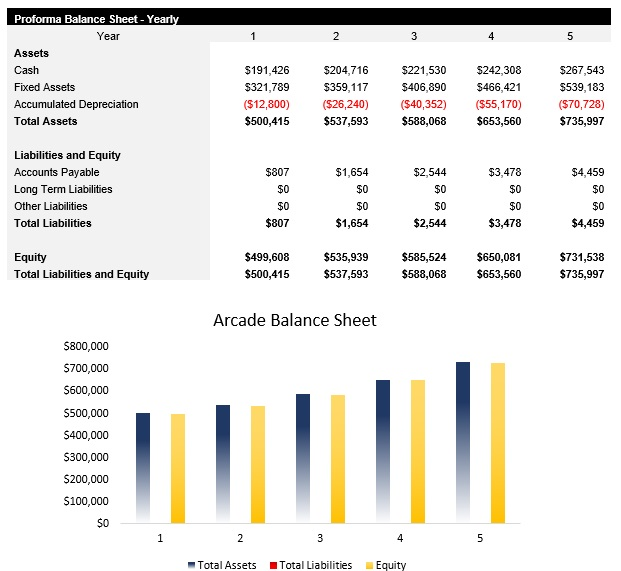
Once we have determined the total addressable market (TAM) as well as the total service obtainable market (SOM) we then apply these numbers to the development of the arcade financial model. In regards to revenue, we take the average number of daily users multiplied by per visit revenues. We then apply the appropriate operating cost as it relates to marketing, rental expenses, utility expenses, personnel costs, as well as general and administrative costs. The scope of the five-year financial model includes a profit and loss statement, balance sheet, cash analysis, breaking analysis, as well as examining the applicable business ratios for this industry.
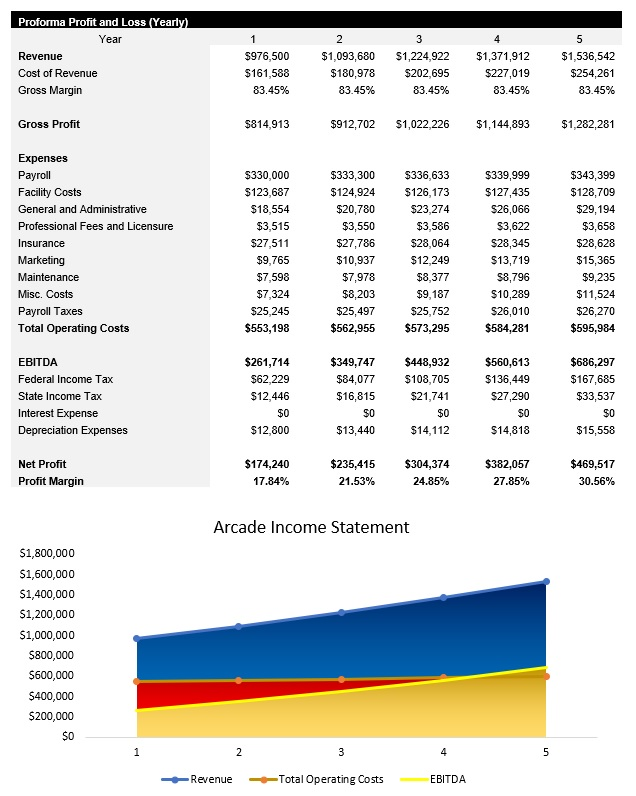
Very importantly, we also develop a very comprehensive arcade marketing plan. Given the level of competition in this industry, it is imperative to implement an expansive pre-launch marketing campaign that clearly delineates the marketing messages and differentiating factors that will be enjoyed by the arcade. We also include an overview of the marketing channels that will be used as well as the allocation of the marketing budget.
From here, we then developed the arcade operations plan. This discussion includes an overview of what type of games will be present, the number of installations on site, whether food and beverage service will be offered, as well as protocols for dealing with matters that may occur on an ongoing basis. This section also discusses human resources matters, hours of operation, and certain employee costs.
We also develop a specific section regarding key strategic issues that will ensure that the business will remain profitable in any economic climate. This further extends to a SWOT analysis. In regards to strengths, arcades are a low-cost form of entertainment, and only an extremely severe economic recessions are their revenues impacted. For weaknesses, these businesses do tend to have moderately high operating costs given the size of their facilities. There are numerous opportunities for an arcade to expand their operations, including through the continued acquisition of new arcade games in order to foster repeat patronage. For threats, this is primarily due to highly established competition in the market.
Now that the entirety of the business plan is completed, we now focus our efforts on developing the arcade executive summary. The way we structure our executive summaries is so that it acts as a roadmap for discussing how the business will be created, the location snapshot, market analysis overview, as well as showcasing the anticipated profits, revenues, and operating expenses of business.