
As EV charging stations are a relatively new industry, there is a higher degree of complexity when developing a business plan specific for this type of enterprise. One of the initial complexities that occurs is having to determine the amount of energy costs that will be incurred as a result of providing access to level two and level three electric vehicle chargers. Over the past few years, we have developed a number of proprietary financial models that properly account for the underlying energy cost, as well as the pricing that is associated with using an EV charger. One of the nice things about entering the industry at this time is that it is relatively new, and there are typically only a handful of EV charging stations that provide access to a number of amenities such as food and beverage service, complementary Wi-Fi, and other on-site services while people wait for their vehicles to be charged.
The first step in developing the EV charging station business plan is to conduct the necessary market analysis. We take a broad boat based approached to this specific for this type of enterprise given that the business will cater not only to individuals that live within the target market radius, but also among people traveling through the area. We conduct an extensive analysis regarding tourism and hospitality to determine the number of people that will be coming through the area that will require EV charging. This analysis further extends to discussing the size of the market in regards to population as well as specific attributes such as median household income, the number of people owning electric vehicles in the target market, median home value (which is an indication of wealth), and the other related metrics.
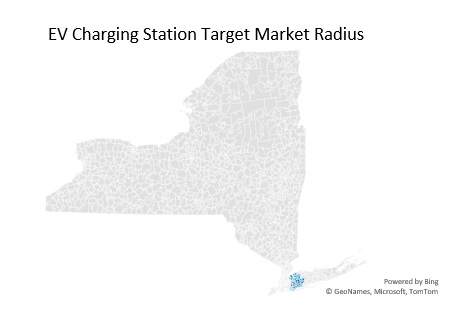
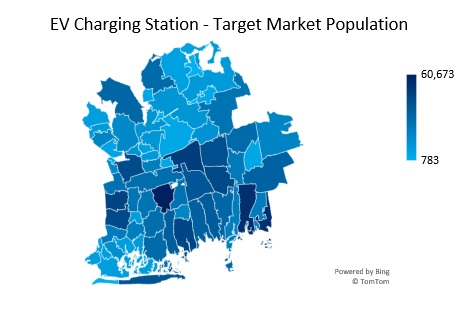
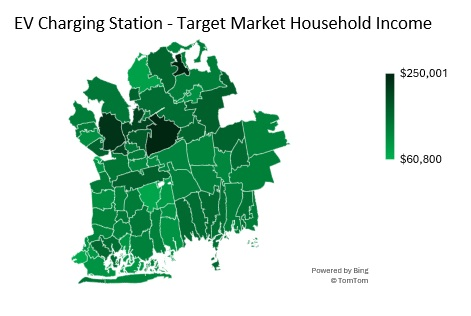
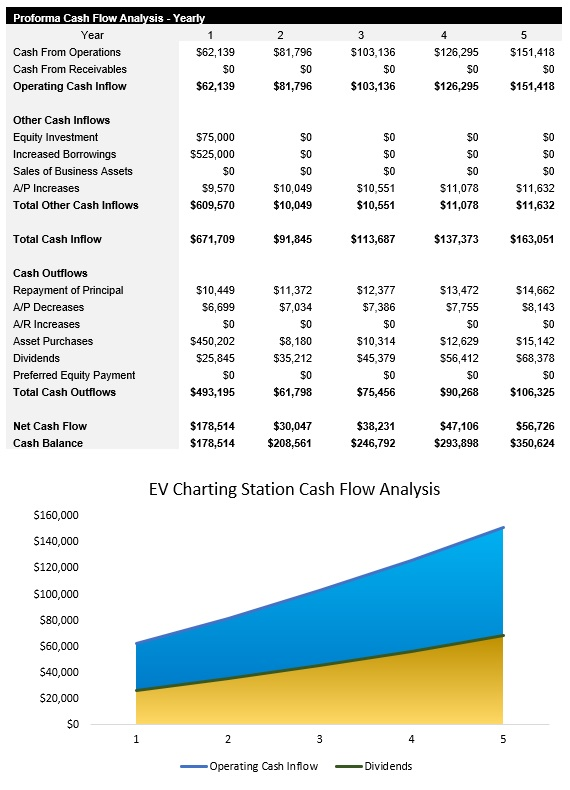
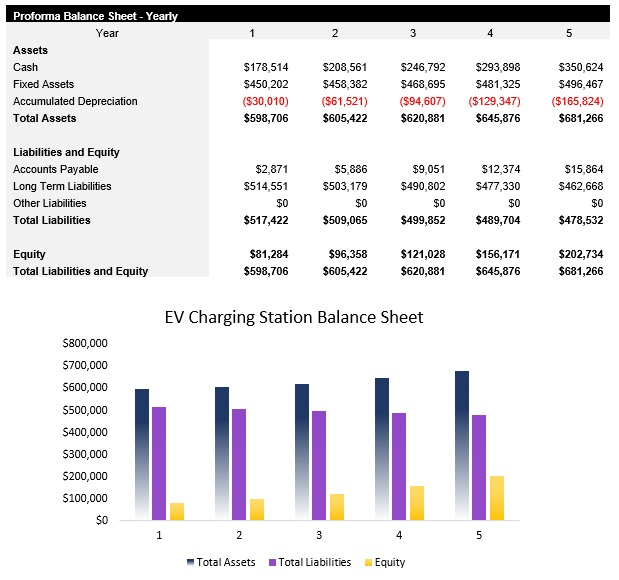
The second step of the process involves the development of the EV charging station financial model. Based on the market statistics that we acquire, we then apply this to the market as whole in order to determine what is a reasonably projected amount of revenue to produce on an annual basis. We also incorporate the continued increase in the number of people that own electric vehicles. The scope of the financial model includes a profit in loss statement, common size income statement, cash flow analysis, breakeven analysis, and business ratios page. These business ratios are pegged against national statistics in order to ensure that the EV charging station is operating as expected.
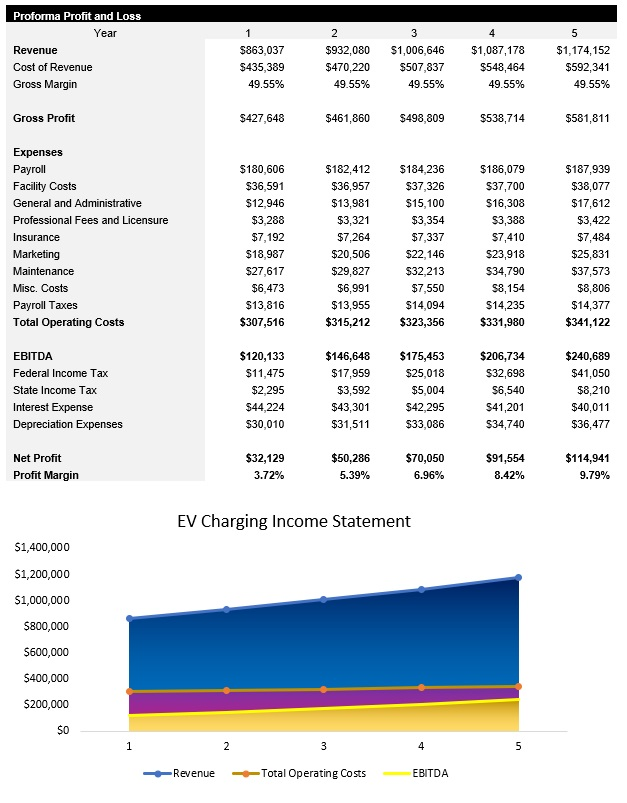
From there, we start the third step of the process which is the development of the EV charging station marketing plan. Most importantly, these businesses typically are able to generate a significant amount of visibility by having signage fixed to the facilities. Generally, these businesses are placed near population dance areas. Beyond this type of visibility, we also discussed the development of an online website that showcases location and its amenities. As people will conduct searches for EV charging stations in any given market, we include a discussion regarding regional search engine optimization so that the location can be found quickly by travelers. We also discuss the implementation of referrals with hospitality businesses that do not maintain their own on-site level two or level three EV chargers.
The third section of the business plan is the development of the EV charging station operations plan. Here we discussed the number of employees that will be required to be on site at any given time, the amenities that are offered to patrons, maintenance related to the EV chargers, and related operational issues.
Beyond these primary chapters, we also include analysis regarding risk. In this section, we discuss the development risk as well as the financing risk. EV charging station businesses, once established, typically have a moderately low risk profile. This is primarily due to the fact that the revenues that are produced from these operations are highly predictable nature. The primary risk faced by these businesses is significant increases in energy costs.
We also always include a SWOT analysis in each business plan that we complete. As it relates to the strengths of an EV charging station, we discussed that it is a continually growing industry given the continued adoption of electric vehicles. For weaknesses, these businesses can be substituted among locations that maintain EV charging stations as value-added benefit to their customers. As it relates to opportunities, the development of additional EV charging station locations is the principal method in which is business is expand. As it relates to threats, issues with the economy may slow the continued adoption of electric vehicles which could impact future revenue.
Lastly, we developed the EV charging station executive summary. Here, we develop this part of the document as a roadmap so that the reader has a complete understanding of the types of chargers that will be used during the course of operations, the number of electric vehicles within the market, and other attributes that showcase the viability of this business. A brief discussion regarding the amount of financing required, and how those funds are going be allocated is included as well in this part of the business plan.