
In any city or town, laundromats are important businesses. They provide cost-effective access to washing machines and dryers, which are an absolute necessity for having clean clothes. These businesses often cater to individuals that have a lower income to lower middle income, who might not otherwise be able to afford in at home washer or dryer. These businesses also exist in many cities given that the space requirements for these appliances are just too large for an apartment or a small home. One of the best aspects of laundromat businesses is that they are able to produce highly predictable streams of revenue from their operations. In fact, one of the newest trends within the industry is for provide subscription-based services that people have near unlimited use of the facility with some restrictions.
Whenever we develop a laundromat business plan, we focus very heavily on the economic viability of the target market. Initially, we conduct an extensive competitive analysis to make sure that the market is not oversaturated with other laundromats that operate in a similar capacity. Once this determination is made, we then take a look at population density, as well as the population size to ensure that there are enough available individuals to support the operations of the business. This forms the service addressable market, which we use when determining the amount of revenue that can be generated on a daily basis for a laundromat enterprise.
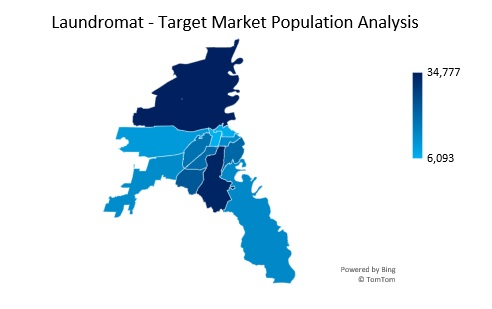
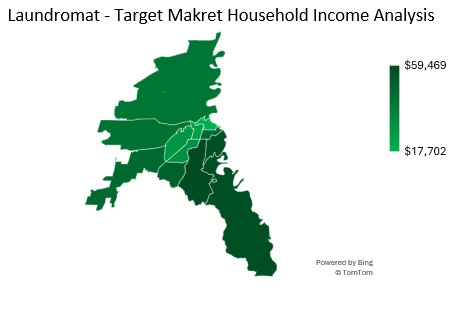
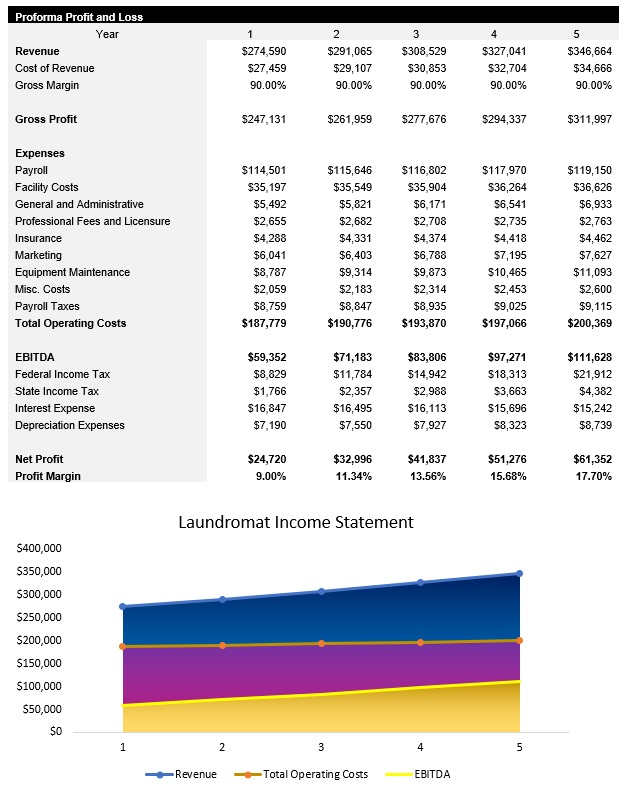
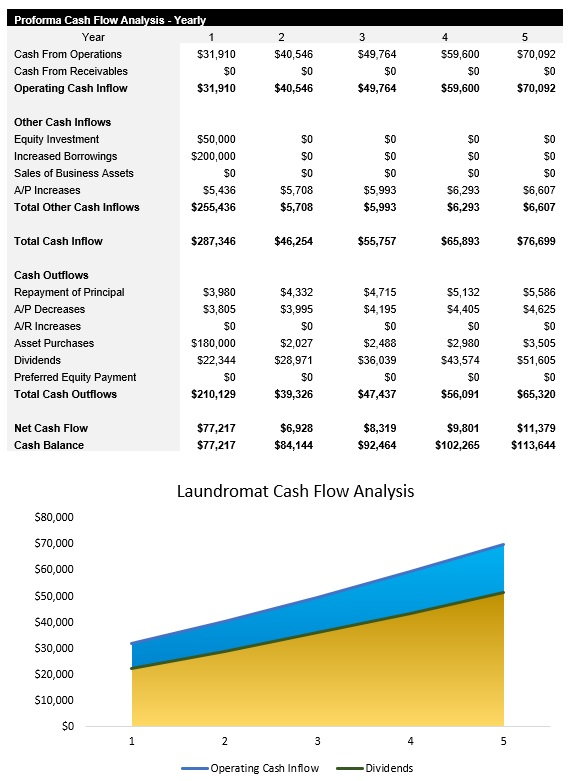
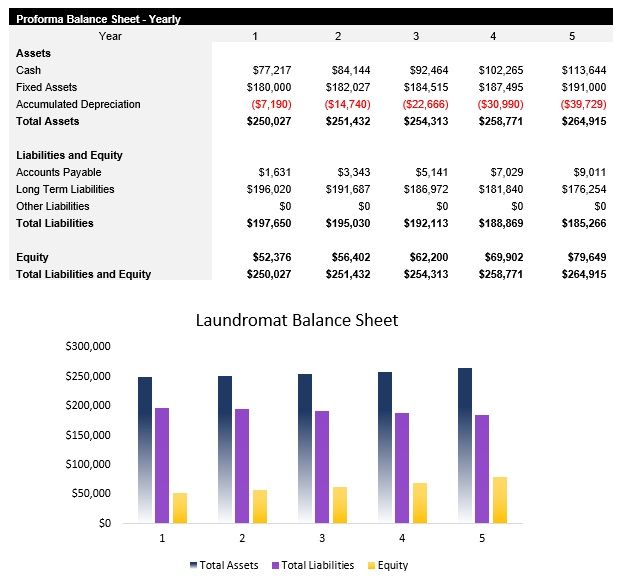
Once we determine the market size, we are then able to effectively create a revenue profile in regards to how much daily sales can be reasonably generated. This forms the entire basis of the five-year financial model that we developed specific for laundromat businesses, which spans a profit and loss statement, cash analysis, balance sheet, breaking analysis, and applicable business ratios profile for this industry. One of the things that we focus on in regards to the business ratios is ensuring that the asset to liability metrics is in line with industry standards as well as for the contribution margins.
The third phase of the laundromat business plan development process involves the creation of the marketing plan. Here we discussed the extensive amount of signage that will typically be fixed to the exterior of the laundromat in order to make sure that people within the target market area are aware of the location. We also discuss the use of referrals among apartment building managers who do not have on-site facilities. Referrals are an extremely important part of many laundromat businesses. Additionally, we also discussed the use of online marketing strategies to further visibility. This includes a hyper-focus on using local search engine organization techniques that will allow the website of the laundromat to be found when relevant searches are conducted within a specific target market radius. The use of local SEO techniques has gained significant popularity over the past ten years given a level of competition that businesses face these days.
From there, we enter the fourth phase of the business plan development process by discussing the operations of the business. This includes discussing the make and models of waters and dryers that will be acquired for the facilities as well as addressing human resources issues. One of the best things about a laundromat business is that it is a human resources efficient business, and typically only one person needs to remain at the facility during the course of any given day. We also discuss whether or not outsource dry cleaning services are offered to the laundromat as well as popular wash and fold service services.
Once this segment of the work is completed, we then move into the development of the appendices. First, we conduct a SWOT analysis for the business which addresses the strengths, weaknesses, opportunities, and threats for the laundromat. As relates to the strengths, these businesses remain economically stable given that they provide cost-effective access to washers and dryers. As it relates to weaknesses, there is typically a significant amount of competition, especially in areas that are considered to be lower income or lower middle income. For opportunities, the integration of outsourced to dry cleaning services can be a significant way of increasing business. As noted above, the use of a membership or subscription-based model also has the ability to produce highly recurring streams of revenue for these businesses.
As it relates to threats, inflation could cause the underlying utility cost of a business to increase significantly. This can cause a shift in the laundromat’s profit loss statement.
We also conduct an extensive amount of analysis as it relates to the risk of the business. This includes discussing the economic risk associated with enterprise, financing risks, as well as marketing risks. As it relates to the latter, we focus on developing appropriate marketing messages so that there will be an influx of customers from the time of the business launches. We also extensively discuss the use of a pre-launch work in campaign.
Finally, we developed the laundromat executive summary. The approach that we take for this is to have the executive summary serve as an overview of all of the chapters within the business plan. This provides the reader with the ability to quickly hone in on the most important parts of the document.