
Unlike a business plan that would be written for a retail store, developing a fix and flip business plan has some additional complexities. This is primarily due to the fact that these businesses operate on a per transaction basis so additional considerations are needed when developing a financial model to showcase the number of homes that will be acquired, renovated, and sold in any given year. Over the past 20 years, we have developed a number of financial models specific for the field of property rehab rehabilitation. One of the nice things about fixing flip businesses is that they can be adjusted based on market conditions. In the event that the real estate entrepreneur does not receive a price that is commensurate with their anticipated profit then they can place a long-term renter in the property until such time when it is viable to sell. Additionally, when housing markets are having issues. The number of transactions that are completed any given year can be scaled back while still maintaining profitability.
The first step of our process when developing a fix and flip business plan is to do a broad range analysis of the real estate market. Most fix and flip entrepreneurs will typically operate within a 50-mile radius of their headquarters. As such, we target specific markets that have moderately high household income, appreciating real estate values, and the population density to support the ongoing sales of property. As it relates to the competitive analysis, this is a bit of a challenging issue for a fix and flip business given that the competitors that the entrepreneur will face will range from individuals that do this on their own to larger scale firms that conduct numerous renovations concurrently.
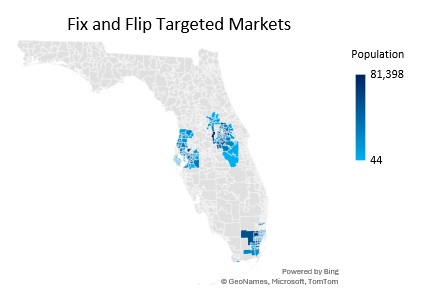
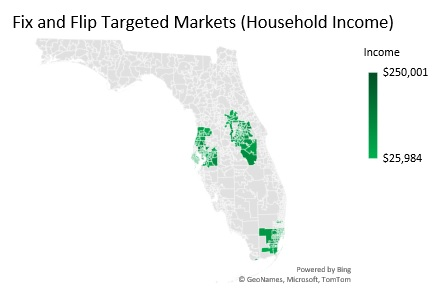
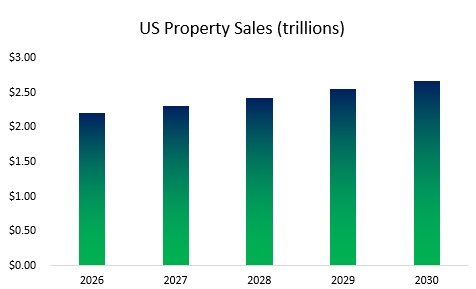
Once we have the market statistics in hand, we then developed the financial model. The fix and flip financial model includes a profit and loss statement, cash flow analysis, balance sheet, breakeven analysis, and business ratios that are applicable to the property rehabilitation industry. One of the things that we also develop as a table that showcases the number of anticipated transactions each year, including the anticipated sales price of each property as well as the underlying cost of the renovation. We also include analysis regarding the headcount and payroll as required for these types of businesses.
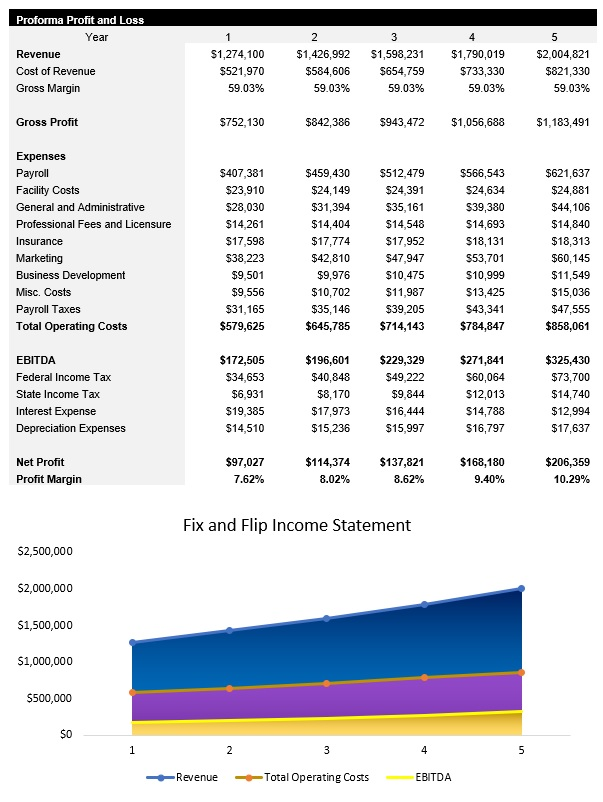
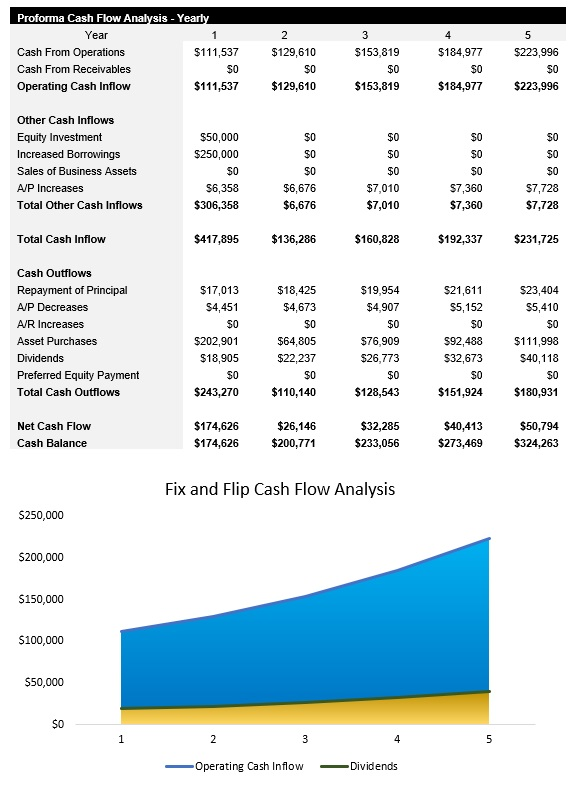
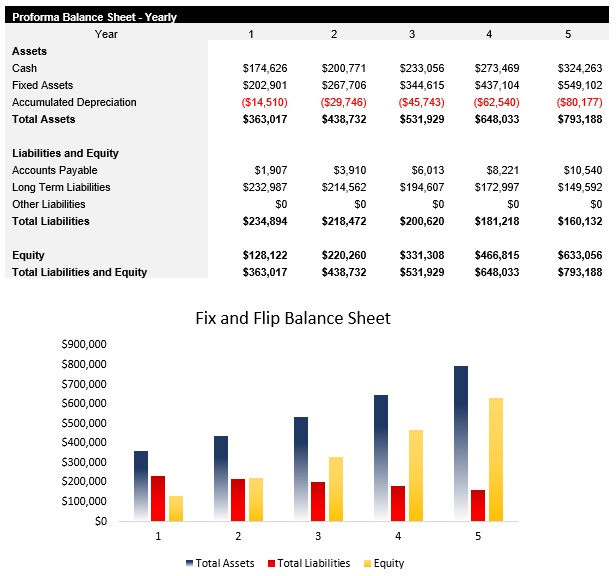
As it relates to the marketing plan, this is relatively straightforward for a fix and flip business. The vast majority of real estate entrepreneurs will work in tandem with retained real estate brokers in order to make sales of properties. This is something that we focus on very heavily in within the marketing section the business plan. We also discuss maintaining listings across numerous online platforms in order to further showcase properties to potential buyers in the target market.
We then move into the operation section which discusses the procedures and protocols that will be used when sourcing properties for acquisition and renovation. This section includes the use of direct staff to make any necessary renovations as well as working in tandem with subcontractors that will complete specific aspects of the property engagement. We also discuss the potential of having to place a renter within a property in the event that the unit is slow to sell. In this section, we also discussed the ways in which the business can grow, including through the acquisition and renovation of multifamily properties, which is a highly lucrative segment of this industry.
We also include a SWOT analysis within the business plan as well. This provides an overview of the strengths, weaknesses, opportunities, and threats that are faced by these businesses. For strengths, these businesses are able to operate on a per deal basis which significantly limits the downside risk associated with this type of venture. For weaknesses, changes in the real estate market can impact these businesses significantly. However, this is remedied by the fact that properties are only held for a short period of time. The opportunities for a fix and flip entrepreneur are enormous. These individuals can easily scale into acquiring larger scale properties will also engaging in proprietary real estate developments from time to time. For threats, changes in the interest rate can impact the demand for the sale of housing units.
Finally, we come to the fix and flip executive summary. Here, we focus very heavily on providing a full overview of the business so that it can be understood by any reader over two to three pages. This includes an overview of how the business will operate, the amount of capital requires required for operations, target market overview, as well as the growth plan.