
Event venue businesses are highly lucrative enterprises that can provide highly predictable streams of revenue for their owners. When we develop an event venue business plan, we focus very heavily on the numerous revenue streams that are produced through these operations. Most event venues are able to generate income, not only from site usage fees, but also from onsite catering as well as use of the bar. Although there are many ways to conduct these operations, there are also numerous ways to capitalize on each aspect of an event engagement. It should be noted that the startup costs for an event venue tend to be on the higher side of things given that a large-scale property is typically acquired in order to conduct these operations. Whenever we develop a business plan specific for this type of enterprise, we focus heavily on the numerous high margin revenue streams that ensure that the business can remain profitable at all times.
The first step of any well written business plan is the development of the market research component. In this section, we focus on the target market radius, the population size, the population density, the median household income, as well as other attributes that are important to the specific target market area. This includes an analysis of event venues that are already an existing operation within the target market radius. Our market analysis not only extends to the regional area, but also on a national basis as well. Here, we discuss trends within the event venue industry as well as the anticipated revenue is over a five-year timeframe.
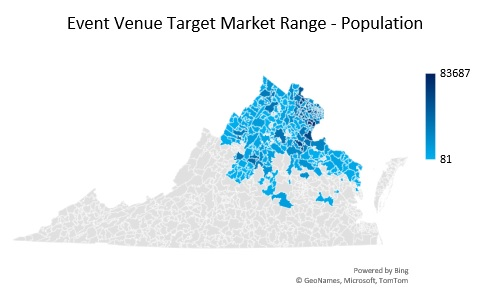
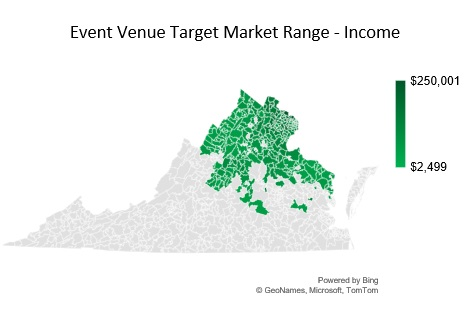
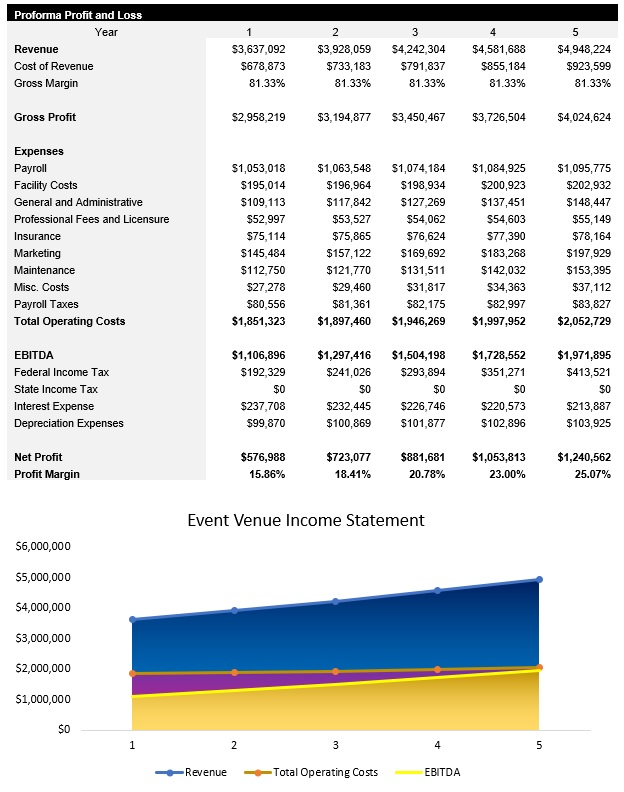
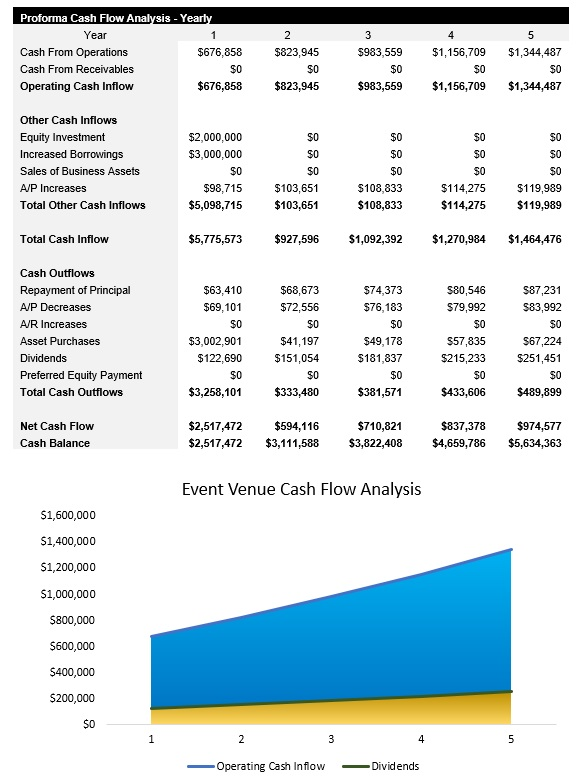
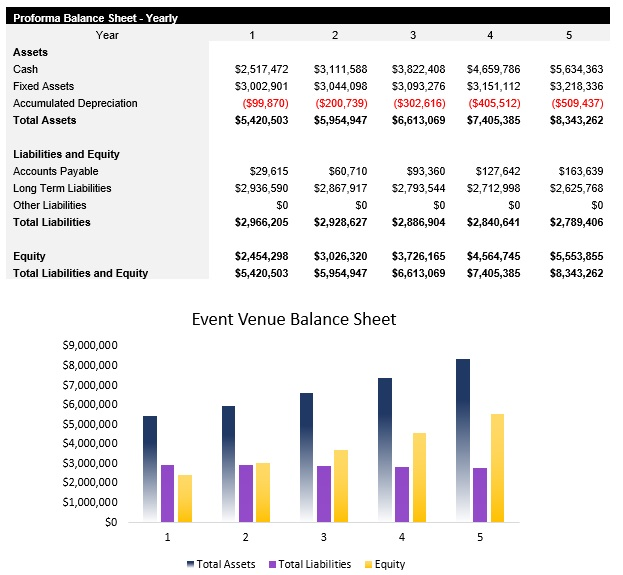
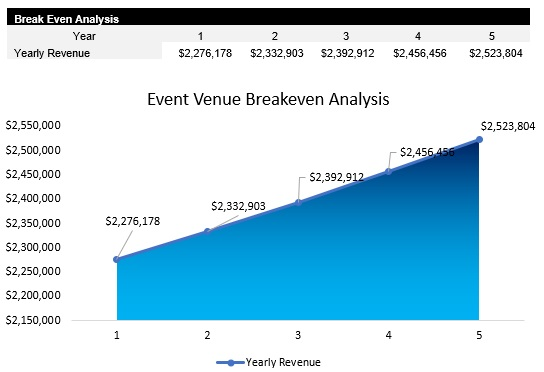
Now that we have the market statistics completed, we are now able to effectively create a revenue profile for the event venue. It’s includes examining the number of anticipated events per year, revenue per anticipated event, as well as the underlying cost. From here, we create the profit and loss statement, cash flow analysis, balance sheet, breakeven analysis, and business ratios that are applicable to the event venue industry.
Now, we put the heart and soul of the work into the event venue marketing plan. Given that this is a competitive industry, we focus on numerous ways in which the event venue owner can differentiate their operations from that of competing businesses. One of the main things that we discuss is conducting extensive direct outreach with wedding planners and event planners within the target market. This further extends to creating relationships with corporate event planners. We also emphasize the importance of having an expansive online presence not only through a proprietary website, but also through referring platforms as well. Regional search engine optimization is also discussed as this is an incredibly important part of creating brand-name visibility specific for an event venue, especially if it provides wedding focused services.
We then move onto the operation section which discusses the scope of services offered, the types of events that will be posted, human resource matters, as well as working with third-party caterers when rendering food service if this is applicable. This discussion also addresses seasonality of event venue operations.
In all business plans that we developed, we always include a SWOT analysis. Specific for an event venue, we focus on the strengths, opportunities, weaknesses, and threats. For opportunities, we focus substantially on the continued increase in marketing operations to create a premium brand name for the business. For strengths, we focus on the substantial contribution margins that are generated from each engagement. For weaknesses, these businesses typically do have moderately high costs related to their location. In regards to threats, a significant economic recession could cause downward revenue pressure.
This section is complemented by the risk analysis which discusses the startup risk, financing risk, as well as operational risks. Once established, event venues maintain a reasonable risk profile and can sustain most challenging economic climates.
Lastly, we developed the event venue executive summary. We intentionally keep this section to no more than three pages so that it can provide a quick overview to the reader about the scope of services offered, the amount of funding required to establish the venue, certain operational issues, and why the business will remain viable in any given time.