
Roadside assistance services are able to produce significant amounts of highly predictable revenue on a daily basis. The service that is offered by this type of enterprise are an absolute necessity as people that have had their cars breakdown on the side of the road need substantial help. These companies are able to produce significant contribution margins from providing direct repairs on site as well as towing services. As it relates to developing a roadside assistance business plan, we focus very heavily on the target market radius in order to understand the amount of demand that occurs in any given year. This is important to note as it forms the basis for the revenue profile that serves as the driver behind the financial projections.
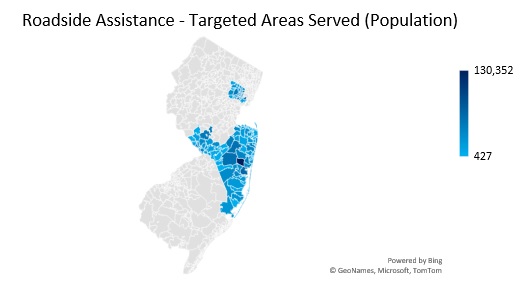
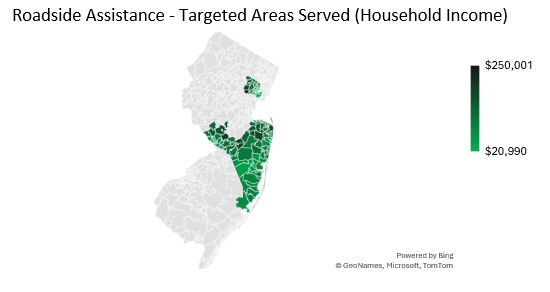
As noted above, market research is the first part of the process when we develop this type of document. Most importantly, we determine a target market radius from the headquarters of the roadside assistance service. We then analyze the number of individuals that are adults to understand how many active drivers there are within the prescribed range. From here, we are able to form the total addressable market as well as the service obtainable market as it relates to the statistical probability that a driver will need roadside assistance within the course of any given year. We also do a deep analysis of the number of competitors in the area, not only among other roadside assistance companies, but also among automotive repair shops that provide towing as an ancillary service.
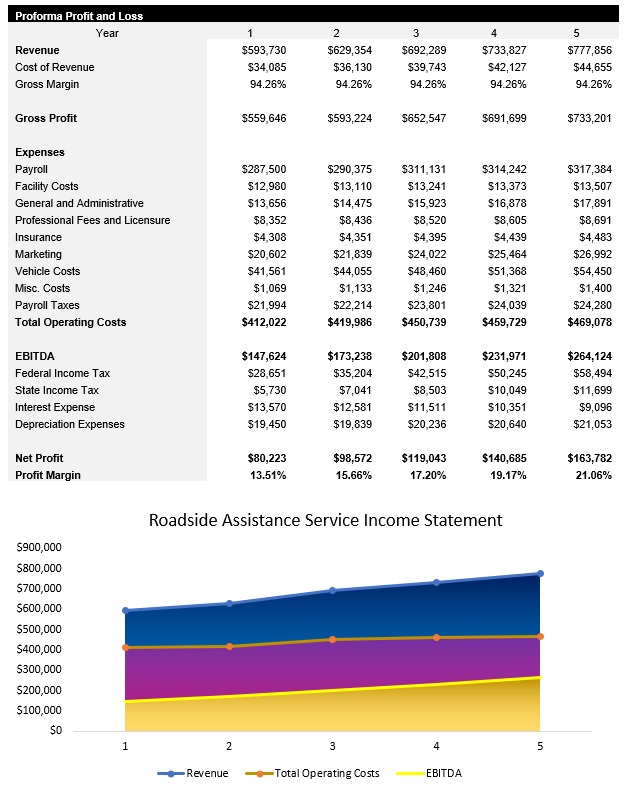
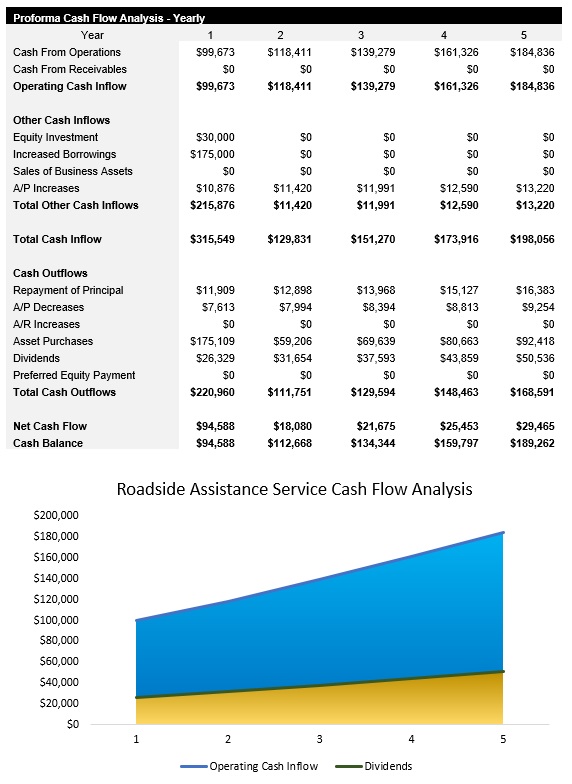
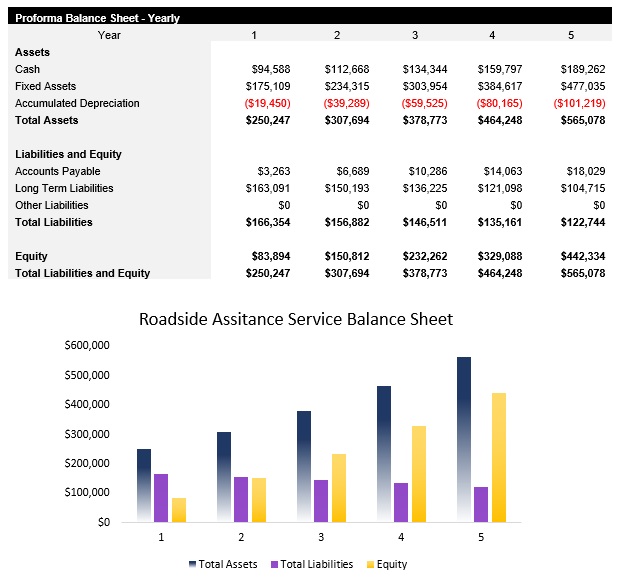
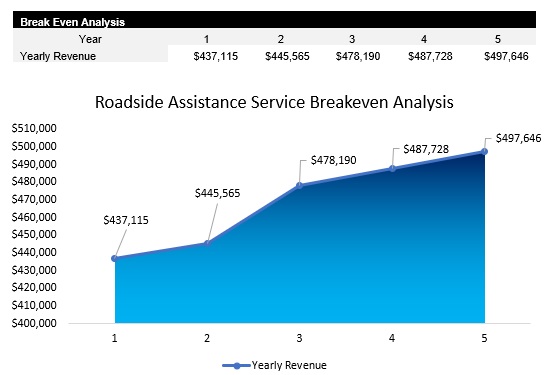
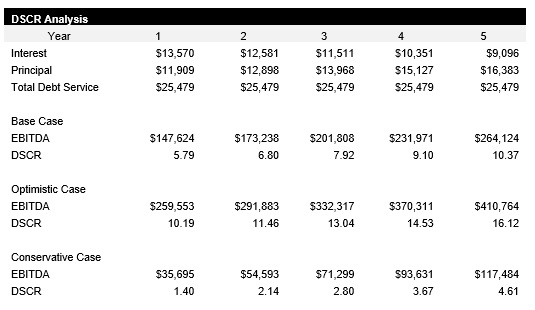
The second phase of the roadside assistance business plan development process is the creation of financial model. We always take a five-year approach to this, which spans a profit and loss statement, balance sheet, cash flow analysis, business ratios that applicable to the roadside assistance industry, a DSCR analysis, as well as a sensitivity analysis. We also have a specialized component of the financial model that addresses how potential spikes and energy costs can impact the overall profitability of these businesses.
The third phase of the process is the development of the roadside assistance marketing plan. We divide this section into two primary components. First, we discuss the consumer facing marketing operations that include search engine optimization, social media, marketing, use of referral application suites, establishment of pages on popular business review platforms, and related online strategies. From a consumer standpoint, this is extremely important given that most people will use their mobile phone once searching for roadside assistance. The second component of the marketing plan is establishing ongoing relationships with companies that maintain fleet of vehicles within the target market range. This allows for ongoing service contracts to be acquired, which can produce highly recurring teams of revenue.
The fourth phase is the development of the roadside assistance operations plan. Here, we discuss the procedures and protocols that will be used during the course of business, the number of roadside assistance mechanics that are employed is also discussed in this chapter, as is the number of trucks that will be dispatched in the field at any given time.
We now move into moving the developing the appendix sections of the business plan, including the SWOT analysis and risk analysis. As relates to the SWOT analysis, the approach we take is to thoroughly examine the strengths, weaknesses, opportunities, and threats that are faced by these companies. As it relates to strengths, these businesses are able to render their services at all times as roadside assistance and towing is an absolute necessity. As it relates to weaknesses, these businesses do face ongoing competition from highly established towing firms as well as automotive repair shops that provide this assistance on a secondary basis. For opportunities, the continued expansion of the company’s fleet of roadside assistance vehicles is the primary method in which these businesses grow. As it relates to threats, these are relatively negligible for a roadside assistance company.
For the risk analysis, we focus on the development risk as well as the ongoing issues that the business will face as it relates to providing roadside assistance services within its target market. As it relates to development risk, this is principally focused on acquiring the necessary capital and licensure in order to operate in this capacity. The ongoing risk faced is typically ongoing competition that is faced in the market.
We then develop the roadside assistance executive summary. The approach that we intake primarily focuses on having this part of the business plan serve as an overview of all other chapters. Snapshots regarding the target market size, the anticipated revenues, as well as the services that are being rendered are covered in this section.