
Property management firms are extremely popular among real estate investors that are seeking to maximize the return on their property investments while also taking a hands-off approach to the day-to-day issues that occur. One of the most important aspects of a property management firm is that it is able to produce highly recurring income from rendering a wide spectrum of services including tenant management, tenant placement, eviction management, and ongoing repairs to client properties. Generally, these businesses receive a fee equal to 10% of the total rent roll, although this may vary depending on the complexity of the management services that are offered. These businesses are highly stable, even during challenging economic climates, especially once a large client based at real estate investors has been secured.
Through the course of the property management business plan development, we focus very heavily on the number of rental units that are within any given regional market. Generally, most property management firms that operate outside of major cities typically will provide their services to residential and commercial units that are located within a 25-mile radius of their headquarters. As part of our analysis, we did not only take a look at the number of rental properties that are available, but we also examine the total size of the area in regards to population as well as median household income. In wealthier areas, there tends to be much higher prevalence of property management firms. Once we determine the number of available rental properties, we then focus on the number of real estate investors that are actively in engaged in the regional market. This allows us to form the service obtainable market, which is imperative for the development of the financial model.
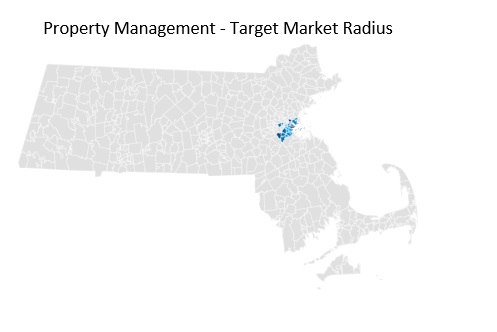
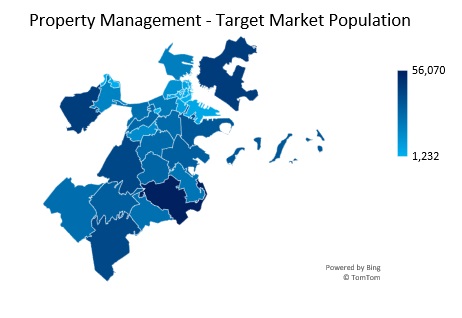
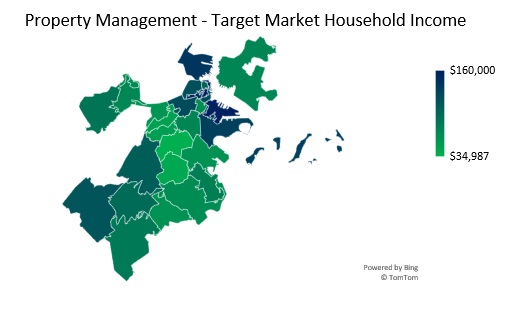
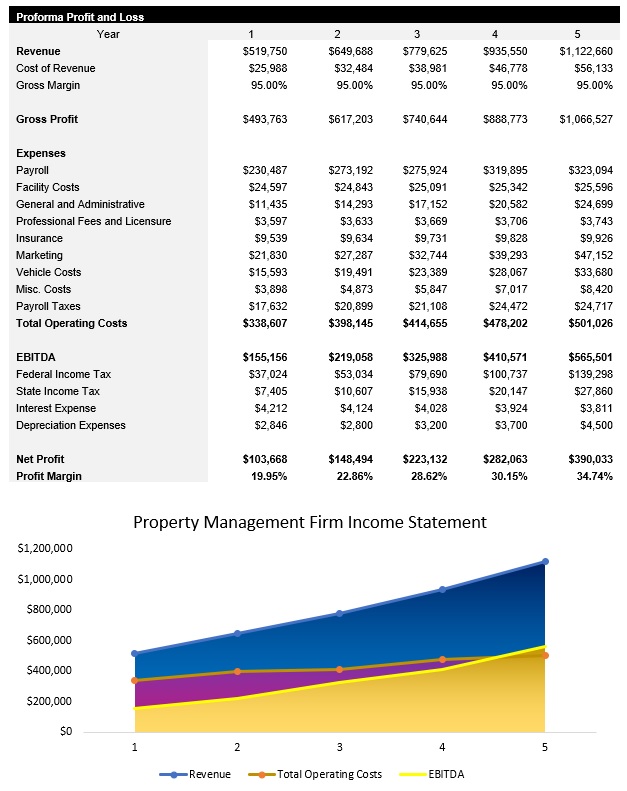
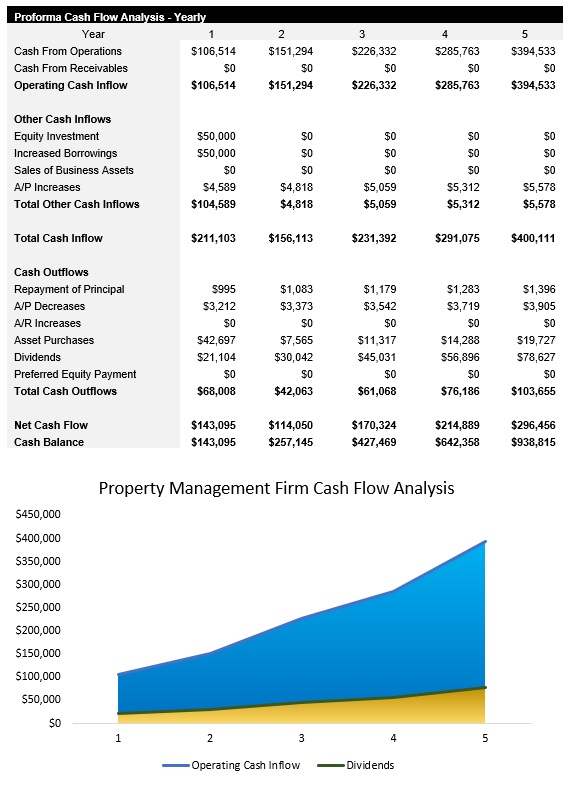
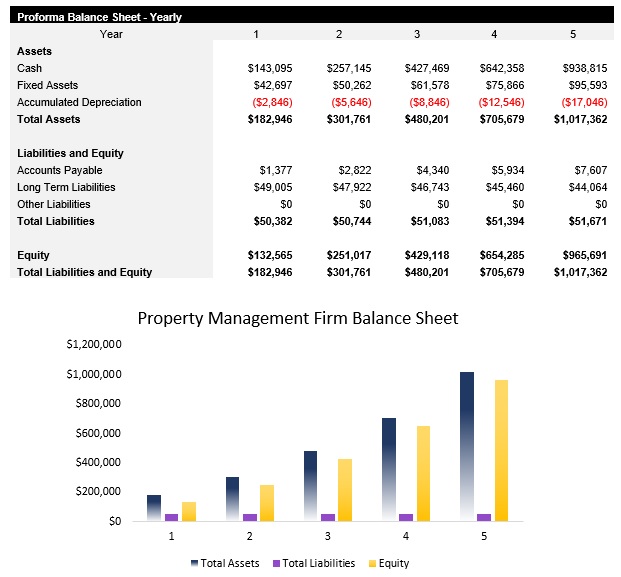
As it relates to the property management firm financial plan, we always conducted this analysis over a five-year timeframe. Using the information that we received during the course of the market research, we then develop the revenue profile based on whether or not the business is going through providing services to residential properties, commercial properties, or a mixture of both. The scope of the financial model includes a profit and loss statement, cash flow analysis, balance sheet, breakeven analysis, as well as all applicable business ratios for the property management industry. A significant focus is shown within the financial model on how revenue will scale over the five-year timeframe as new clients are onboarded and as a greater number of properties come under management.
We then move on to developing the property management marketing plan. Very importantly, we focus on establishing ongoing relationships with realtors that do not directly render property management services as part of their operations. This presents a unique opportunity to receive ongoing referrals, especially among realtors that specialize in finding viable properties on behalf of their clients. As this is not a consumer facing business, we take a highly focused to approach to the marketing plan in order to ensure that the business can effectively reach a number of real estate investors within the regional market. We also discuss the use of online marketing strategies with a focus on pay per click marketing and the long-term use of regional search engine optimization. One of the other components of the marketing plan is to join numerous real estate focused associations in order to further brand visibility among real estate investors that are seeking to have their properties managed by a third-party firm.
The fourth phase of the development is the discussion regarding the operations of the business. Throughout this chapter, we focus on the wide range of services that will be offered by the property management firm as noted above. We also discuss partnering with general contractors as well as subcontractors in the event that the property owner requires significant improvements, which can be managed by the company. One of the other things that we indicate is human resources regarding the number of property managers that will be hired based on the number of residential and commercial units that are under management. Regulatory matters are also addressed in this chapter as well.
Now that the foundation of the property management business plan is complete, we now focus our efforts towards the risk analysis, SWOT analysis, as well as the initial launch of the business. As it relates to establishment and launch, we typically will include a Gantt chart that showcases on a month-to-month basis have the business will roll out its marketing strategies to onboard clients. This is complimented by a Gantt chart second table that showcases how the working capital will be allocated during the early months of the business in order to ensure that it can reach profitability.
As it relates to the SWOT analysis, we focus very heavily on the strength of the business given that these companies are able to produce highly recurring income from property management services. As relates to weaknesses, this is a highly competitive industry given its lucrative nature. For opportunities, a significant focus is placed on the establishment of additional offices once the business has reached its maximum capacity in its initial market. As relates to threats, outside of competitive issues this is typically a business at tends to remain stable at all times.
We then move into developing the property management executive summary, which focuses not only on providing an overview of the operations of the business, but also how the company intends to expand its operations over the five-year timeframe. A snapshot regarding the anticipated financial results, including a quick overview of the underlying assumptions is included in this chapter as well. In most instances, if available, we will also include a biography of the founder in the executive summary.