
With the advent of short-term rental platforms, there has been a substantial increase in demand among travelers and tourists to rent apartments as well as single-family homes while they are on vacation. This model has found an immense audience, and nearly 10% of vacation travel within the United States is booked through private owner-operators of properties. In turn, this is created an entirely new industry of real estate entrepreneurs that acquire proper specific for short-term rental operations. The capitalization rate associated with acquiring a proper specific for short-term rental purposes is substantially higher than that of producing income through a long-term lease.
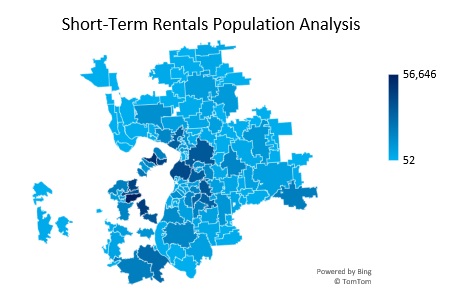
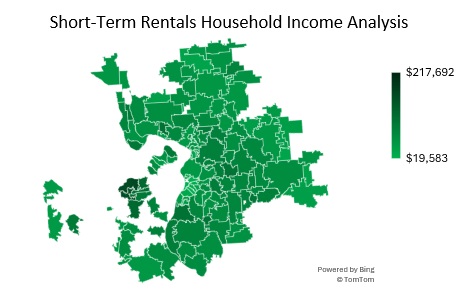
The approach we take when developing a short-term rentals business plan is to first conduct an extensive amount of analysis regarding the number of tourists that come into the area in which the business is being developed. This includes citing national statistics regarding air travel to destinations. We further discuss travel by other means as well, in order to understand the amount of tourism revenue that is produced in any given market. Beyond examining the tourism industry, we also examine the local market as people have needs for short-term rental rentals from time to time. The scope of our analysis includes the population size, population density, as well as an overview of median household income (which is important to note in order to understand how much people can afford on a nightly basis).
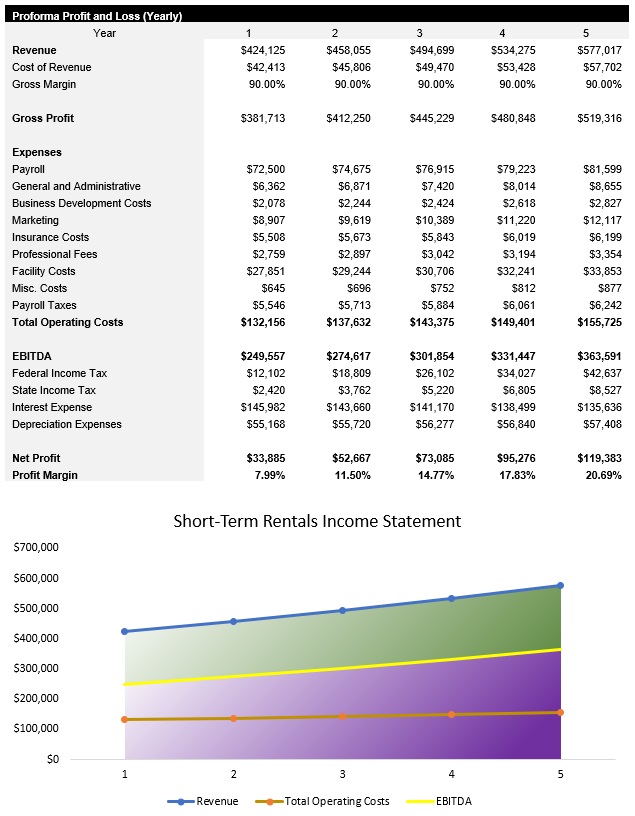
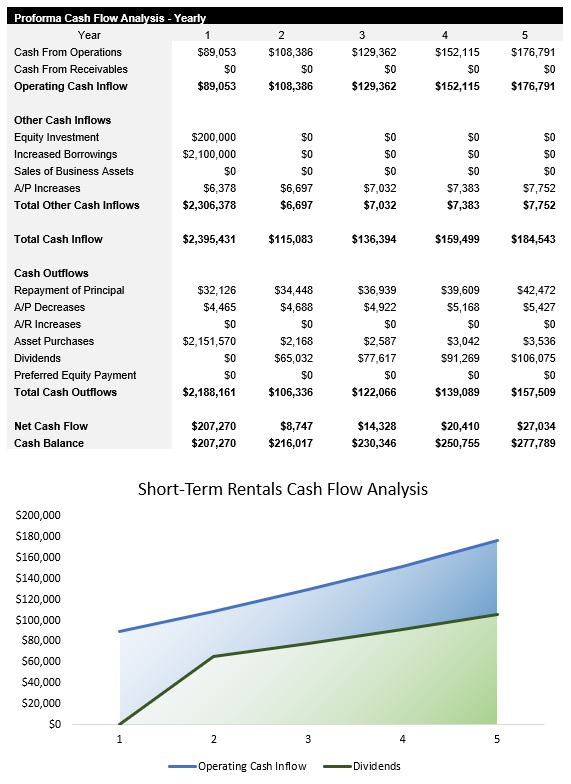
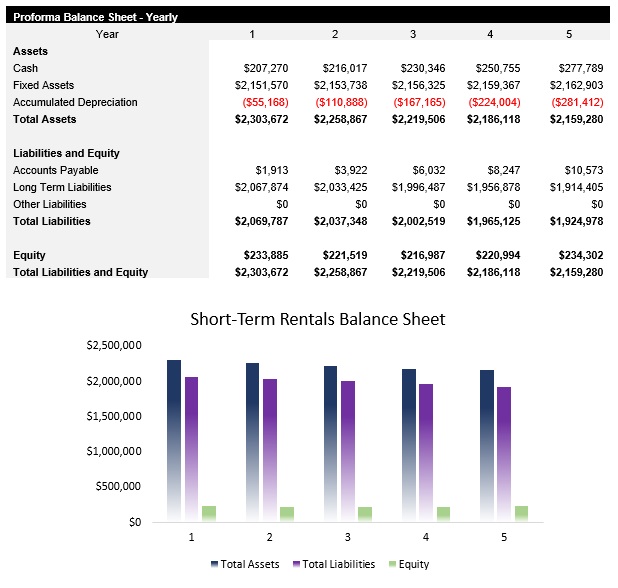
After we have completed the market analysis, we transition into developing the short-term rentals financial plan. This encompasses a profit and loss statement, common size income statement, DSCR analysis, return on investment analysis, balance sheet, and breakeven analysis. As it relates to the operating costs, we focus on the utility expenses, cleaning expenses, and the fees that are associated for using platforms that make arrangements for short term rentals.
The third phase of this process is the development of the short-term rental marketing plan. For these types of businesses, marketing available properties relatively straightforward. As noted above, there are numerous platforms that real estate entrepreneurs can use in order to promote their short-term rental properties. This is usually complemented with the development of a proprietary website that links to a specialized software suite so that individuals can also make arrangements for their short-term rental directly through the company’s website. The company may also establish ongoing relationship relationships with event planners in the area, so that referrals can be made when large scale of events, such as weddings and corporate events require additional hospitality space.
From here, we developed a short-term rental rentals operating plan. The scope of these operations primarily focuses on the per night rental fees, adjustment of fees for seasonality, human resources matters, procedures for keeping the property clean after a guest has departed, as well as dealing with potential contingencies that can occur during the curse of course of normal business operation.
We also developed several additional analyses that focus on the risk as well as these strengths, weaknesses, opportunities, and threats were commonly known as a SWOT analysis. As it relates to short term rental businesses, their strengths are based on the fact that they are able to produce highly predictable income from ongoing short-term rental engagements. For weaknesses, this is now a very crowded industry given that many real estate entrepreneurs have sought to profit from the significant fees associated with a nightly rental. The opportunities for growth for this type of enterprise or enormous given that additional properties can be added to the portfolio and marketed for nightly rent. The primary threat faced by these businesses outside of competition is the fact that a severe economic recession can substantially reduce vacation travel.
In most instances, we will also include a Gantt chart specific for the development of a short-term rental property business. This allows us to understand, on a month-to-month basis how the business will be developed. For many readers of business plans, this is important because it provides a definitive timeline about how operations will be created.
Once all of these sections are completed, we then transitioned into developing the short-term rentals executive summary. Generally, the executive summary spans two to three pages and focuses on the most important aspects of the short-term rental business. We typically will include a five-year snapshot of the expected financial results while also discussing the appreciation of the properties while they were held in the company’s portfolio. We also will provide information about the founder and their ability to properly operate this business on a day-to-day basis.