
It is no secret that matters related to electricity should be left to trusted professionals. As such, electrical contractors enjoy a wide degree of economic stability as they develop their operations. These businesses have enormous opportunities for growth by providing services for both residential and commercial properties. One of the best things about these businesses, is that they enjoy extremely high barriers to entry given the level that is training that is required in order to operate as an electrician or electrical contractor. These business businesses are also able to produce substantial revenues when engage engaged in new property developments.
When we develop an electrical contractor business plan, we take a market research approach in order to ensure that the market is not oversaturated and that the business can thrive. The scope of our market research includes a deep competitive analysis regarding the number of other electrical contractors that are in operation within the target market range. We also do a deep analysis regarding the number of residential properties, number of commercial properties, as well as the number of mixed-use properties that are within the target market radius as well. We also examine specific metrics related to the market including population size, population density, median household income, median home value as a measure of wealth, as well as population growth statistics. These analytics allow us to form the revenue profile for the electrical contracting business.
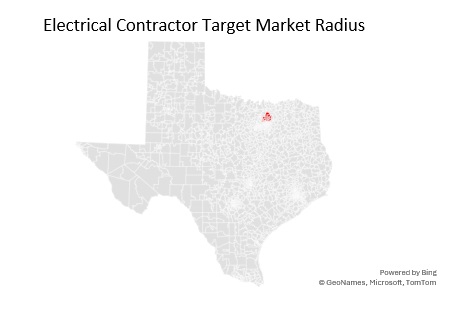
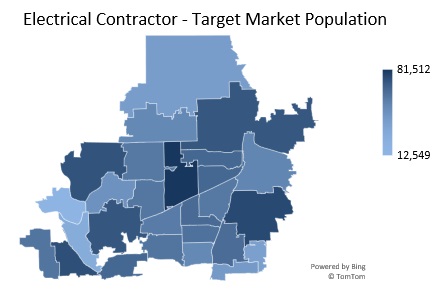
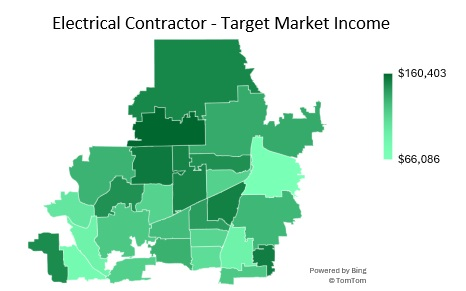
Once we have completed the revenue profile, we then move into developing the electrical contractor financial model. The approach we take is to fold. First, we take a look at the amount of revenue that can be produced from ongoing maintenance services. Second, we then look at higher value engagements, such as large-scale installations for new developments, electrical generator installations, as well as engaging in property rehabilitation projects in tandem with general contractors. This allows us to form the profit and loss statement, cash flow analysis, common size income statement, breakeven analysis, and business ratios.
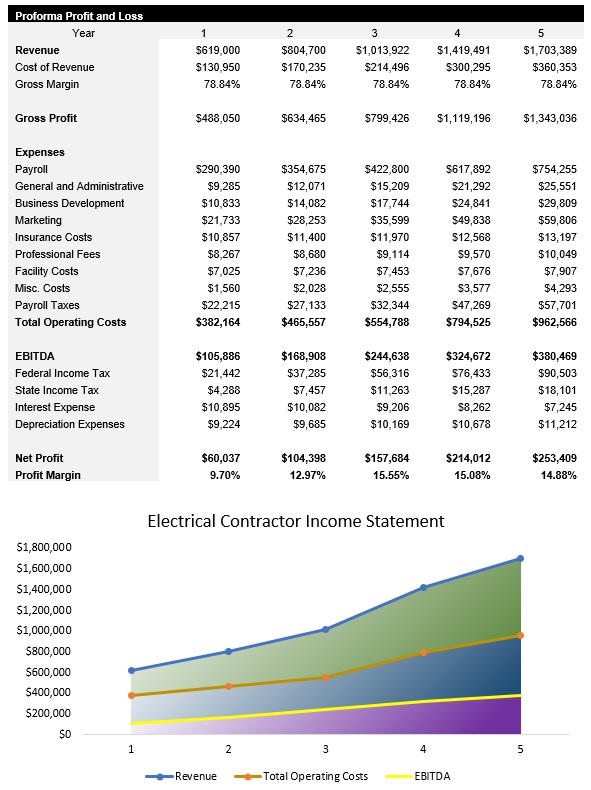
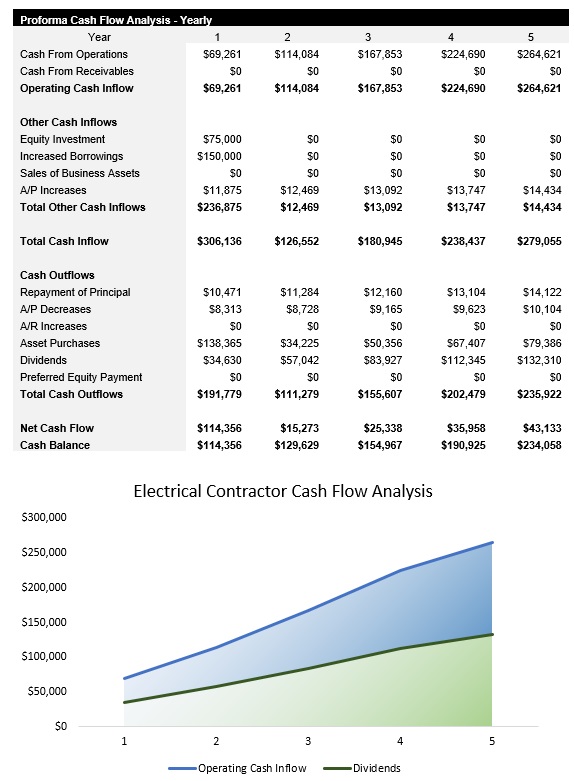
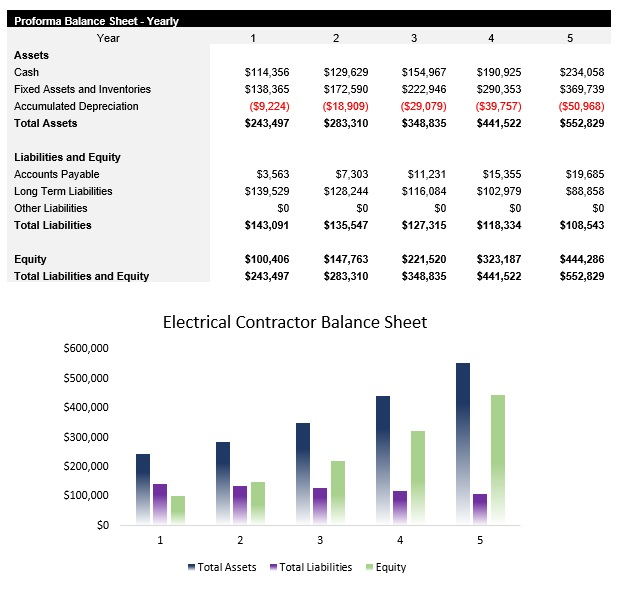
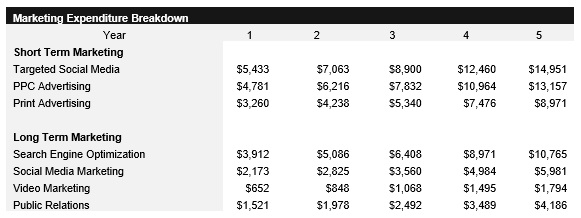
Once these two chapters are finalized, we then move into the development of the electrical contractor marketing plan. Here, we discussed the numerous strategies that are used in order to onboard a client base. We typically also take a two-prong approach to this part of the document as well. First, we discuss developing ongoing relationships with general contractors that will call on the business when specific types of electrical work is required. Second, we take a consumer facing approach as it relates to having the general public aware of the service as it relates to maintenance and repair matters. One of the things that we develop is a marketing channel breakdown so that we can understand the most effective way of deploying the marketing budget. The scope of these channels includes short-term marketing, such as PPC advertising and social media ads, which is complimented with long-term marketing strategies such as local search engine optimization, video marketing, and direct outreach initiatives.
We then move into developing the electrical contractor operations section. This discusses the number of journeyman and apprentice electricians that will be on staff, protocols and procedures, the number of vans that will be in service, as well as matters related to complying with regulatory frameworks.
Now that the foundation of the electrical contractor business plan has been developed, we then move into the secondary chapters of the document. This includes a SWOT analysis which outlines the strengths, weaknesses, opportunities, and threats. As it relates to the strengths, as noted above, the demand for electrical services remain strong in an economic climate. These businesses also have the ability to generate numerous different types of revenue, all of which are high margin in nature. As it leads the weaknesses, these businesses do require highly specialized labor, given the risk risks that are involved with working with electricity. For opportunities, beyond simply increasing the scope of the marketing campaign, electrical contractors are able to continually hire additional staff as demand grows. For threats, this is primarily competitive in nature, given that these businesses remain in demand even during an economic recession.
Finally, we come to the electrical contractor executive summary. Here, we take a roadmap and guide approach to developing this part of the document so that the reader has an immediate understanding of the services that are offered, location, the background of the founder, as well as providing a snapshot of the anticipated revenue and profit over a five year timeframe.