We take a market research approach when developing a business plan specific for a café or related enterprise. This allows us to form the foundation of understanding the size of your market and its potential for revenue generation. The process begins by examining the number of people within your effective target market radius (which typically spans five miles), the median household income, population density, as well as other important metrics that showcase the potential viability of your café. Once we have this market research in hand, we then focus on the number of competitors in the market. This is important for a few reasons. First, it allows us to understand what challenges you may face when establishing a new café specifically within your target market radius. Second, it confirms the total addressable market (commonly referred to as TAM) from a revenue standpoint. The scope of our market research also extends to include an economic analysis as well as an overview of the industry. For cafes, one of the more common trends to integrate a number of technology suites that facilitate seamless management of day-to-day operations while allowing for takeaway and delivery orders to occur from the location. This is something we focus very heavily on within the scope of any café business plan.
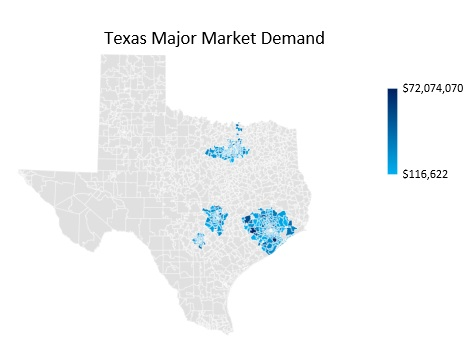
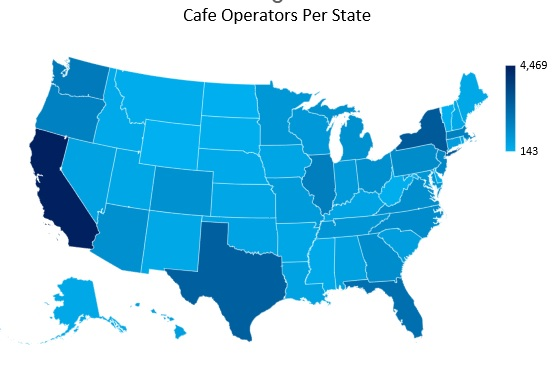
An example of how we conduct market analysis is done below. In this instance, we mapped the highest probability for success within the State of Texas for a café chain.
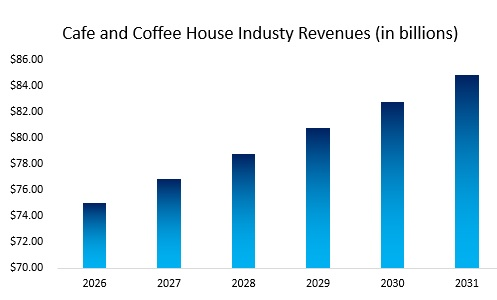
Beyond conducting the necessary market research specific for the local area, we also conduct extensive analysis regarding the café industry as a whole. As of this year, cafes are expected to produce near $75 billion of revenue coupled with a compounded annual growth rate of 2.5%. There is a growing popularity among independently owned cafes as people enjoy supporting small businesses. Additionally, many independently owned cafes operate as social outlets for their communities. This is one of the principal ways in which a smaller scale café is able to compete with national level chains. As part of our competitive analysis, we discuss the numerous ways in which the café will maintain an advantage as well as important differentiating factors. This is compared against other existing independent cafes within the target market radius.
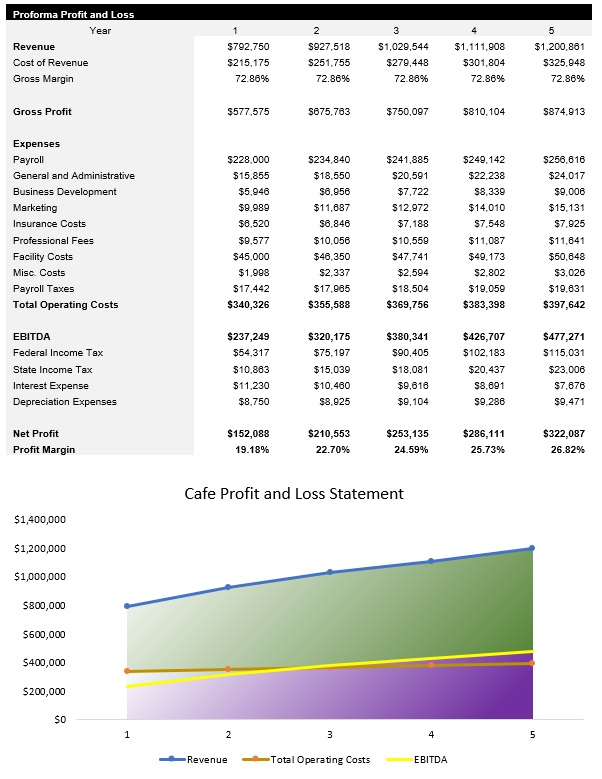
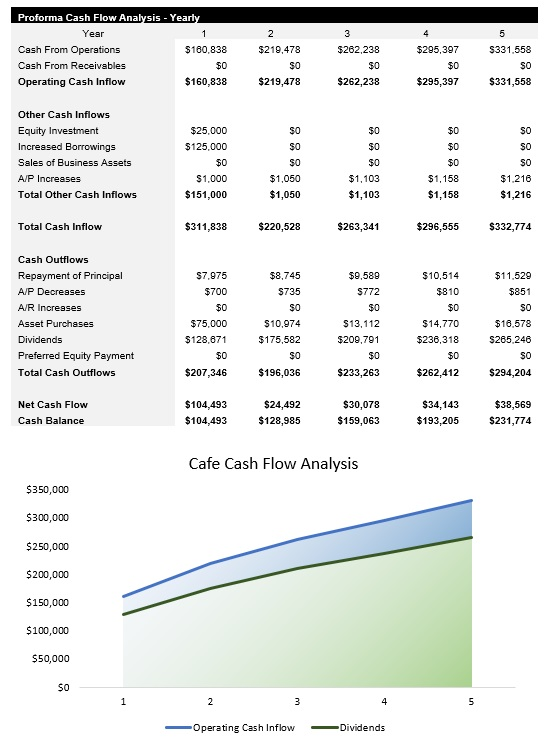
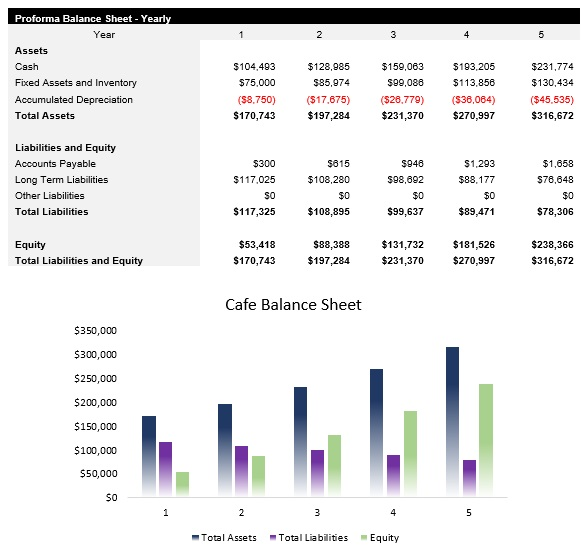
Once we complete the market research, we then move into developing the financial model which is done on a five-year basis. Based on the TAM, we are able to properly ascertain a potential amount of revenue your café can produce. This is calculated not only as a function of the number of people within your market but also on the square footage of your anticipated location. The scope of the cafe financial plan includes a profit in lost statement, common size income statement, cash flow analysis, balance sheet, business ratios, as well as a DSCR analysis. In the event that the entrepreneur seeking capital from a private funding source, then we also include a full proforma valuation.
Once these two primary chapters are complete, we then move into developing the marketing plan. Here, we discuss numerous marketing channels that can be used in order to drive interest in the café. This includes includes the use of traditional print advertisements as well as the use of flyers coupled with online advertising spanning, search engine optimization, use of social media, targeted social media advertisements, as well as PPC. A significant focus is on regional search engine optimization so that the café can be quickly found when relevant searches are conducted specific within the target market area.
Once we complete these three chapters, we then move into the operation section of the café business plan. This includes discussing hours of operation, the types of cafe beverages, faire offered, employee related issues, safe handling of food, as well as best practices as it relates to the integration of technology the cafe. This part of the business plan typically is one to two pages.
Now that the heart and soul of the business plan have been put in been completed, we then move into developing the secondary chapters, including a SWOT analysis, risk analysis, and of course, the executive summary. Although it is the first chapter of the business plan, we always reserve the executive summary for last. This is primarily due to the fact that we treat the executive summary as a road map for the rest of the café business plan.
We then move into the development of the café pitch deck. We always do the pitch deck second as the it is heavily driven from content from the business plan.
This is the process that we use to develop a full-scale café business plan.