
Candy stores are unique retailing businesses given that they are able to sell their goods from both a brick-and-mortar location will also generating substantial revenue from online sales. The low-cost nature of purchasing candy makes these economically viable businesses that are able to remain profitable even during challenging times. Candy has an exceptionally low pricing point. Additionally, many people enjoy the novelty of going to a candy store in order to make selections. This makes them more stable than other types of brick-and-mortar retailers that can often lose sales to ecommerce competitors. One of the common trends within this industry is to sell candy by the pound that customers can mix in match products. There are now numerous domestic wholesalers that provide access to underlying products that have been imported from a wide range of global sources.
When we work with clients for developing a candy store business plan, we first focus on conducting an extensive amount of market research. This ensures that the target market is able to properly accommodate a candy store. First, we take a look at the ongoing competition that the business will face. Although grocery stores and food retailers often carry wide selections of candy, most entities that operate as a dedicated candy store will typically source inventory from across the world. This provides the candy store with a major differentiating factor. Once we have completed the competitive analysis, we then move into the development of the demographic profile. Here, we examine the population size, median household, income, population density, as well as other important economic metrics. We will typically also include an economic sensitivity analysis that addresses how the target market responds to changes in certain economic indicators, including inflation, the prime interest rate, GDP, consumer spending, and unemployment.
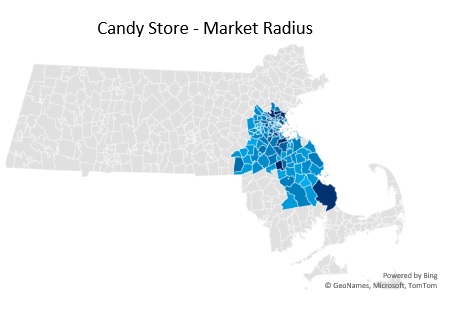
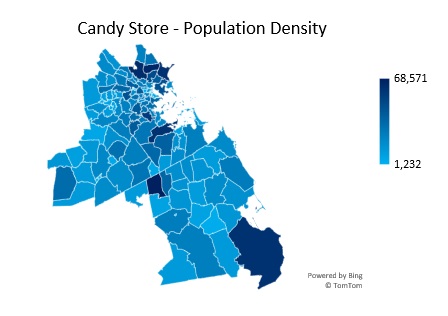
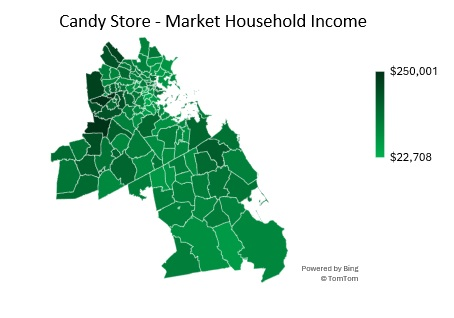
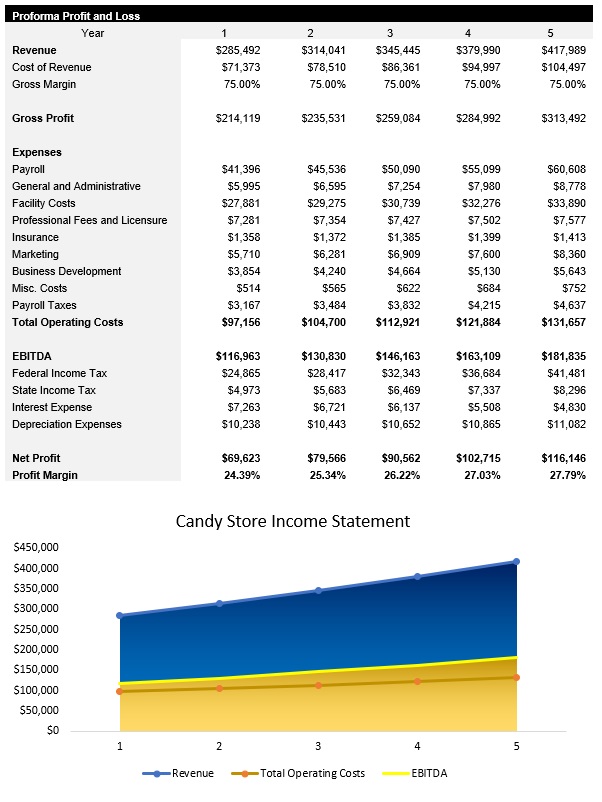
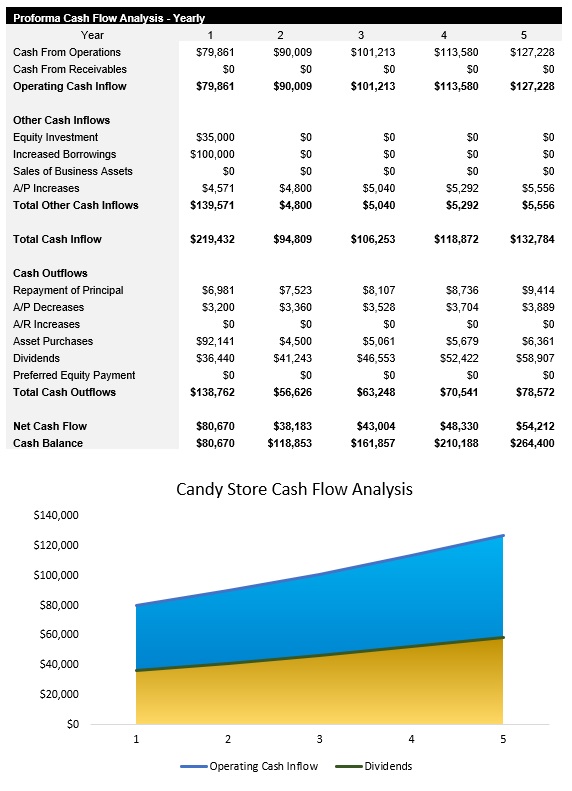
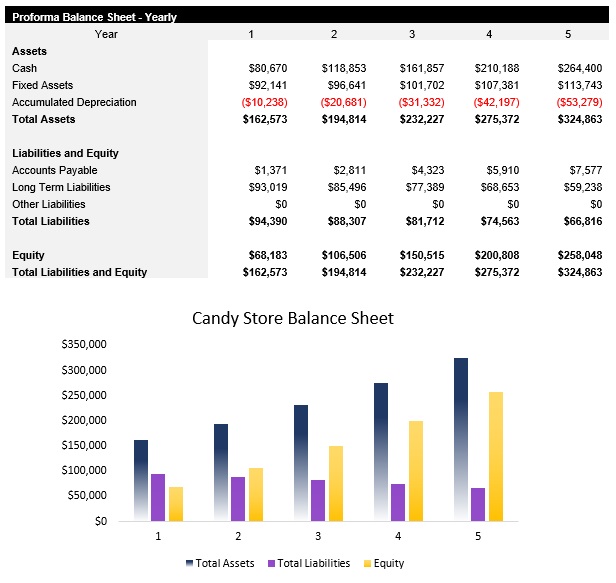
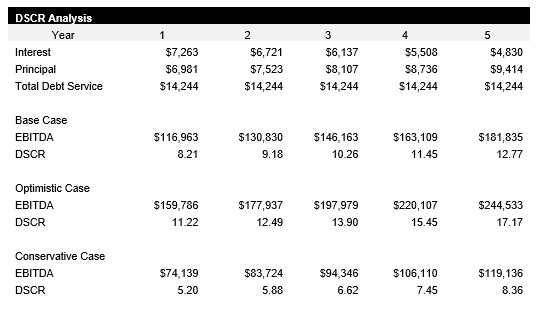
With this information in hand, we are then able to develop the candy store revenue profile. Here, we develop unit economics tables that allow us to understand the average price per ticket as well as the gross profit. Once this is completed, within transition to developing the candy store financial plan. Here, we create a five-year profit and loss statement, cash flow analysis, common size income statement, balance sheet, breakeven analysis, DSCR analysis, as well as relevant business ratios. We benchmark the anticipated results against industry standard figures. Through the section of the work, we also developed the budget for the marketing plan which is imperative in order to drive people to the candy store location.
The third step of this process is the development of the candy store marketing plan. We take a multi-phase approach to this aspect of the business plan given that we discuss the pre-launch operations as well as the marketing strategies that will carry on for the life of the business. One of the main things we focus on during the pre-launch phase is to create regional awareness through the extensive use of online marketing activities. Once the grand opening occurs, we discuss the use of targeted social media, regional search engine optimization, general social media marketing, as well as strategic partnerships. One of the ways that these businesses are able to increase their visibility is by establishing relationships with local schools in order to provide significant discounts among children that have excel academically. Parents will often redeem their coupons, which leads to greater brand visibility.
Once we finalize the marketing plan, we then move into the development of the candy store operations plan. In this section, we discussed the inventory sources that will be used in order to acquire candy inventories on a global basis, use of e-commerce to further drive sales, hours of operation, the need for human resources, as well as general information about the day-to-day operations to the store.
Once these four primary sections are finalized, we then move into the development of the secondary chapters of the candy store business plan. This includes the development of a SWOT analysis. As it relates to strengths, candy stores are able to produce highly predictable revenue in any economic climate. These businesses are also able to divest substantial inventory through online channels, especially if they have a specialty in unique globally-sourced candies. For weaknesses, these businesses have relatively low barriers to entry and third parties could easily establish similar locations within the target market radius. For opportunities, the continued to expansion of the candy stores online marketing operations can drive local traffic but also e-commerce sales as well. For threats, these are relatively minimal for a candy store. Given that even during high inflationary periods, the underlying cost of candy is relatively low as a function of revenue. The gross margin on candy sales typically exceeds 75%.
Now that the entire text and financial model are complete completed, we then developed the candy store executive summary. This provides a full summation of the business, the capital needs, the location, information about the founder, as well as general information about the target market.