
Car washes have been around for the last 100 years, and the business model has undergone numerous changes since its inception. These businesses are able to operate as a high margin enterprise that produces highly predictable streams of revenue. One of the more recent trends within the car washing industry is to integrate subscription-based services so that individuals can access the facilities for a specific number of times during any given month in exchange for a recurring monthly fee. As this business model produces a much higher valuation, many new car washing facilities have implemented this type of system. One of the other things that has changed in the industry is the use of automation. Today, there are numerous tunnel-based car washes that operate in an automated capacity.
Whenever we develop a business plan specific for car wash, we first conduct an extensive amount of competitive analysis to ensure that the market can sustain a new car wash even with existing competitors in place. The scope of is competitive analyzes whether or not the competitor operates in an automated capacity or in a hand wash capacity. Once we have determined the competitive nature of the regional market, with then transition to the development of the demographic profile. This is accomplished by examining the population size, population density, median household income, median home value, as well as specific economic metrics applied to the regional market. This allows us to effectively create a revenue profile specific for the car wash based on unit economics.
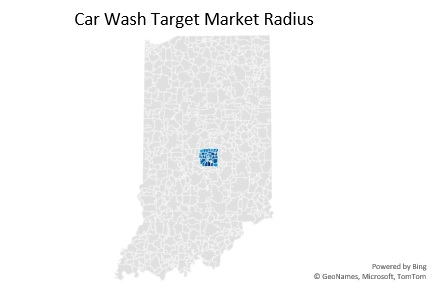
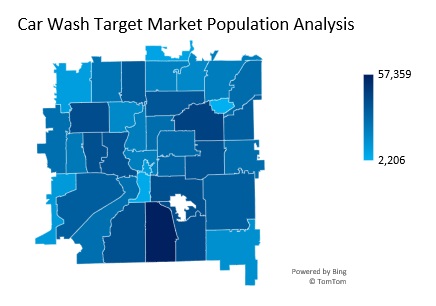
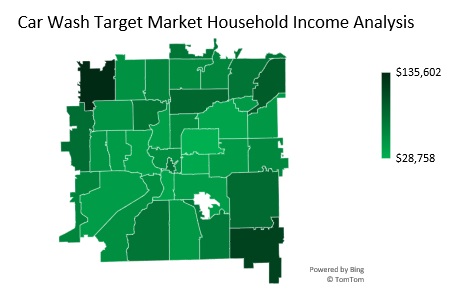
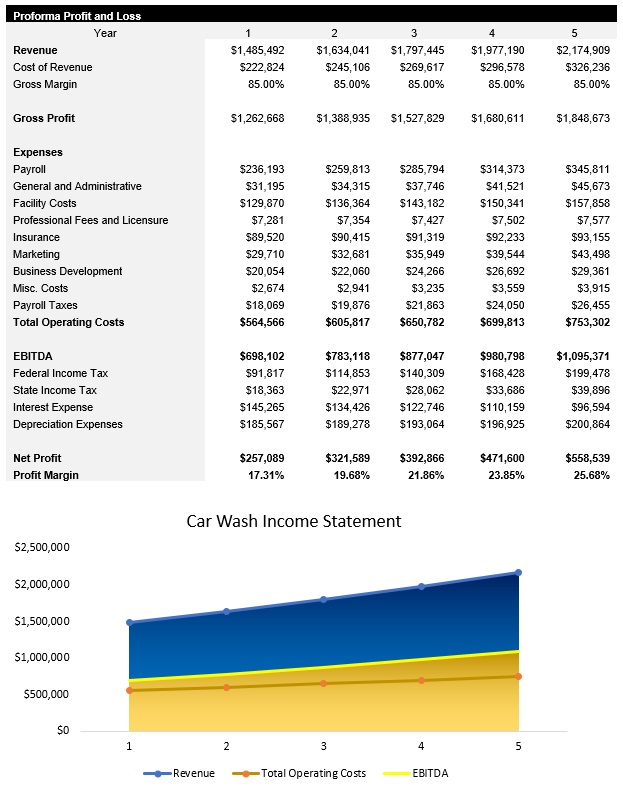
Once the revenue profile has been completed, we then move into the development of the car wash financial model. Here, we create a five-year profit and loss statement, cash flow analysis, common size income statement, DSCR analysis, balance sheet, and breakeven analysis. One of the most important things we include when developing this type of financial model is the unit economics table so that it can be understood how much revenue is generated on a per ticket basis, the underlying cost of energy and cleaning supplies, labor costs, and ultimately the operating profit.
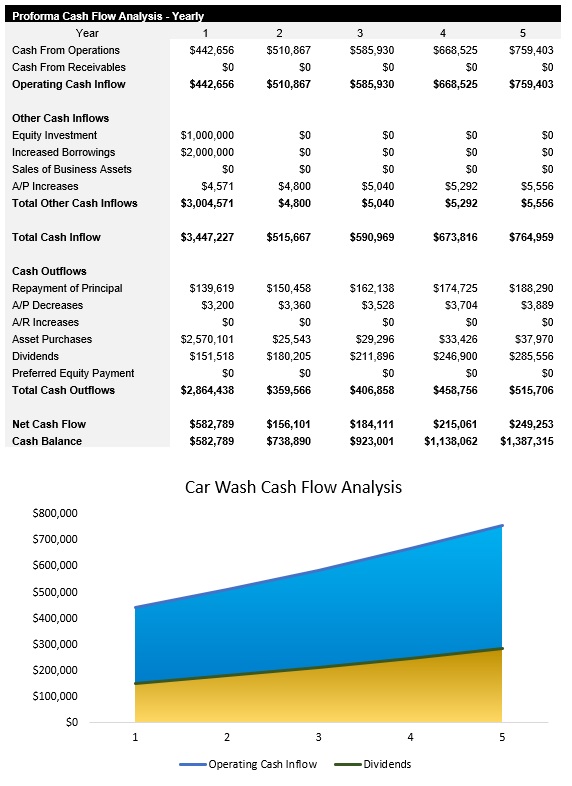
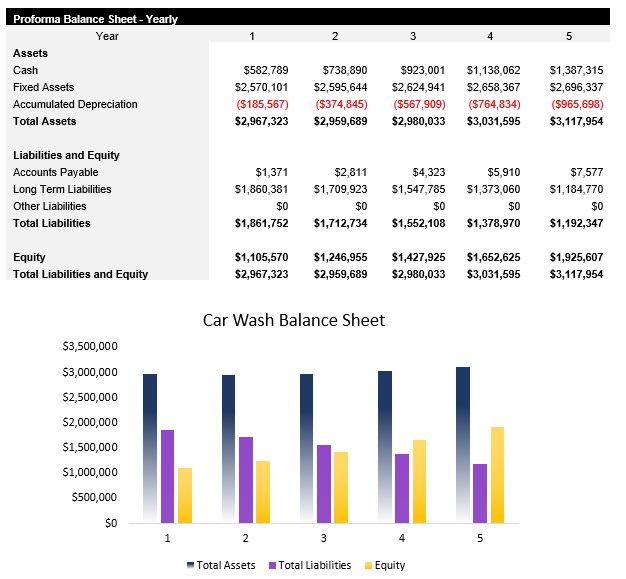
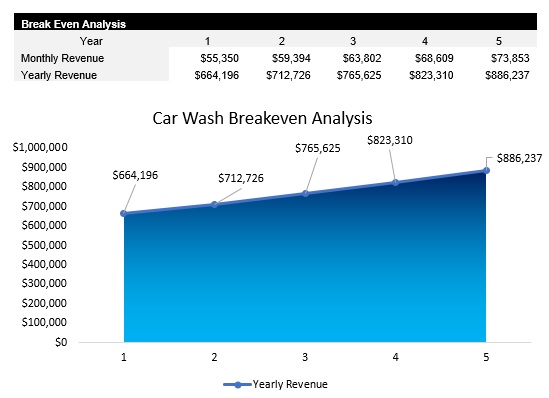
From here, we then develop the car wash marketing plan. This part of the document outlines the ways in which the car wash will generate an ongoing customer base. Most importantly, these businesses typically have extensive amounts of exterior signage that showcases the high-quality nature of the car washes that can be completed at the location. Beyond this type of general marketing, we also discuss the use of pre-launch marketing strategies including early implementation of search engine optimization, targeted social media, free car washes during the grand opening, as well as PPC. The scope of the marketing campaign also includes discussing the ongoing development of relationships of fleet operators that will use the company services on an ongoing basis.
Now that these three chapters are complete, we now move into developing the car wash operating plan. Here, we discuss the general operations of the business its human resources needs, contingency plans, as well as the ongoing need for equipment maintenance, especially for automated car washing businesses.
This forms the foundation of the car wash business plan. Once we have completed these four chapters, we then create the SWOT analysis. As a really strengths, car washes have the ability to generate highly predictable stream of revenue through ongoing use as well as recurring revenue from a subscription-based program. These businesses also have a relatively low pricing point so they are able to remain stable even during an economic recession. For weaknesses, these businesses do have very high operating costs, especially if it is an automated facility. For opportunities, these businesses can thrive if by continually expanding the scope of their marketing operations in order to onboard new customers. For threats, severe increases in the price of energy can impact these companies given that this is a major component of their operating costs.
We also discuss the risk associated with developing a new car wash enterprise, including competitive risk, financing risk, economic, risk, and matters related to the ultimate sale of the business. As it relates to the exit risk, we typically discuss the hiring of a business broker that has extensive experience in this industry.
Finally, we move into the car wash executive summary. This part of document provides a complete overview of the car, washes operations, its capital needs, timeline for development, information about the founder, and other pertinent information related to a launch of the business. In some cases we include a Gantt chart in order to provide a visual overview of the development of the car wash. For larger-scale facilities, the development timeline can last as much as one year. For car washes that operate in tunnel capacity, the cost of equipment and the buildout can cost millions of dollars. The primary reason why we include a Gantt chart is to indicate the necessary milestones in regards to the deployment of capital.