
For any major event, there is a significant demand among both event hosts as well as event planners for high-quality caterers. One of the best things about these businesses is that they are able to tightly control their operating costs. Catering engagements are paid for upfront, so these businesses can have strict controls over their inventory acquisition operations. Additionally, these businesses typically have low operating costs of a function of revenue that allow them to thrive, even during a challenging economic climate. Even during an economic recession, people will continue to hold large-scale events from time to time. These businesses also typically do not need to maintain a large-scale facility as they can use a commissary kitchen when they receive a catering at engagement.
The approach we take when developing a catering business plan first starts with conducting the market research. This is done across a number of prongs. First, we examine the market as it relates to population size, population density, as well as median household income. We also take a look at the number of event venues within the target market as well as other companies that operate in a catering capacity. This analysis allows us to form the total addressable market. Most importantly, we examine the service obtainable market in order to understand what type of market share that a catering business can achieve over a five-year period.
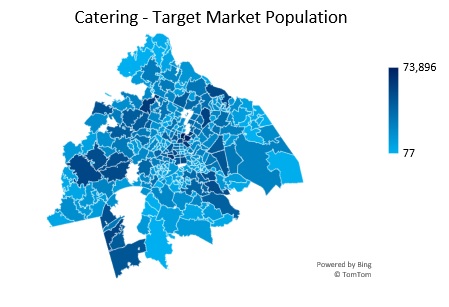
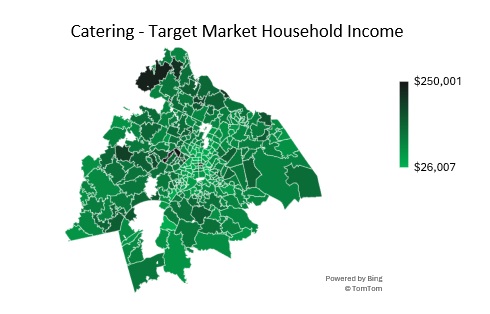
The scope of analysis and further extends into the market research in regards the economic sensitivity of the target market area. Through numerous models that we have developed on a proprietary basis, we take a look at how the local market responds to certain changes in the economy as it relates to the prime interest rate, unemployment, GDP, consumer spending, as well as other economic metrics. This is important as it provides the reader with the understanding of how this business will be able to respond in the event of an economic recession or a challenging economic climate. Typically, inflation has a more limited effect on a catering services operation as these businesses are able to increase their fees in lockstep with the prevailing rate of inflation. The primary issue that is faced by catering businesses, from an economic standpoint, are decreases in gross domestic product.
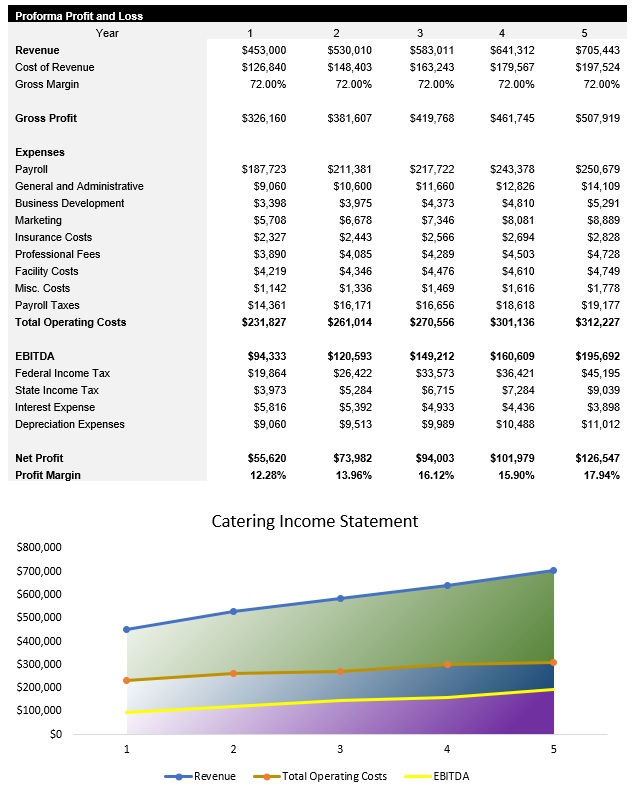
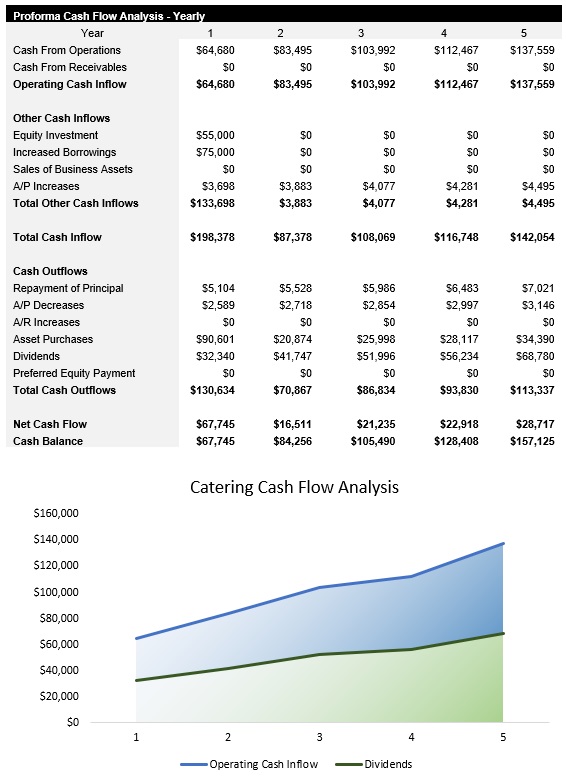
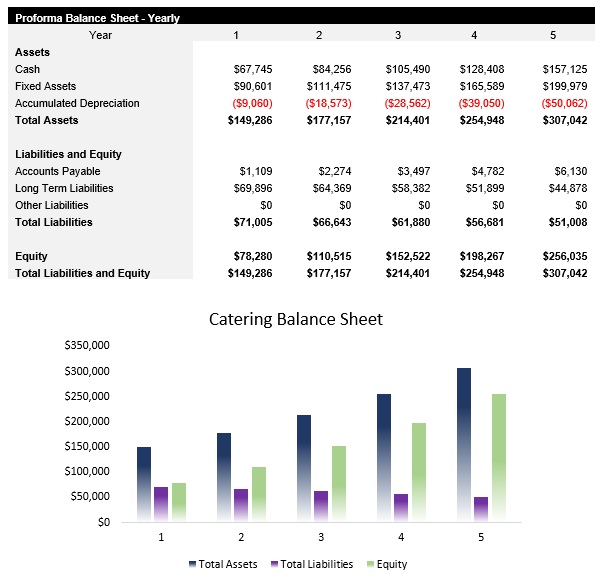
Now that we have this information in hand, we can effectively create a revenue profile for the catering business. This examination takes a look at the average number of guests per event, as well as a number of events that will be catered per year. Using this information, we then develop the catering financial plan, which spans a profit and loss statement, cash flow analysis, breakeven analysis, balance sheet, as well as applicable business ratios for this industry. We take a major focus on examining the amount of capital that needs to be spent on marketing in order to drive catering engagements.
Once this is completed, we focus on developing the catering marketing plan. Most importantly, creating a high visibility profile among event venues as well as event planners is of the utmost importance when establishing this type of business. The referrals that can be obtained by working with these types of entities are an invaluable source of revenue for any catering service. Beyond this business-to-business approach, we also discuss strategies that will significant awareness among the general public. This is primarily accomplished through numerous online strategies including registering the catering business among service directories, engaging in search engine optimization, maintaining a presence on social media, using search engine advertising, as well as using targeted ads among all social media platforms. We focus very heavily on using popular platforms such as Facebook and Instagram to showcase images of prepared foods from prior engagements.
We then move into the creation of the catering operations plan. In this section, we document the type of cuisine that is typically prepared for each type of event, the number of caterers that need to be hired to assist with services rendered, seasonality related issues, capacity matters, as well as addressing certain aspects of human resources. We also discuss the use of a commissary kitchen in order to engage in preparation of certain items before going to the event location.
Now that the analytical sections of the business plan are completed, we move into the development of the catering executive summary. Here, we provide a full overview of every aspect of the business within a condensed three-page summary. A snapshot of the anticipated financial results of the business is included in this part of the analysis. We also discuss plans for expansion including an increased target market radius, as well as developing satellite locations to other geographic areas.