
Regardless of how the economy is doing, people will continue to need products that are sold at convenience stores. These businesses are able to generate substantial amounts of revenue on a highly predictable basis from the ongoing sale of life essentials. In many cases, convenience stores will often have an affiliation with a fueling company which often act as a major driver of traffic to the store. One of the nice things about these businesses is that they are not only able to thrive during difficult economic climates, but they also have relatively moderate startup costs. These businesses are also frequently come onto market for sale, and they can be acquired relatively easily.
The approach we take when developing a convenience store business plan is to first conduct an extensive amount of market research. The first step in this process is completing the competitive analysis in order to ensure that that there is not a significant amount of competition within the target market area. In the event at the convenience store is associated with a gas station, then we also take a look at the number of other entities that operate in a similar capacity as these are normally grouped together as a result of zoning regulations. Once we have completed the market research in this regard, we then move into analyzing the target market area. This includes an overview of the population size, population density, median household income, as well as relevant economic metrics. For each market that we examine, we take the approach of looking at how inflation, GDP, prevailing interest rates, and changes in consumer spending trends can have an impact on the regional area. This is incredibly important as it allows us to create a sensitivity analysis specific for the market to in order to analyze different potential scenarios.
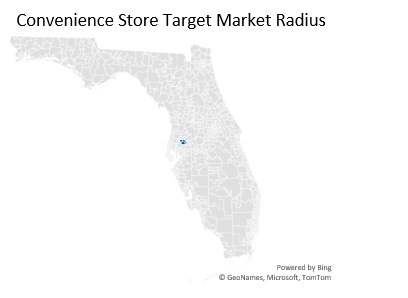
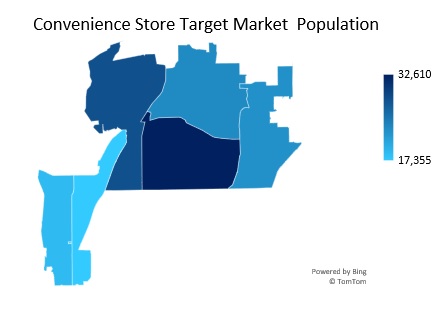
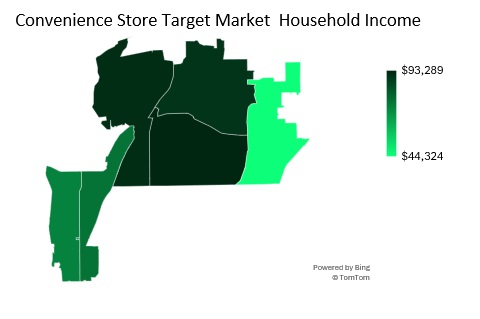
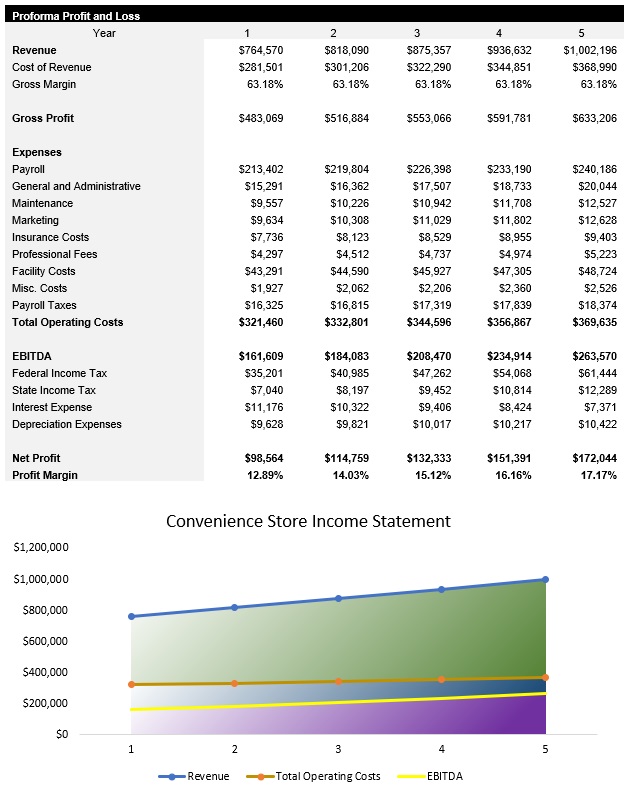
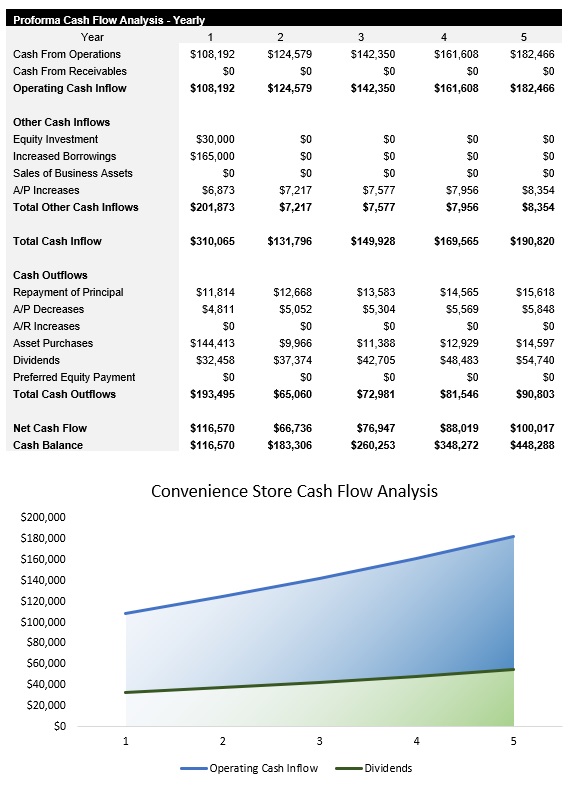
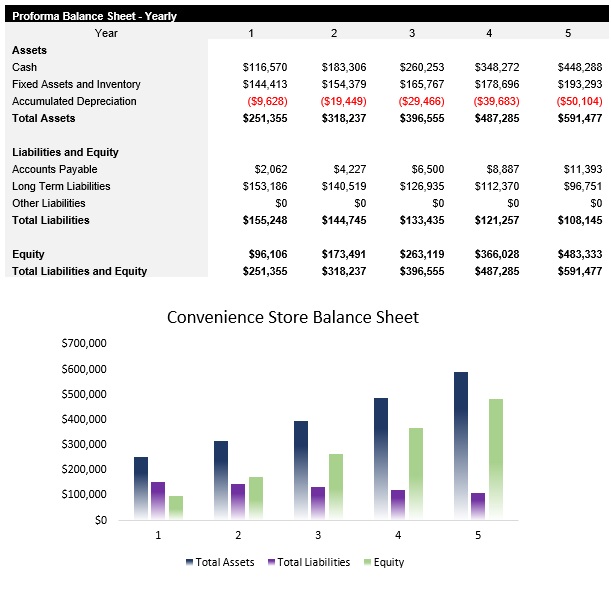
Using the market research we have completed, we then move into the development of the convenience store financial plan. Here, we create a five-year prop and loss statement, common size, income statement, balance sheet, breakeven analysis, business ratios page, as well as other tables that showcase the ongoing operations of the business. We create separate tables for human resources expenditures in order to showcase the number of personnel that are required to operate the convenience store on a day-to-day basis.
Once this is completed, we then move into the convenience store operations plan. Here, we discuss these types of products that are offered, ancillary revenue centers, relationships with inventory providers, as well as human resources protocols. We also discuss the hours of operation in the segment of the document as well.
Fourth, we developed the convenience store marketing plan. For this type of business, this is a relatively straightforward endeavor as most convenience stores seek to acquire highly visible retail locations that are on well traffic roads and streets. To a more limited extent, we discuss the use of online marketing strategies in order to ensure that the business can be found with relevant searches are conducted for convenience stores within the target market area. We also discuss the use of social media as it means of creating promotions to sell a greater amount of inventory was also contributing to the efficacy of the business’ SEO campaigns.
Now that the foundation and base of the convenience store business plan is completed, we then move into the development of the secondary chapters. In each plan that we develop, we always include a SWOT analysis. This provides a clear overview of the strengths, opportunities, weaknesses, threats their faced by convenience store enterprises. As it relates to strengths, these businesses are typically able to remain profitable given that they provide life essentials that are relatively low cost. As it relates to weaknesses, these businesses are highly commoditized, and there are always a number of competitors in any city of your town. For opportunities, these businesses can simply increase the types of inventories that are carried at the locations while also establishing additional facilities in the years to come. As a release threats, outside of competitive matters, these businesses are relatively insulated enterprises.
From here, we also discuss the risk that are associated with the development and ongoing expansion of the convenience store. This includes addressing the development risk which heavily focuses on implementing a proper marketing campaign in order to create brand name awareness during the pre-launch timeframe. We also discuss ongoing issues with the economy, as this can have a modest impact on revenue generation.
Now that the entirety of the business plan has been completed, we move into developing the final chapter, which is the convenience store executive summary. Here, we provide a complete overview of the business in regards to where will be located, its startup budget, information about the founder, as well as other attributes of the business that are pertinent and need to be made immediately visible.