
Dog daycare businesses have exploded in popularity over the past twenty years given that nearly 50% of the population now owns a dog. Additionally, many people among younger generations are not starting a family as early as prior generations. In turn, many of these individuals have turned to dog ownership during the early part of their careers and professional lives. One of the absolute best things about operating a dog daycare is that they are able to produce highly recurring streams of revenue given that people will bring their pets to the location on a daily basis. These businesses are often able to care for numerous dogs during the course of the day, which makes these highly lucrative enterprises. Whenever we develop a dog daycare business plan, we focus very heavily on the recurring nature of revenue as well as their economic stability. People treat their dogs like members of their family, and they are willing to spend significant amounts of their discretionary income on their proper care.
The first phase of developing a business plan specific for a dog daycare center is to conduct the market research. Here, we complete a full analysis of the targeted area including known percentages of dog ownership, population size, population density, median household income, as well as other metrics specific for the specific area in which the client is developing their dog daycare business. Based on the total addressable market (commonly called “TAM”), we then calculate the service obtainable market (or “SOM”) in order to provide the necessary metric to develop the five-year financial model. We also examine the number of competitors in the market in order to gauge what percentage of the total demand can be acquired by a newest established dog daycare business.
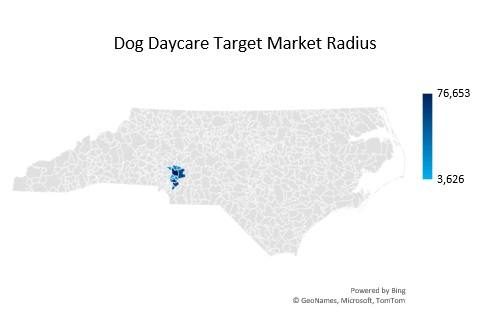
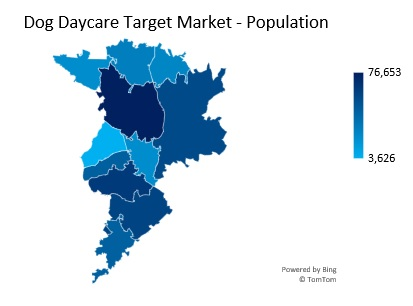
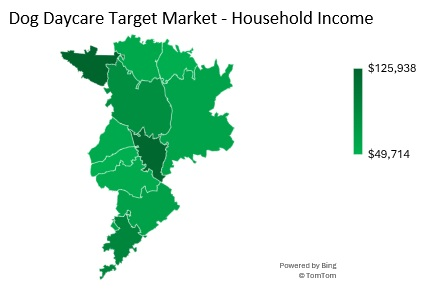
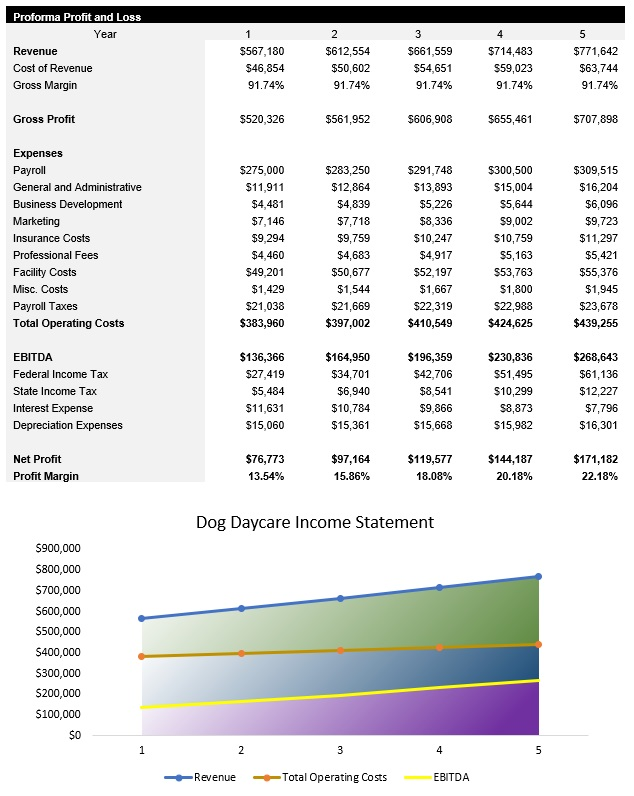
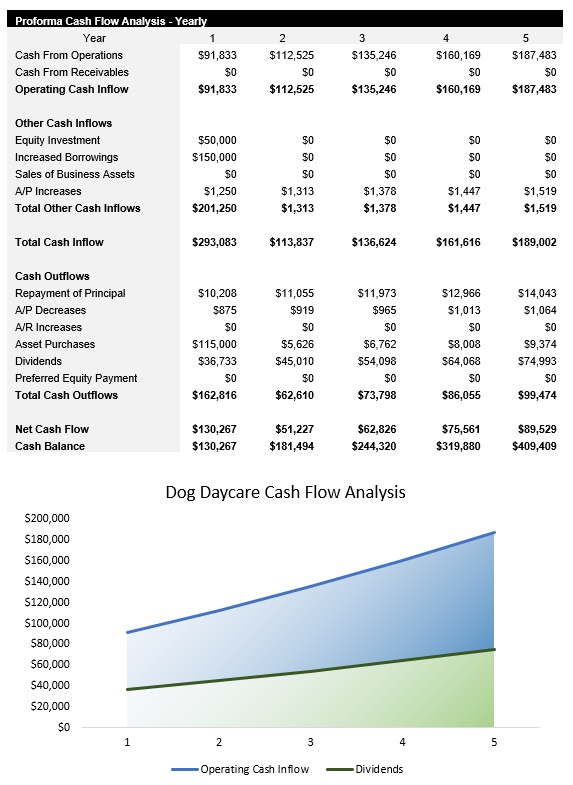
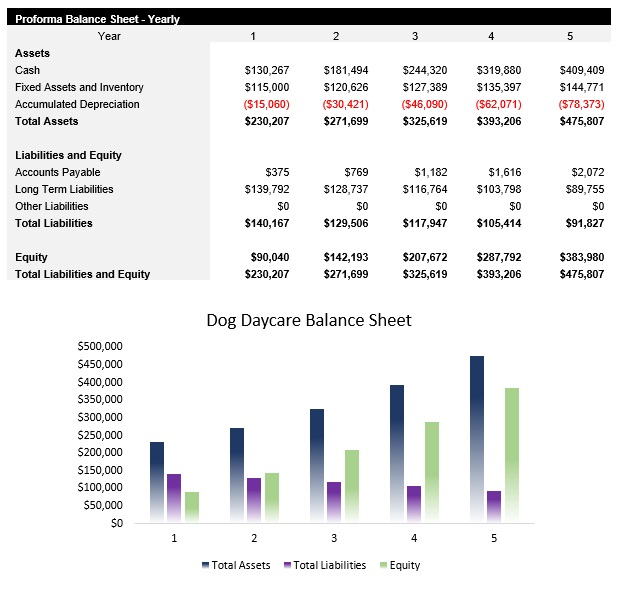
From there, we develop the financial model. This is based on the size of the service obtainable market as well as the median household income. One of the things that we will do is base the pricing on the level of affordability for individuals that are within the target market radius. We then then apply these figures in order to require the necessary projections of revenue. The scope of the financial model includes a profit and loss statement, cash flow analysis and balance sheet as the primary financial statements. As a standard, we also always include a breakeven analysis, DSCR analysis, as well as metrics regarding the appropriate operation of a dog daycare so that these figures are in line with industry standards.
Once this is completed, we then move into the third phase of the work, which is the development of a dog daycare marketing plan. Here, we discussed the numerous strategies that can be used in order to create significant visibility for the business including establishing ongoing relationships with veterinarians as well as other pet care specialists within the target market. This is further extended into a discussion regarding the use of regional search engine optimization as well as geotargeted online advertisements. As part of these operations, we always include a table that outlines the cost and expected return from each revenue channel that is implemented by the dog daycare owner.
We then come to the operation section which discusses the safe handling of pets while they’re staying at the facility, the fees that will be charged, human resources, as well as contingency plans. When the key things that we focus on is that the business will have the proper insurance policies in place in the event that there is an accident with a dog.
As these are the primary chapters of the business plan, we also include a number of supportive secondary chapters. This includes a SWOT analysis which addresses these strengths, weaknesses, opportunities, and threats that are faced by dog daycare businesses. As it relates to strengths, we placed a heavy focus on the recurring stream of revenue that are produced from rendering care services. As it relates to weaknesses, this is a competitive industry and a new daycare center will face ongoing competition in any given market. For opportunities, we focus on the fact that these are scalable enterprises and additional centers can be developed. For threats, in a very severe economic recession individuals make curtail their expenditures on their pets.
We also include a risk analysis section that discusses the issues that will occur not only during the development but also through life for the business. We assigned a risk score for each aspect of these matters.
Once the secondary chapters are completed, we then move into developing the dog daycare executive summary. This act as a snapshot for the rest of the business plan, and it provides the reader within an immediate understanding of the content throughout the document. As we have been developing business plans for the past 20 years, many people will skip around a different section of the business plan rather than reading it from front to back. As such, we developed the executive summary so that you can give a quick overview of all the chapters in the business plan.