
Once established, facilities management businesses can be highly scalable enterprises that produce significant revenue from the ongoing management of large scale commercial and industrial properties. One of the best aspects about these businesses is that many operators of commercial properties will often work with a facilities maintenance and management firms in order to reduce their overhead costs. In many instances, it is advantageous to maintain a relationship with a facilities management company rather than conducting these operations in house. As such, an extremely large industry has been developed in order to provide the services on an outsourced basis. One of the common trends within the industry is to not only provide general facilities management but also repairs of systems related to HVAC, electrical, as well as other specialized repair repairs. This can easily provide a facilities management company with a significant competitive advantage and differentiating factor.
The approach we take when developing a facilities management business plan is to first conducted the market research. Specific for this type of enterprise, we focus on the number of commercial properties and industrial properties within the target market radius. We also take a look to see how many owners there are of these properties given that some companies will have several properties within the target market area. This allows us to form the total addressable market while also conducting the necessary analysis to see how many of these properties are under third-party management. From here, we then calculate the service obtainable market in order to determine what percentage of the regional industry can be acquired by the facilities management enterprise.
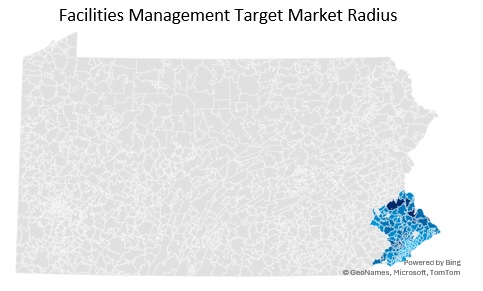
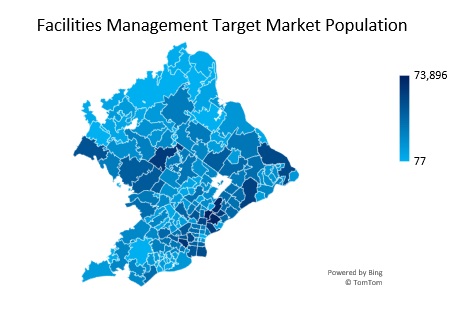
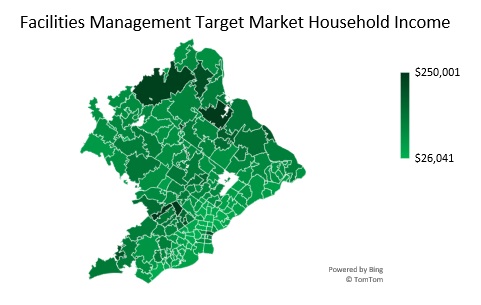
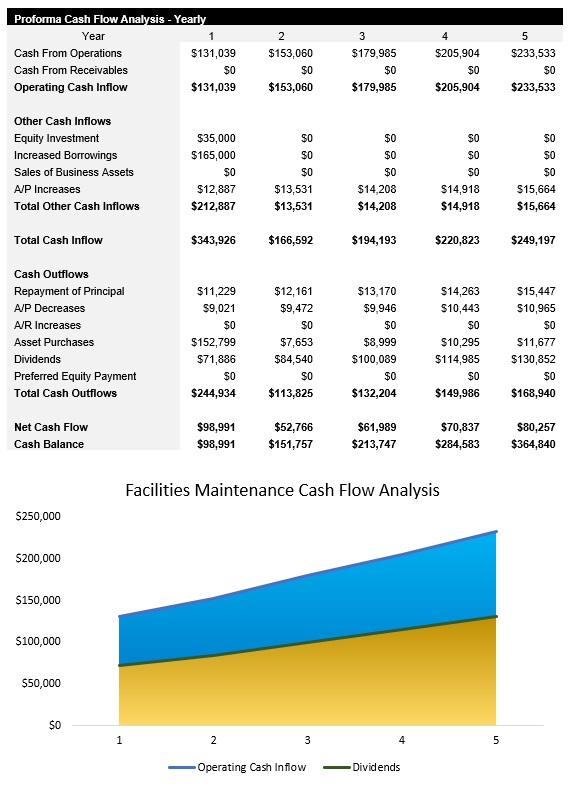
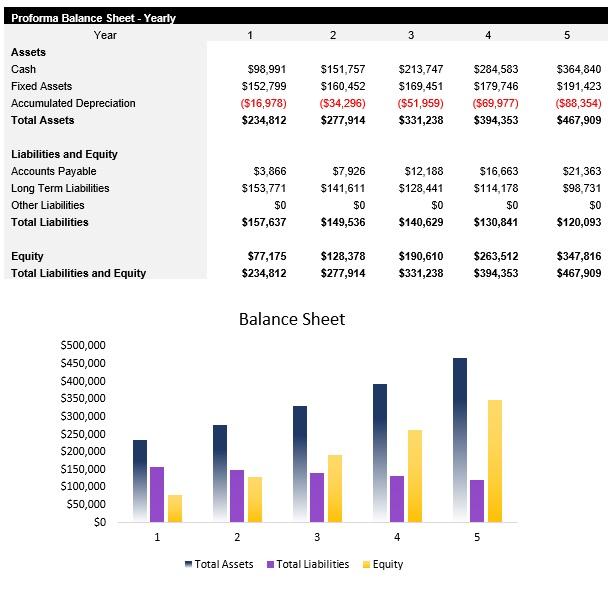
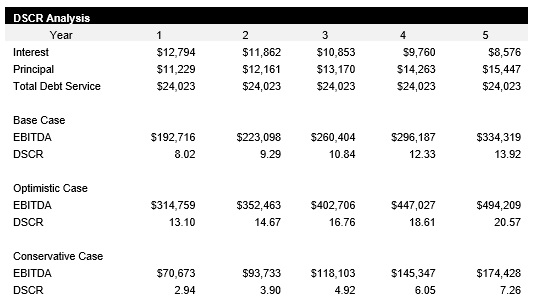
Using this information, within develop the facilities management revenue profile. This allows us to then seamlessly create a profit and loss statement which leads into the cash flow analysis and balance sheet. Additional tables that we include within our business plans are a common size income statement, breakeven analysis, facilities management business ratios profile, DSCR analysis, as well examining unit economics. These tables are very important as they showcase the potential viability of the business within its target market area.
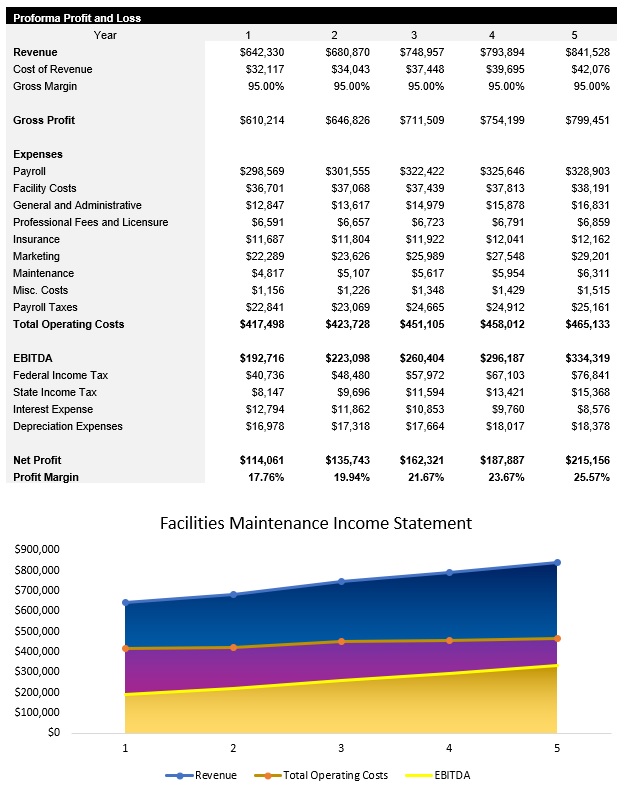
Once the financial model is finalized, we then move into developing the facilities management marketing plan. As these companies are not consumer facing, a heavy focus is placed on conducting direct outreach with owners of commercial/industrial properties. This includes the development of extensive sales brochures that showcase the wide range of capabilities that are offered by the company. Beyond direct outreach, which is the most effective way of onboarding clients through contractual relationships, we also discuss the extensive use of online marketing strategies. As many people initially find a potential service provider through the internet, it is extremely important to have a wide-ranging online presence. This includes a proprietary website that undergoes regional search engine authorization while also listing the business among numerous online directories which contributes to the efficacy of this type of marketing. We also include a discussion regarding the use of PPC in order to immediately drive traffic to the website. Beyond these online marketing strategies, we also integrate the use of print advertisements in publications that are geared towards the owners of commercial and industrial properties as well as enterprises that operate within these types of facilities.
We then move into the facilities management operations plan. In this section, we discuss the scope of services that are offered by the company including general facilities management, repairs, maintenance, and supervising third-party contractors were needed. This chapter further extends discussing human resource resources matters, including employee scheduling, compensation of employees, and contingency plans in the event that there is an incident at a client’s location.
Once these primary chapters are finalized, but then move into the secondary work of the facilities management business plan. This includes a SWOT analysis which outlines the facilities management enterprises’ strengths, weaknesses, opportunities, and threats. As relates to strengths, facilities management companies are able to produce recurring income, which allows them to have stability of profit while also providing opportunities for significant growth. For weaknesses, these businesses do have high barriers to entry given the scope of services that they render at large scale properties. A significant amount of capital is typically spent on marketing in order to onboard an initial client base. For opportunities, this can be done quite simply by hiring additional personnel that can provide facilities management services at a client’s location. There is also the opportunity to enter other geographic markets. For threats, this is primarily due to competitive issues given that this is a large-scale industry. Economic recessions can impact the revenue of a facilities management company in the event that a client no longer can remain in business due to economic circumstances.
We also develop a risk analysis section which addresses matters related to the pre-launch of the business as well as things that may occur during the course of normal business operation. This is broken down into development risk, marketing risk, management risk, exit risk, and valuation risk.
Finally, we turn our attention to the facilities management executive summary. Here, we outline the entire capabilities of the business, while also discussing how the enterprise will launch operations. The name of the owner, location information, use of funds information, and related content is included in this chapter.