
Writing a food truck business plan is a complex undertaking as unlike a brick-and-mortar restaurant, the mobile-driven issues of these businesses needs to be addressed. Most importantly, when we develop a business plan for a food truck, we focus very heavily on the size of the market and the distance in which the operator will be willing to travel in order to provide service. Beyond operating the business on a day-to-day basis through predefined routes throughout the targeted city, we also thoroughly discuss the attendance of the business at major sporting events, venues, concerts, as well as other large-scale gatherings that allow food trucks to be present. There are numerous ways that a food truck operator can capitalize on their operations. Beyond directly providing food service to the general public, we also focus is very heavily on establishing ongoing relationships with event planners that can call on the food truck operator to provide service at their client’s event locations. In many instances, this is a highly profitable aspect of operating a mobile food service business.
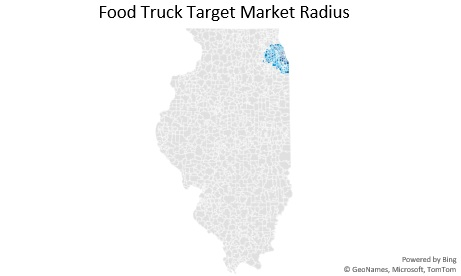
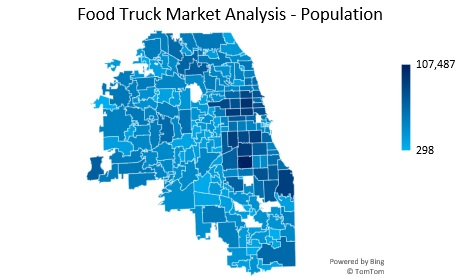
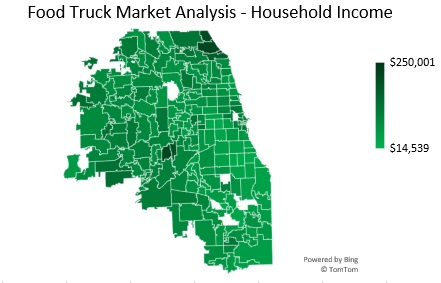
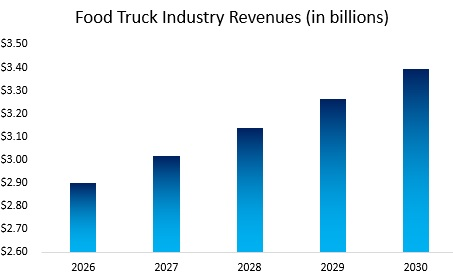
The market analysis further extends to the industry as a whole. This includes discussing ongoing trends regarding the food truck and mobile food service industry. Over the past 20 years, these businesses have become very highly popular among smaller scale food focused entrepreneurs given their relatively low cost as well as their low risk. Unlike a restaurant, a mobile food service business is able to effectively relocate to more population dense areas on an ongoing basis. This is one of the primary reasons that funding sources like mobile food businesses as a result of the far lower operating risks. As of this year, there are currently 48,000 companies that own and operate one or more food truck related enterprises. These businesses accurately produce about $3 billion of revenue. It should be noted that a significant portion of this income is generated from catering focused engagements.
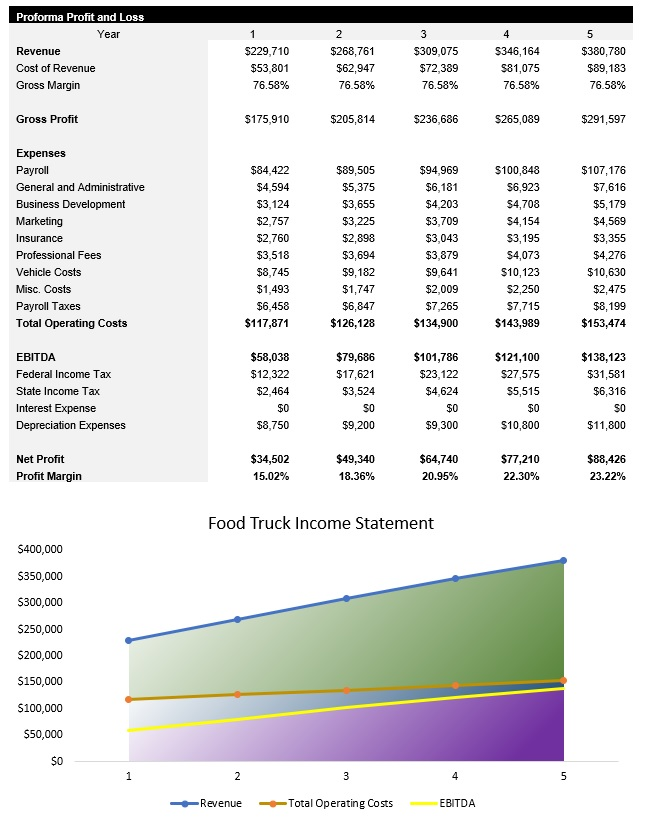
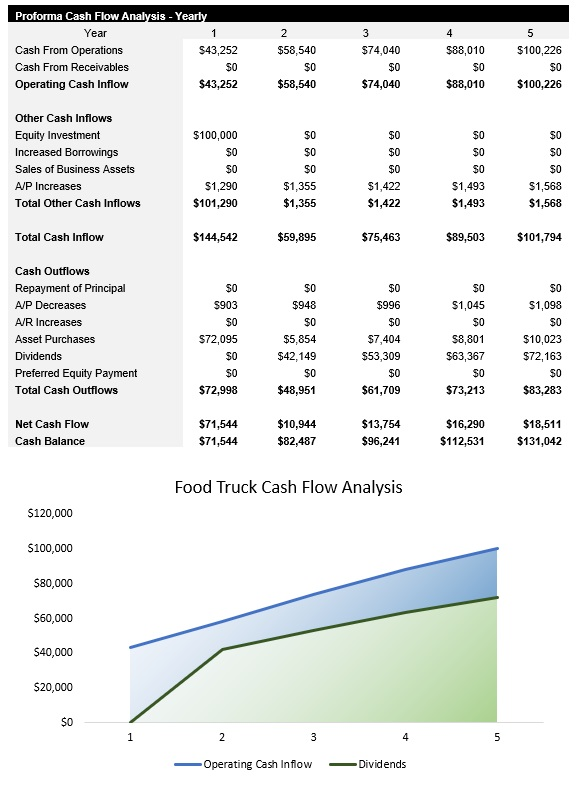
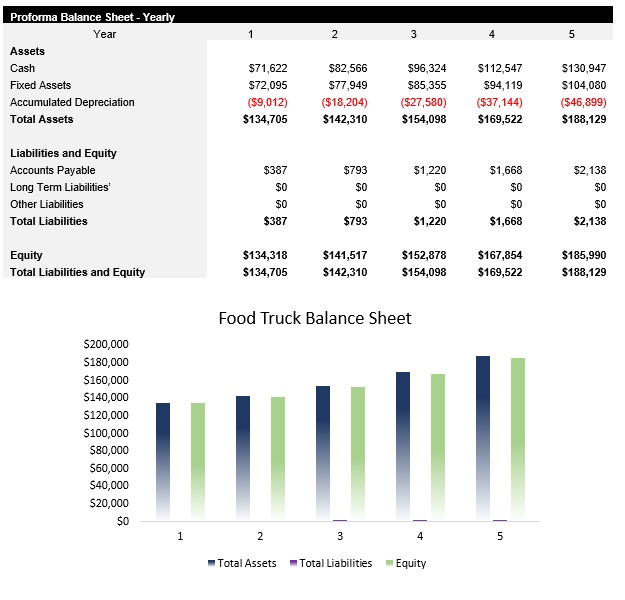
Once the market analysis is completed, we then focus on developing the financial model. Specific for a food truck we include a profit and law statement, cash flow analysis, balance sheet, common size income statement, breakeven analysis, and business ratios page. Depending on the type of capital that is being sought we then include a proforma valuation or DSCR analysis. One of the most important things that we also include in the food truck income statement is the ongoing cost related to the maintenance of the truck. In many cases, we have seen many entrepreneurs underestimate the ongoing cost related to fuel as well as maintaining the trucks operational status. Given that fuel is a major component of these operations, we also include a sensitivity analysis to show different scenarios based on potential increases of energy pricing. Below is an overview of the financial tables that we include any food truck business plan:
Once this part of the process is complete, we then focus on developing a marketing plan specific for the food truck. Most importantly, these businesses benefit from the highly visually engaging signage that is fixed to the truck. Beyond the mobile nature of the type of business, we also thoroughly discussed the use of multiple online sales platforms in order to create online visibility and brand recognition. For a food truck that is going to operate throughout the course of the week, we discuss the use of GPS linked technologies to the food trucks website so that the business can be quickly found when someone visits the platform. We also thoroughly discuss the use of social media engagement in order to create significant brand of visibility which can lead to catering engagements. The marketing messages are specific for the types of cuisine that are offered on a mobile service basis.
After these primary chapters are completed, we then move onto the operating section of the business. It includes a discussion of the types of cuisine that are provided, signature dishes, as well as the general day-to-day operations of the business. Here we also discussed the use of a commissary kitchen if it is required by the food truck operator.
Now that the a primary chapters of the business plan are completed, we now focus our efforts towards the secondary chapters including the risk analysis as well as the SWOT analysis. These additional chapters provide a greater degree of insight into the food trucks operations.
Finally, we develop the food truck executive summary. In all business plans and pitch decks that we create, we always leave this aspect of the work to the very end. This is primarily due to the fact that it serves as a deep overview of the operations, including providing a snapshot of the anticipated financial results during the first five years of operation. This section of business plan also discusses the methods in which the food truck operator intends to grow their business over the five-year period.