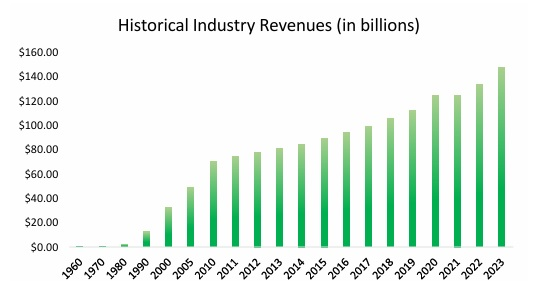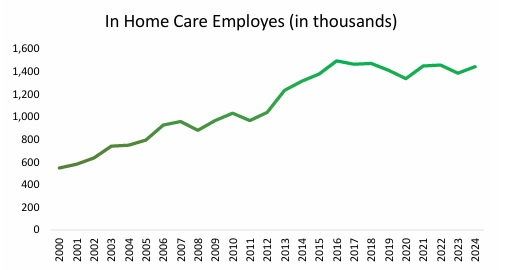
Starting a non-medical in-home care agency can be a highly lucrative opportunity. As of this year, millions of people from the baby boomer generation are entering their later years. According to the US government, nearly 60% of people over the age of 65 will require some form of in-home care in the coming years. This presents an enormous market opportunity for entrepreneurs that are seeking to develop a business that provides services to these individuals. Many in home care agencies also provide services specific for the needs of individuals that have disabilities. It should be immediately noted that the requisite licensure needed to establish a non-medical care business is far more straightforward than that of their skilled care counterpart. As the services that are being provided do not constitute medical services, these businesses can be quickly established within any market.
The costs associated with establishing a non-medical in-home care agency are relatively low. Primarily, a substantial amount of working capital is required in order to hire staff that will provide services to the business’ clients. Beyond having this capital on hand for payroll purposes, many non-medical in-home care businesses require a substantial marketing campaign in order to create brand name visibility. It should be noted that while this is a competitive industry, the demand for in home care services currently exceeds the market supply. As such, it should be relatively easy and straightforward to establish an initial client base once operations commence. In regards to the startup costs, an investment of $50,000 to $100,000 is typically required in order to establish operations. However, these businesses can be established for less if the founder is going to initially operate as an in-home care provider. This allows for immediate revenue generation while also allowing a portion of this revenue to be allocated towards greater marketing efforts in order to onboard a greater number of clients.
In furtherance of financing, these businesses are able to secure business loans and working capital lines of credit in order to establish their operations. Given the economic stability of these businesses, many banks and financial institutions are willing to extend credit and provide the necessary capital to startup businesses. This is primarily due to the fact that in home care agencies generate highly recurring streams of revenue from their operations. Although they are not able to directly bill private insurance or publicly funded health care systems, the substantial contribution margins from services rendered allows these businesses to take on financial obligations that will allow them to expand.
As it relates to licensure, these businesses typically require a home care agency or home care organization license which is typically acquired through any state’s health or social services department. Again, given the non-medical nature of these businesses this licensure process is relatively straightforward. Many entrepreneurs that are entering this market will typically hire an attorney to help them navigate the complex regulatory process while during compliance at all times.
As it relates to marketing, many non-medical in-home care agencies focus heavily on receiving referrals from a number of medical and healthcare professionals. In some instances, social workers have frequently worked with individuals that are over the age of 65 can also provide referrals given that they have clients that need ongoing care. Additionally, physicians and psychologists are also a strong referral source given that these individuals often work with patients that are over the age of 65 and require specialized degree of non-medical care.
One of the nice things about offering a non-medical in-home care agency is that these businesses can be expanded to include skilled services in the future. Although additional licensure is required to operate in this capacity, an entrepreneur that has established a business in this field easily retain licensed practical nurses as well as registered nurses that can render skilled care. These fees are substantially higher than that of their non-medical counterpart, and per hour fees can range from $50 to $80 depending on the market in which the business is operated. Additionally, among individuals that initially began as non-medical clients – they can be transitioned into skilled care should their condition change and require these types of specialized services. Many in-home care agencies also maintain relationships with therapists such as speech therapists, physical therapists, and occupational therapists so that they are able to render specialized therapies when needed. Again, this does require that specialized licensure is in place but this can be a major high margin revenue center as these individuals operate as independent contractors.
For marketing, non-medical in-home care agencies typically focus heavily on online marketing strategies. This includes search engine optimization as well as targeted social media marketing specific for the area in which the business is operated. These efforts can be conducted in house through the development of a substantial amount of content specific for the regional market or in tandem with a third-party search engine optimization firm that can ensure that when searches for non-medical home care agencies are conducted – the website will appear frequently within the body of the search results. At the onset of operations, many of these businesses will use pay per click marketing in order to ensure that their website is on the first page of the search especially as it relates to any specific regional market. Although this form of advertising can be expensive, it is a highly effective means of marketing given that the business is targeting people that have specifically conducted searches for in home care. As it further relates to search engine optimization, it is imperative that a non-medical in-home care agency continually create content that addresses issues that are faced by families that have an older loved one. Common topics can include the costs related to in home care, common issues that are faced by families that have an aging loved one, and related matters.
These businesses are highly scalable. As new clients are onboarded, additional staff can be hired in order to provide a greater degree of care to a large number of individuals This allows for a substantial degree of flexibility, as it relates to controlling the underlying payroll costs. As noted earlier, skilled care workers can easily be integrated into the ecosystem once the proper licensure is acquired. Registered nurses as well as licensed practical nurses can be retained.
It should be noted that recruitment costs can be somewhat high for a non-medical home care business. One of the reasons why this can be an expensive endeavor in regards to this matter is that demand currently outpaces supply, and home health care agencies need to carefully vet any potential person that is going be working with a client. One of the ways that this can be addressed is that recruitment can occur directly from community colleges especially among individuals that are preparing for a position in the field of health care. Many of these people often seek ways to gain experience so that they can enter more comprehensive programs especially as it relates to skilled care.
Overall, the industry outlook is extremely positive. There is a continued and growing demand for non-medical care especially as many families struggle to make time to provide proper oversight of their older loved ones. Additionally, the demographics of the country are changing. By 2034, there will be more people over the age of 65 than the number of people that are under the age of 18. This will create additional strain on the system which will necessitate that a greater number of non-medical in-home care aides. Any entrepreneur that is seeking to enter this field will find remarkable opportunities especially in population dense and wealthy markets.