
Writing a business plan specific for an organic farm is a complex process given that these businesses often provide a wide range of crops as well as livestock products from their expansive locations. It is no secret that organic farming has a number of complex inventory inputs and various crops achieve different pricing as well as contribution margins. Over the past 20 years, we have taken the approach of using numerous models that showcase the anticipated profits on a per acre basis, depending on the type of crops that are being produced.
Whenever we develop a business plan specific foreign or organic farm, we always take a market research approach to create our assumptions. Unlike a retail store or service based business, organic farms tend to sell their crops into the open market. They are also able to produce significant income from selling farm shares while also having numerous other revenue streams such as farm tours and on-site events. As such, we first take a look at the population density and population size when examining the market analytics specific for an organic farm. We also includes an overview of household income given at upper middle and upper income families are more likely to purchased farm shares.
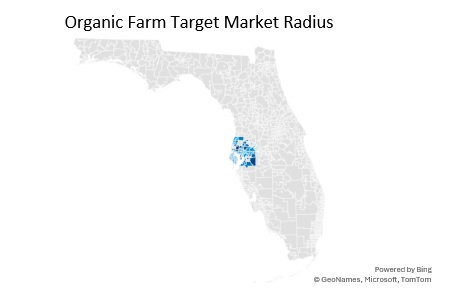
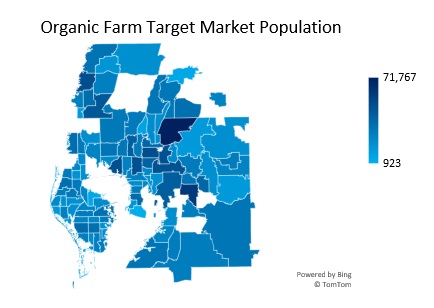
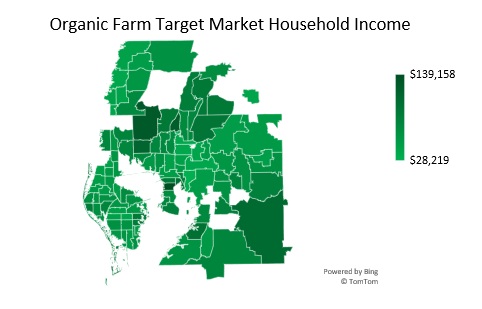
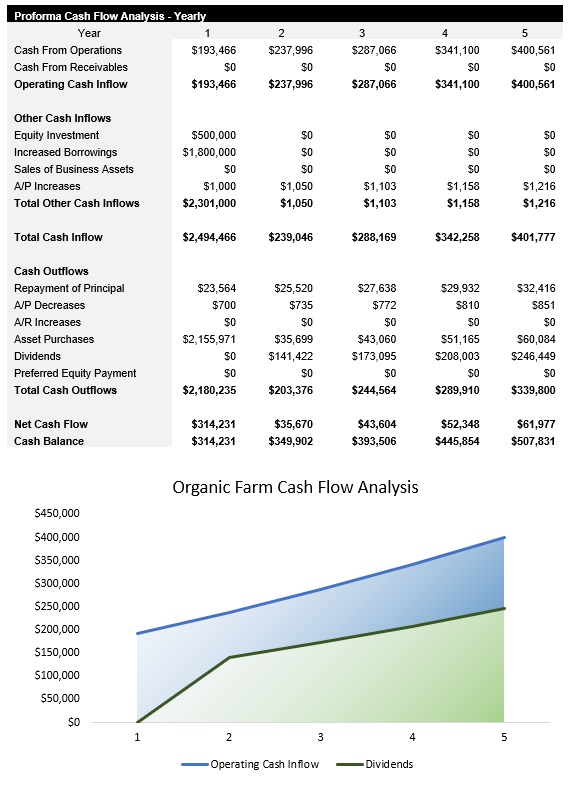
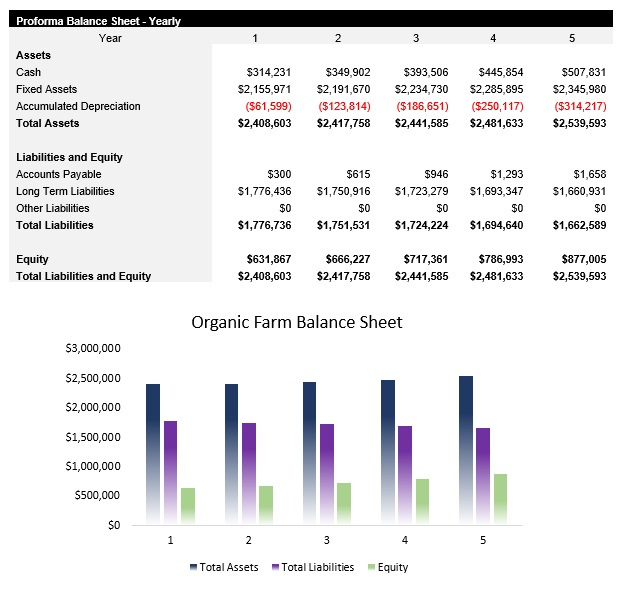
Once this part of the analysis is completed, we then move into the development of the organic farm financial plan. As noted above, we use several different types of models in order to showcase the per acre yields in regards to creating the revenue profile. Among organic farms that also deal in livestock, we address this as a separate line of them within the revenue profile. From here, we develop the profit and loss statement, cash flow analysis, breakeven analysis, balance sheet, as well as business ratios that are applicable to the organic farming industry. It should be noted that we do all of our modeling over a five-year timeframe.
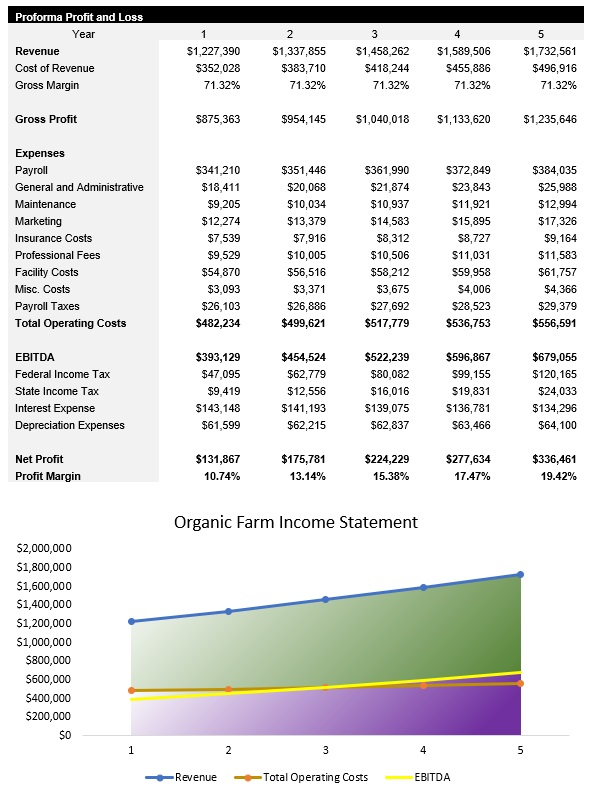
We then move into the organic farm marketing plan. This is relatively straightforward given that the vast majority of revenue is produced from the sales of crops into the open market as well as farm shares. As it relates to open marketing operations, we discuss developing ongoing relationships with brokers and other agents that acquire inventory inputs from these types of businesses. We also discussed direct outreach with food service businesses that want a source product on a local basis. In regards to promoting farm share, we take an online focused approach that encompasses search engine optimization, targeted social media, word-of-mouth referrals, as well as community involvement. Most organic farms are heavily involved in the communities in which they operate.
Once this is completed, we then developed the organic farm operations plan. The focus of this chapter is to showcase the types of crops being produced, livestock raised, as well as the general operations of the business. This includes an in-depth analysis regarding seasonality in regards to having the human resources available to address the needs of a farm during peak seasons. It also includes an overview of the anticipated pricing of each crop that is raised at the organic farm.
We then move into the secondary chapters of the business plan, which spans a risk analysis as well as a SWOT analysis. As it relates to the strengths of an organic farm, these businesses can thrive in areas that are reasonably wealthy. They are able to produce highly predict income from the ongoing sale of farm shares. As it relates to weaknesses, these businesses do have extremely high operating costs and the pricing for crops are subject to market fluctuations. For opportunities, the primary means in which these businesses expand is to acquire additional acreage to plant a greater number of crops. For threats, extremely severe economic recessions can hamper the sales of organic farm shares. Additionally, shocks to input pricing can put downward pressure on farm income.
Finally, we address the organic farm executive summary. This chapter provides a full overview of the business, where it is to be located, information about the founder, the types of crops raised, the startup budget, as well as providing a snapshot of the anticipated, revenue and profit over a five-year timeframe.