1.0 Executive Summary
The purpose of this business plan is to secure $3 million for the development of a peanut farm based in Arkansas. Deutsch Agricultural Group LLC (“the Company”) was founded this year by Matthew Deutsch with the intention of providing cost-effective production of peanuts which will be sold at market rate. Full scale revenue generating operations are expected to commence in the first quarter of next year once the funding has been secured and the land has been acquired.
Operations
Through its 100-acre farm in Arkansas, the Company will produce peanuts. The Company will directly employed staff to have the business has full control over every aspect of the peanut farming process.
To complement these operations, the Company will have onsite processing which will produce peanut oil and hulls that will be converted to livestock feed. Peanut oil is an incredibly important part of numerous types of cuisine, and Management sees a substantial opportunity to directly produce this type of oil at the Company’s facilities. This will drastically boost revenues in the coming years.
The operations of peanut farm business we further discussed in the third section of this document.
The Financing
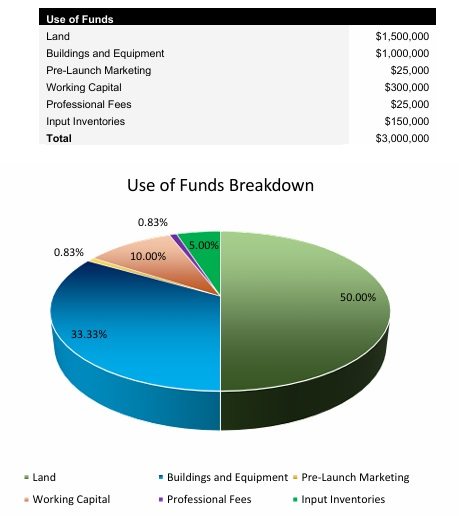
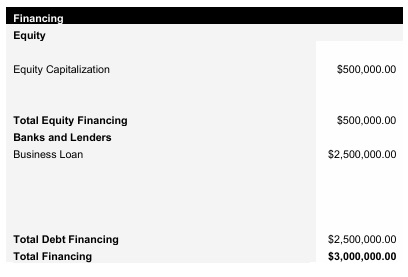
As noted above, the Company is currently seeking a total of $3 million a capital to establish operations. Of this funding, $500,000 will come from private investors to be used as a down payment on the land and equipment.
As this is a commodity driven business, the Company could easily acquire a revolving credit facility to support its underlying operations. The business will have substantial inventories of raw peanuts, peanut oil, and peanut hulls that can be quickly sold into the market.
The Future
Over the next five years, the Company will make ongoing reinvestment into its operations so that the business is able to further improve its economies of scale as a relates to the vertical integration shown in this document. There is also a possibility that the Company will acquire additional parcel of land within Arkansas or other states that are amenable for the farming of peanuts.
Revenue Forecasts
2.0 The Financing
2.1 Funds Required
The funds discussed in the executive summary will be allocated towards the following:
2.2 Management and Investor Equity
This matter will be further discussed with a potential investor.
2.3 Exit Strategies
Given the vertically integrated nature of the Company’s peanut farming, peanut oil production, and livestock feed production – there would be a significant demand for this enterprise. Historically, peanut farms and entities typically have a sales premium of three times. This event is not expected to occur for a significant period of time as Matthew Deutsch intends to aggressively expand the operations of the business in the coming years.
3.0 Operations
As discussed in the executive summary, the Company will be actively involved with the production of peanuts. This will be complemented by the on-site production of peanut oil as well as converting peanut hulls into livestock feed.
As it relates to peanut oil, it is expected that the best major majority of this inventory will be used for culinary purposes. However, this type of oil is extremely important for the production of bio fuel. There will be numerous ways in which the Company will be able to divest both its inventories of raw peanuts as well as peanut byproducts.
The Company’s farm will be developed with ecologically and environmentally sustainable practices in mind. Most importantly, the Company will use alternative energy structures in order to produce in enough electricity for the processing equipment. This will drastically reduce the cost associated with operating a facility while contributing to a substantially higher profit margin.
The Company will directly employ all staff members, so that full control can be maintained over the course of their work. Although peanut farming has a very definitive season, the business will be able to conduct its peanut oil processing and livestock feed production operations on a year-round basis. The Company will source inventories of peanuts from other farmers within the area for these purposes.
4.0 Overview of the Organization
4.1 Registered Name
Deutsch Agricultural Group LLC. The Company is registered as a limited liability Company in the State of Arkansas.
4.2 Commencement of Operations
Full scale revenue generating operations will commence in the first quarter of next year.
4.3 Mission Statement
To cost effectively produce peanuts, peanut oil, as well as profitable byproducts.
4.4 Vision Statement
To become the model farm for vertically integrated farming and production of peanuts and peanut related products.
4.5 Organizational Objectives
• Properly establish the Company’s farming and production operations once the capital has been secured.
• Implement best standards as a relates to all facets of operation.
• Leverage numerous technology suites so that the business can manage each aspect of its operation on streamlined basis.
• Conduct extensive direct outreach with entities that have ongoing peanut product needs.
• Adhere to all regulatory frameworks regarding the safety of the Company’s operations.
• Frequently attend tradeshows and expositions specific for the agricultural industry of this will increase brand visibility
• Maintain substantial relationships with wholesalers that will acquire inventories from the business directly.
5.0 Market and Industry Analysis
5.1 External Environmental Analysis
This section of the peanut business plan will focus on the current economic climate, the industry, a demographic profile of buyers, and the ongoing competition that the business will face.
It is well known that inflation has taken center stage as a primary economic issue facing the United States. Due to changing trade policies, as well as adjustments in fiscal policy, there has been a period of higher-than-expected inflation. The Federal Reserve is implementing appropriate measures to reduce the inflation rate while ensuring that unemployment remains as low as possible.
There may be some challenges in regards to the pricing of peanuts as a result of the changing trade policies. However, as this is going to be a newly established peanut enterprise, the business will be able to make appropriate adjustments to its operations to ensure profitability. As has been one of the themes throughout this document, the business is operating in a vertically integrated capacity, which includes both farming as well as peanut oil production.
5.2 Industry Analysis
As of this year, the domestic demand for peanuts exceeds $1.6 billion. The industry is poised to achieve a compounded annual growth rate of 4%.
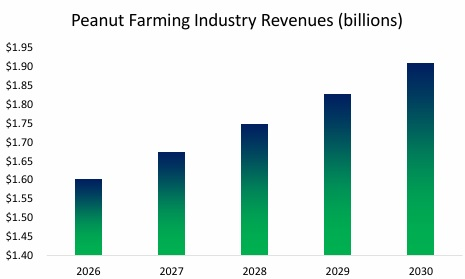
This is a mature industry, and the future growth rate will be similar to that of the economy as a whole.
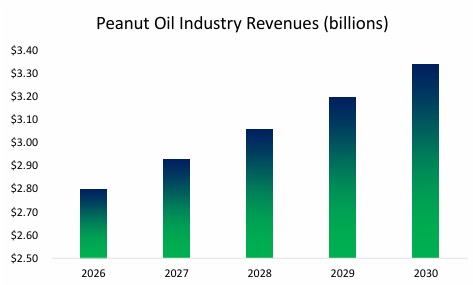
As it relates to peanut oil, domestic demand is currently a $2.8 billion industry. The increase in demand is similar to the growth rate of the peanut farming industry.
5.3 Customer Profile
The demographics of entities that will acquire a wholesale inventory of peanuts and peanut byproducts from the Company is enormous. The demand for these types of products spans food producers, restaurants, biofuel producers, as well as livestock enterprises. As such, the Company will have an exceptionally large market for making sales of its peanut products.
5.4 Competitive Analysis
The production is peanuts is very much a commodity driven enterprise that is dictated by free market pricing. There are several thousands of producers of peanuts and related products within the United States. As such, it is difficult to ascertain the ongoing competition at the business will face moving forward. However, Deutsch Agricultural Group will maintain a significant competitive advantage given the vertically integrated nature of its operations.
6.0 Key Strategic Issues
6.1 Sustainable Operations
Deutsch Agricultural Group will have sustainable operations as a result of the following:
• It is this is operating in a vertical capacity by farming and conducting processing on site.
• Business will have ongoing access to capital as this is a commodity driven business.
• The Company can scale operations ongoing acquisition of additional parcels land.
• Limited competition among peanut enterprises that operate in a vertically integrated capacity
6.2 Basis of Growth
The Company will expand via the following methods:
• Continued expansion of a Company of byproduct production operations as this can be conducted on a year-round basis.
• Acquisition of additional land that is appropriate for the farming of peanuts.
• Expansion of operations to include other types of agricultural products.
7.0 Marketing Plan
7.1 Marketing Objectives
• Conduct extensive direct outreach with entities that will acquire a wholesale inventory on an ongoing basis.
• Established ongoing relationships with livestock enterprises that will purchase peanut hulls.
• Frequently attend industry focused trade shows in order to drive interest in the business.
7.2 Revenue Forecasts
7.3 Revenue Assumptions
Year 1
• The business will begin farming and peanut oil production operations.
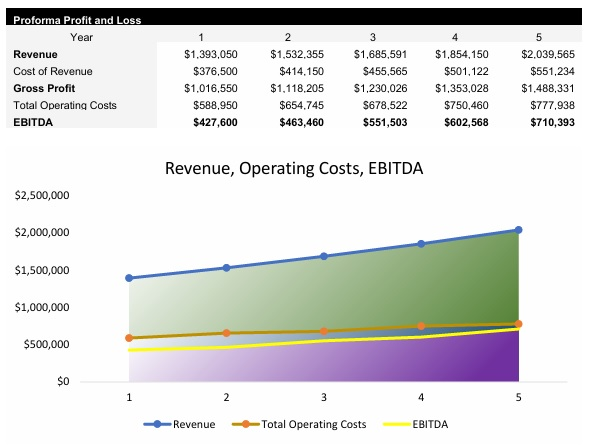
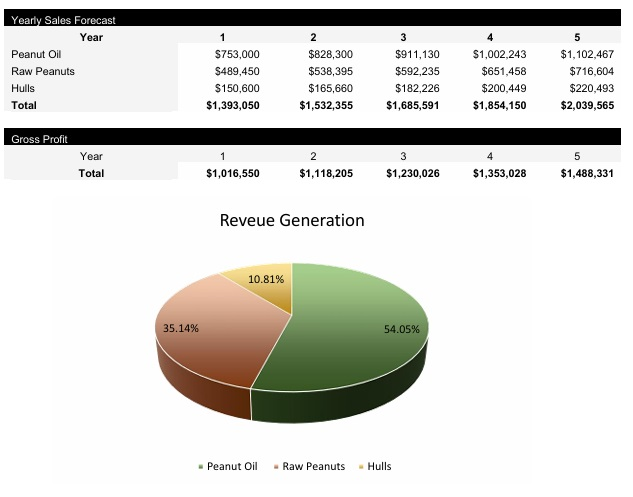
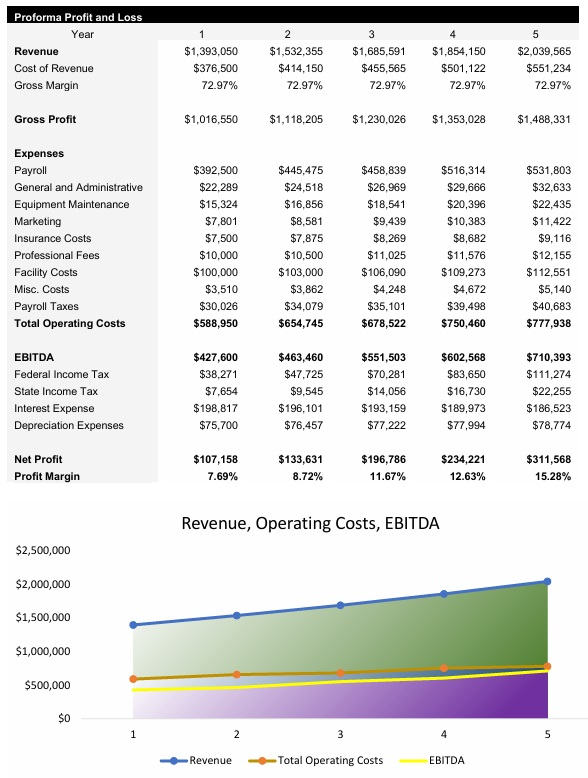
• Revenue will reach $1.39 million in Year 1.
Year 2
• The business will ramp up its peanut oil production operations while scaling raw peanut farming.
• Revenue will be $1.5 million in Year 2.
Years 3-5
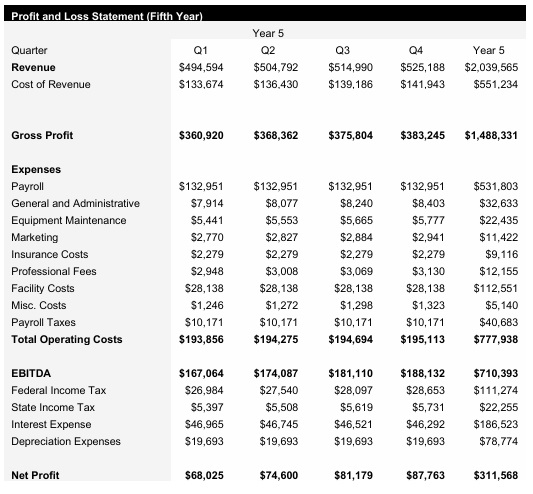
• By the fifth year of operation, top line income will reach $2 million.
• Gross profits will reach $1.4 million. .
7.4 Marketing Strategies
The ongoing marketing required by Deutsch Agricultural Group will be relatively minimal. This is primarily due to the fact that the business is not providing its inventory is the general public, but rather a wide range of wholesalers and commodities dealers of United States. As such, the principal method of driving business will be to conduct direct outreach with these entities so that the business can make readily available in inventory of peanuts available for sale.
The Company will frequently attend industry related trade shows in order to further increased brand visibility. This will be complemented through the efforts of the Company’s sales staff that will foster ongoing wholesale relationships with numerous entities throughout the United States.
From time to time, the Company email also take out print advertisements in industry publications in order to increase visibility with the intention of creating strategic partnerships, especially as a relates to the sale and distribution of peanut byproducts.
8.0 Organizational Plan
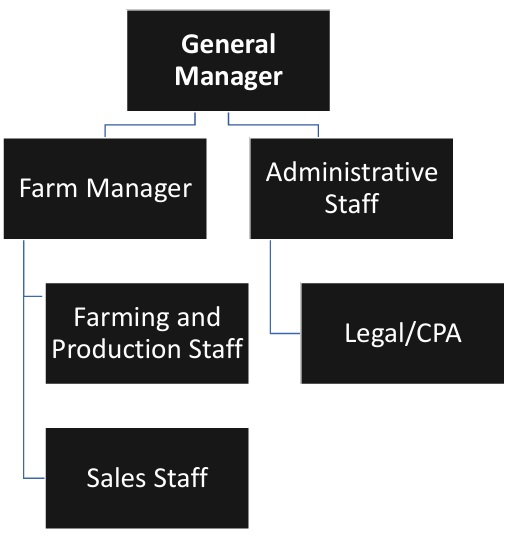
8.1 Organizational Hierarchy
8.2 Personnel Costs
9.0 Financial Plan
9.1 Underlying Assumptions
• The Company will have a compounded annual growth rate of 10%.
• The business will acquire $500,000 equity capital.
• A loan of $2.5 million will be acquired for land and real estate purposes.
9.2 Financial Highlights
• Contribution margins on raw peanuts will be 60%.
• The sale of peanut oil, peanuts, and peanut hulls will produce contribution margin of 70%.
9.3 Sensitivity Analysis
The revenue of the Company is subject to market pricing. The business will use multiple techniques in order to reduce these risks as it produces its agricultural products. As noted earlier, the vertically integrated nature of this would be farm and processing facility will provide a significant competitive advantage.
9.4 Source of Funds
9.5 Financial Proformas
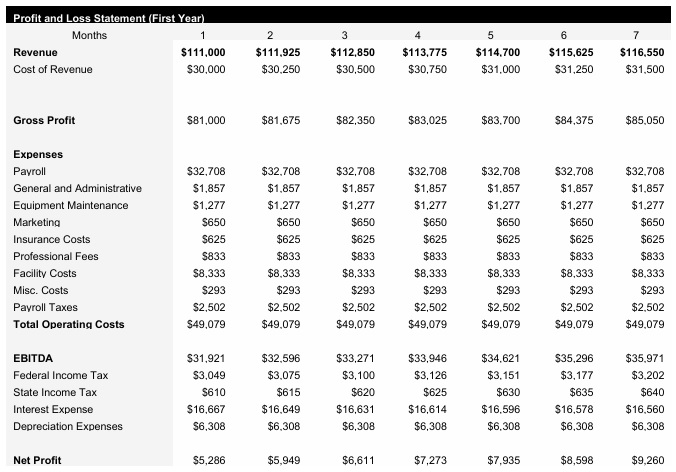
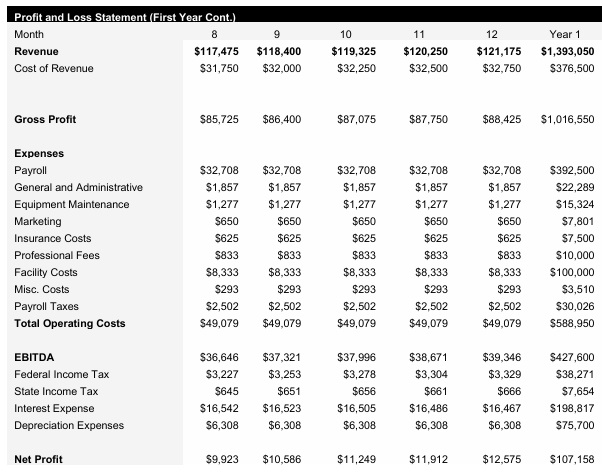
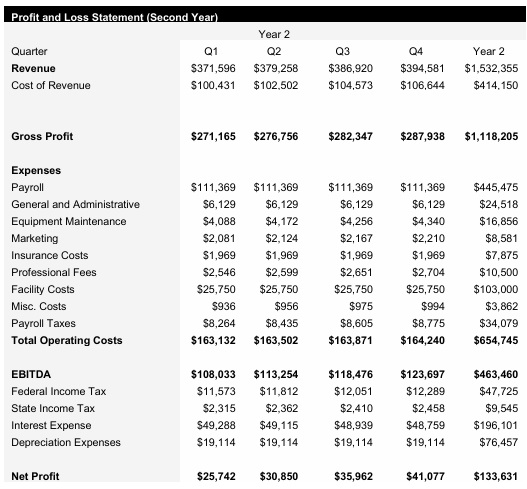
A) Profit and Loss Statement
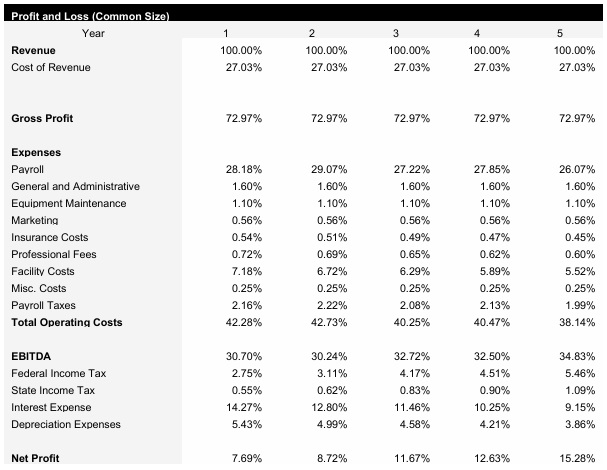
B) Common Size Income Statement
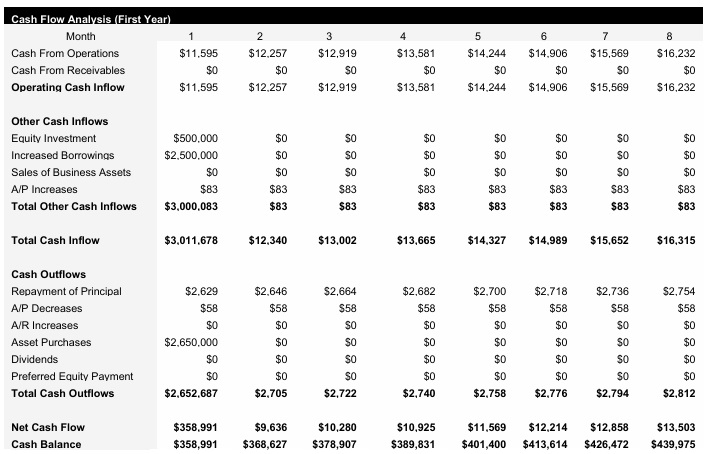
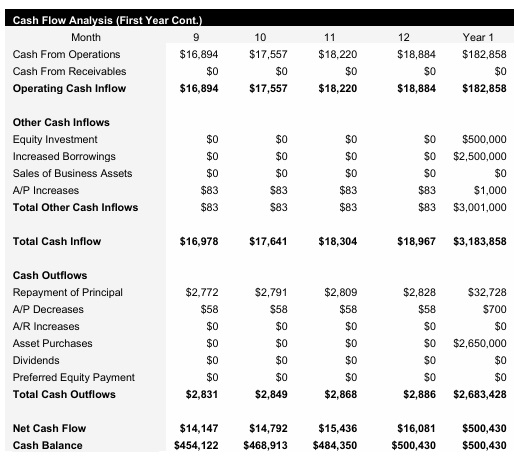
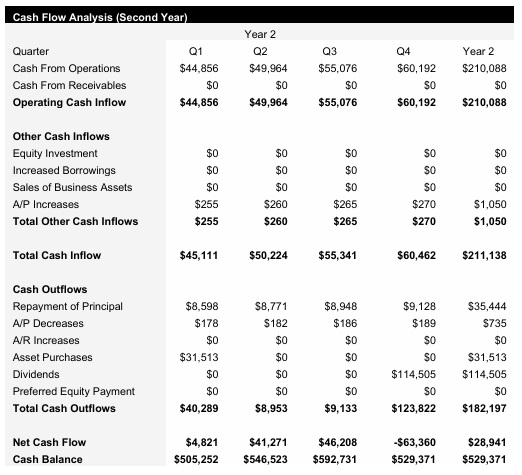
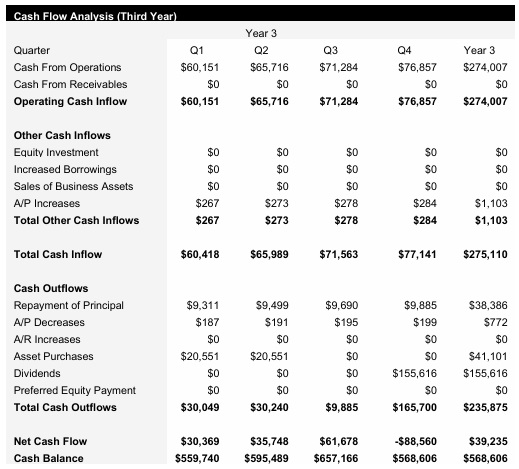
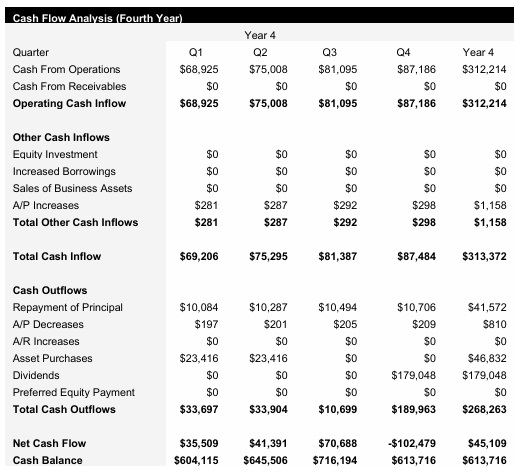
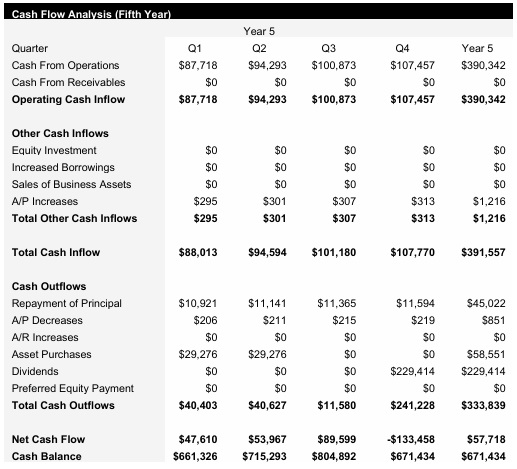
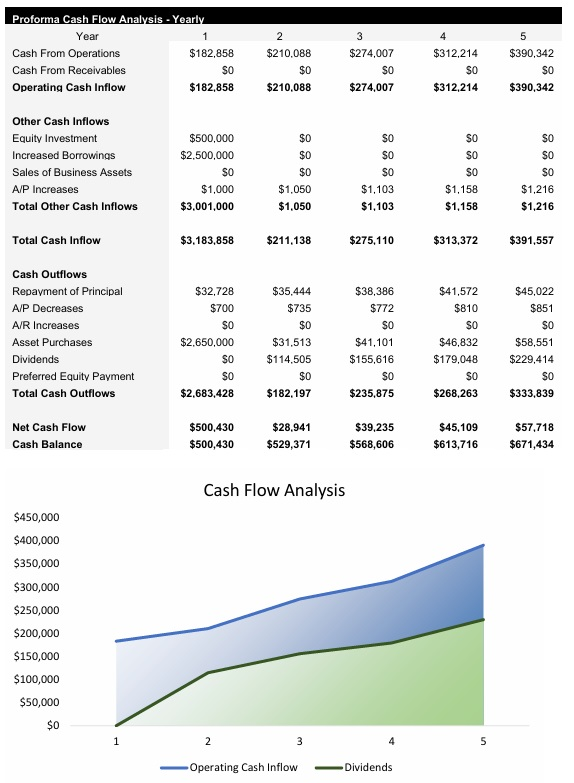
C) Cash Flow Analysis
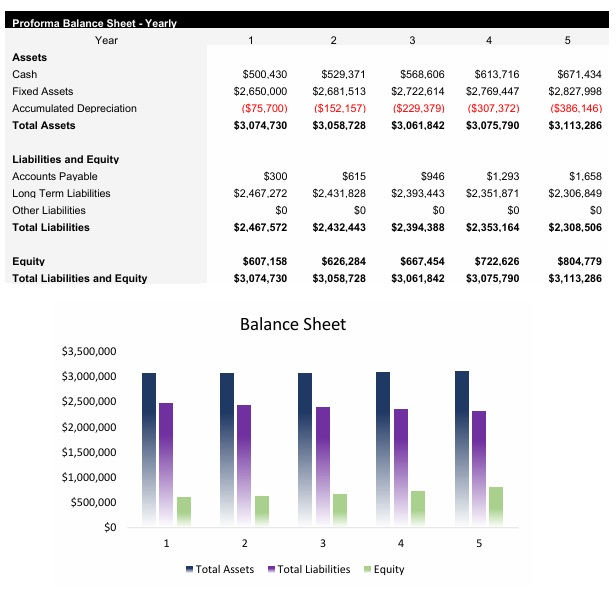
D) Balance Sheet
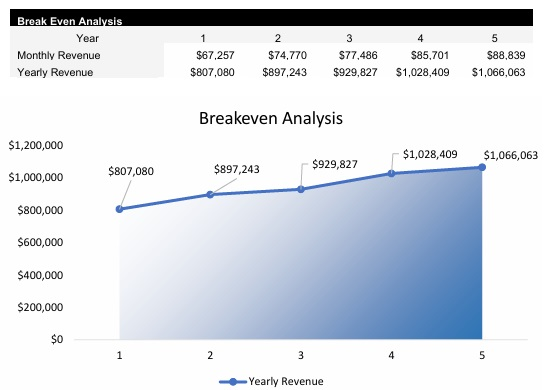
9.6 Breakeven Analysis
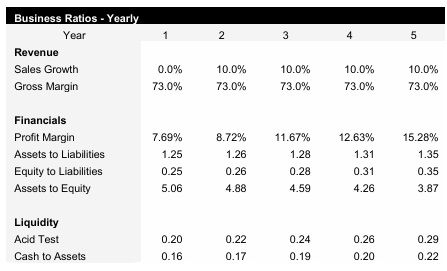
9.7 Business Ratios
SWOT Analysis
Strengths
• Continue to not going to demand for cost-effective access to peanuts as well as peanut products (oil and hulls).
• Vertical integration will improve profitability in the coming years.
• The Company can coordinate acquisition of raw inventory for processing with numerous farms within the Midwestern United States.
Weaknesses
• Substantial operational complexities given them multiple facets of how Deutsch Agricultural Group will conduct business.
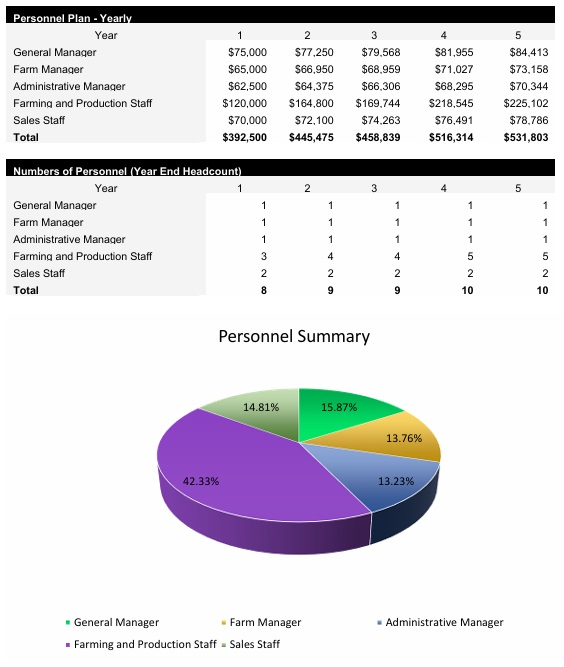
• Moderately high cost related to personnel expenditures.
Opportunities
• Expansion of operations to include additional parcels of farming land.
• Farming and processing of additional agricultural commodities.
• Continued expansion of brand visibility through direct outreach initiatives.
Threats
• Continually changing trade policies could impact operations.
• Inflation could cause the operating cost of the business to increase rapidly.
Risk Analysis
Development Risk – Low
The primary matter that needs to be addressed and securing the $3 million a capital sought in this document. The secondary development risk will come as the business establishes its operations as noted of this document.
Financing Risk – Low
A significant portion of the capital sought in this document will be used specifically for the acquisition of land, real estate, and equipment. The multiple revenue streams that are vertically integrated will reduce these risks.
Marketing Risk – Very Low
As this is not a consumer facing business, the business will be able to take a highly focused approach to its marketing and branding campaigns. This will be principally accomplished through direct outreach, which will be completed by the Company sales staff.
Management Risk – Very Low
Matthew Deutsch is a highly experienced farming entrepreneur who will be able to properly establish the operation of these business profitability
Valuation Risk – Low
The valuation risk is offset by:
• The underlying land in real estate owned by Deutsch Agricultural Group will appreciate in the coming years.
• Vertical integration will provide a substantial degree of economic stability.
• The Company can scale operations as needed.
Exit Risk – Low
As noted earlier, there are no long ranging plans to sell this peanut enterprise to any third-party. A qualified commodities focused and investment bank would be hired to arrange the sales to a third-party.
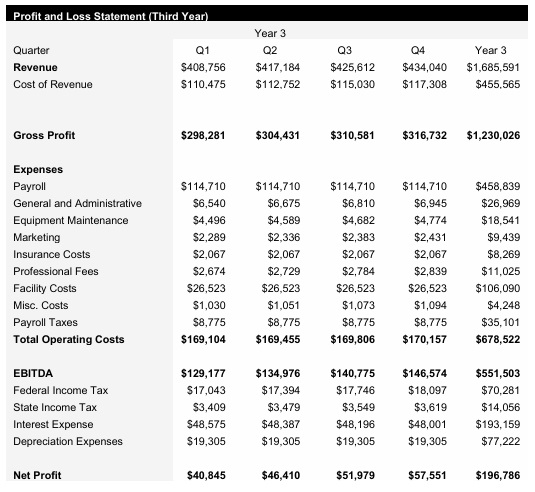
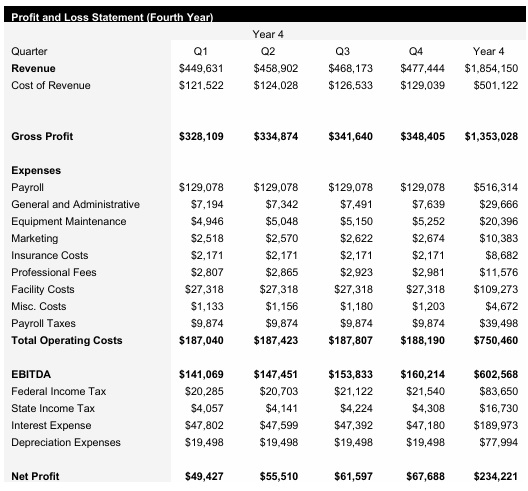
Appendix C – Expanded Profit and Loss Statements
Appendix D – Expanded Cash Flow Analysis