
When we develop a business plan specific for a restaurant, we incorporate numerous processes in order to showcase its economic viability within any given market. One of the more challenging aspects of developing a restaurant business plan is addressing competitive issues. In any city or town, there are always a number of restaurants that are in competition with one other. One of the key focuses of the restaurant business plans that we develop is to develop marketing messages as well as differentiating factors that allows the enterprise to thrive within its respective market. An additional focus of our work is to develop a large-scale pre-launch marketing campaign that ensures that the business will have a significant number of patrons during the grand opening.
The first step in our process is to conduct the necessary market research. As noted above, this is heavily driven by initially completing a competitive analysis so that a determination whether or not the market is oversaturated can be made. From here, we analyze every metric available in regards to the target market including analyzing household income, median home value as a function of wealth in the market, population size, population density, age demographics, as well as regional economic growth. This allows us to make a determination regarding the possibility to thrive in any given economic climate. The extent of our research, not only includes the regional analysis specific for the restaurant, but also for the industry as a whole. This allows us to understand certain trends within the food service industry as well as the overall direction of revenue growth. It is no secret that technology has become a major component of how a restaurant operates given its ability to streamline operations, especially from an inventory management and employee management standpoint. In the coming years, new technologies that will provide predictive analytics that will assist with inventory acquisitions are expected to become more common place.
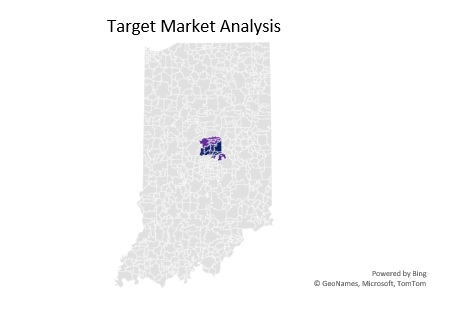
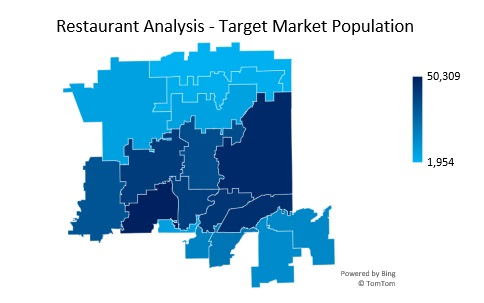
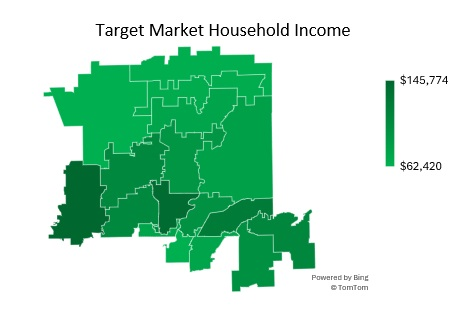
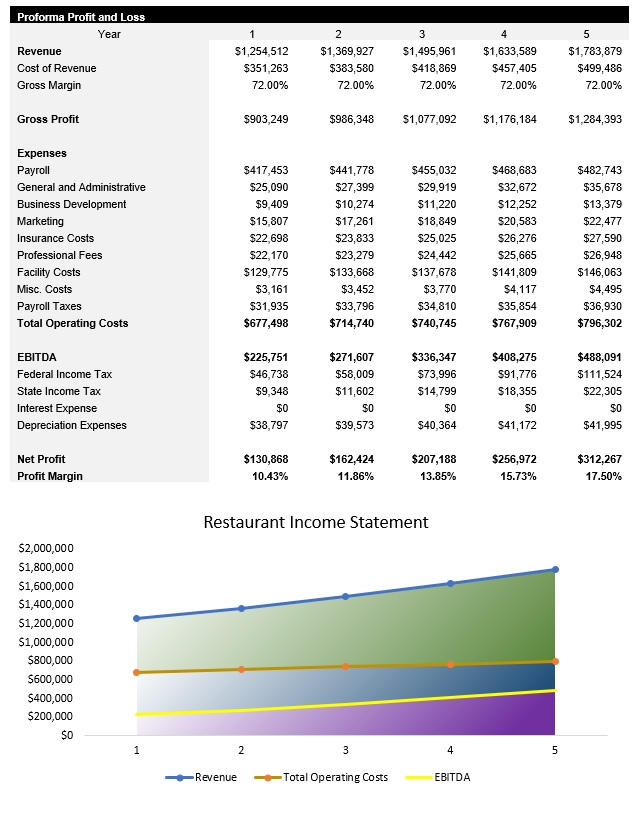
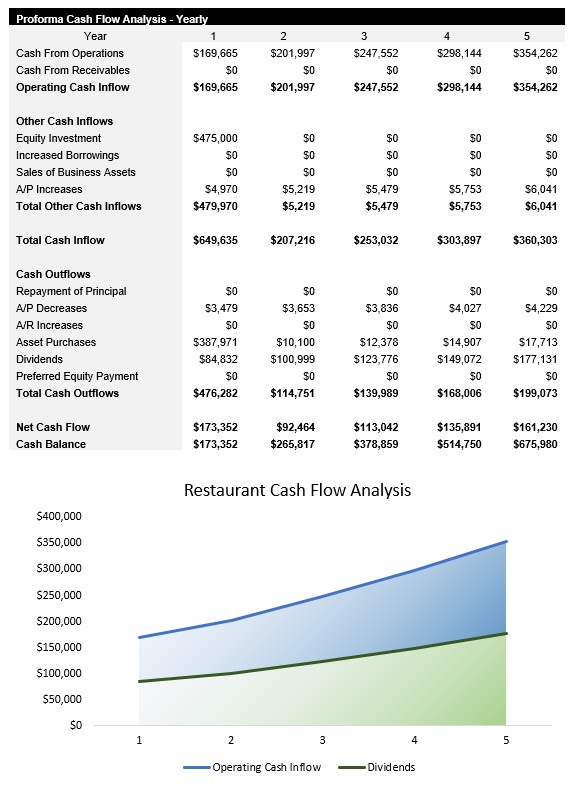
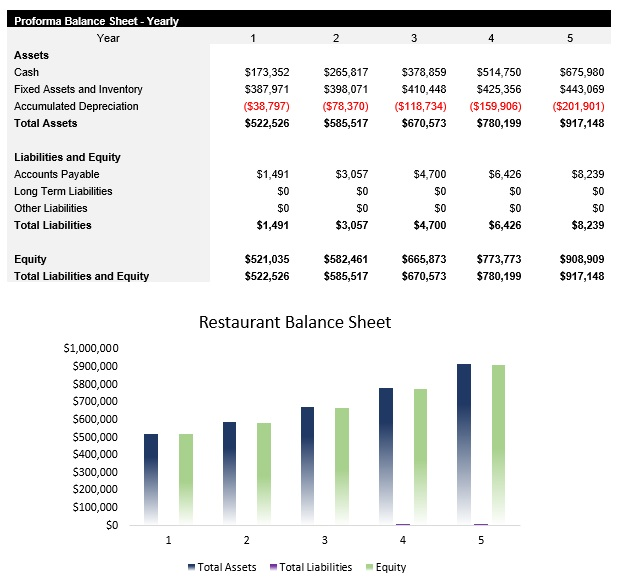
Now that we have the necessary market analysis in hand, we are now able to produce the revenue profile based on the specific type of cuisine that is being provided. Here, we determine the per ticket revenues as well as the anticipated number of customers at the restaurant will receive on a daily basis. We then apply appropriate statistics regarding the cost of revenue. The scope of the restaurant financial plan includes a profit and loss statement, common size income statement, cash flow analysis, balance sheet, breakeven analysis, and restaurant applicable business ratios. We also include a DSCR analysis as well as a return on investment analysis to complement these primary financial statements.
Now we move into the restaurant marketing plan. In my opinion, this is the most important section of the restaurant business plan outside of the foundation through market research and financial modeling. Again, given the level of competition that is experienced by restaurants, it is imperative to have a comprehensive and highly-focused marketing plan in place. The first component of the restaurant marketing plan is discussing the pre-launch marketing. This includes the establishment of the company’s online presence during the development timeframe while also engaging in public relations in order to make individuals aware of the grand opening date. We also include a section regarding the ongoing marketing strategies that will be used throughout the life of the business, including regional search engine optimization, the use of social media ads, direct outreach with community groups, potential for event hosting operations, as well as engaging in charitable activities to further increase brand visibility. As restaurants are very community focused, there are numerous opportunities to advance the visibility of the brand name through this type of engagement.
The fourth part of this process involves the development of the restaurant operating plan. In this section, we discussed the need for human resources, the type of cuisine being offered, hours of operation, use of delivery application suites if this is applicable, as well as procedures and protocols related to the safe handling of food. We also discussed certain regulatory matters that may be pertinent based on the location of the business.
We also provide a SWOT analysis with every restaurant business plan that we develop. As it relates to the strengths of a restaurant, these businesses typically are able to produce highly predictable streams of revenue on a very high-volume basis. Once popular, these businesses are able to further enjoy opportunities for growth. For weaknesses, these businesses have a large number of inputs that need to be acquired on a daily basis. Additionally, many of these inputs are sold at market price, which can fluctuate. For opportunities, restaurants are able to rapidly expand their operations through ongoing marketing expansion as well as a potential development of additional locations. The biggest threat that is faced by a restaurant is a severe economic recession or if a larger competitor establishes a similar facility in the same target market.
As with any enterprise, we also address the risks that are associated with starting a restaurant. This includes pre-launch risk, operational risks, as well as addressing potential issues regarding the economy that could affect the restaurants operations.
Lastly, we developed a restaurant executive summary. We try to structure this as a roadmap and guide that showcases the entirety of the restaurant’s operations over the course of a three-page chapter. Each chapter within the business plan as quickly addressed so that the reader has an understanding of the content as well as any immediately important and pertinent issues. As most people do not read a business plan from front to back, providing an executive summary that serves as a roadmap for the rest of the business plan is typically the most effective way to do this.