
Since the invention of sports, there have been sports bars. These businesses are able to thrive given if they provide a low-cost form of socialization and entertainment. Additionally, these companies are able to produce significant contribution margins from bar sales as well as food sales. One of the common trends within this industry is to operate a sports bar so that serves as a wide-ranging entertainment facility that not only showcases sporting events that provides cuisine and beverage options, but also allow patrons to enjoy arcade games, entertainment installations, as well as other related amenities. As it relates to their ability to remain stable in challenging economic climates, their low-cost nature typically allows these businesses to remain profitable at all times. The primary issue that most sports bars face as they progressed through their operations are competitive in nature.
When we develop a sports bar business plan, we focus very heavily on market research. We initially do an examination of the demographics of the target market area, which includes an analysis of the population size, median household income, population density, median home value, as well as the number of tourists in the area. Geographically speaking, we take a look at hospitality enterprises are close to location in order to further understand the amount of traffic that the sports bar can receive at any given time. Beyond the analysis of the demographics, we also analyze a number of economic metrics in order to ensure that the target market area will be able to sustain a sports bar, even during an economic recession. This includes an analysis of how changes an inflation can impact unemployment, how fluctuations in GDP can impact the regional economy, consumer spending trends, as well as macro-economic trends. Once we have this information, we then create a model that determines the overall outlook of the regional area using these inputs.
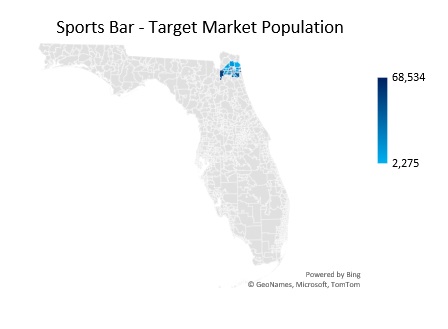
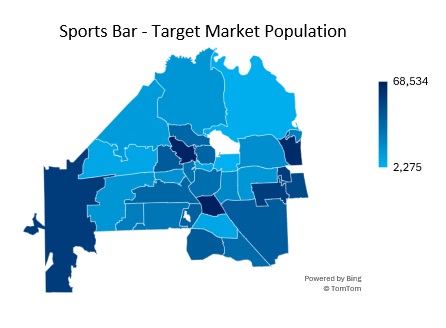
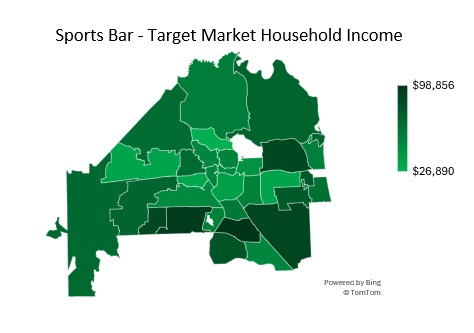
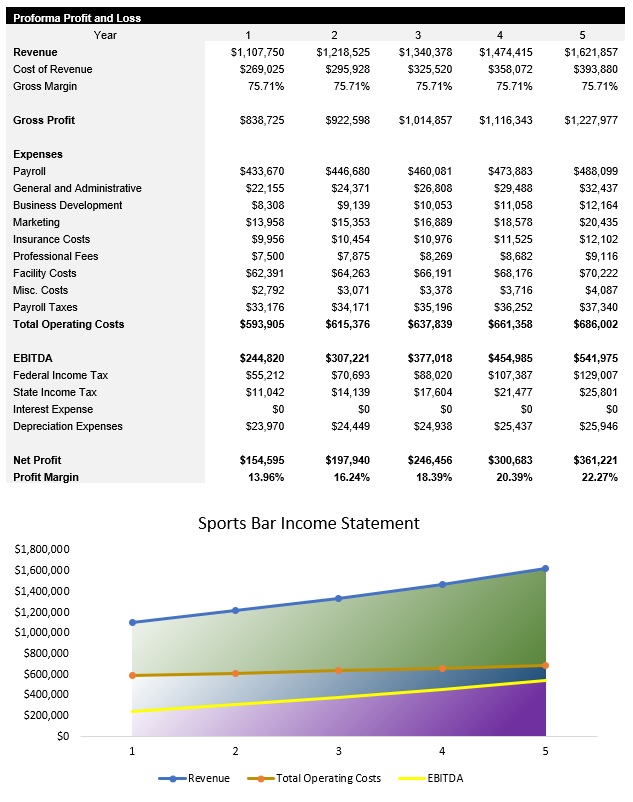
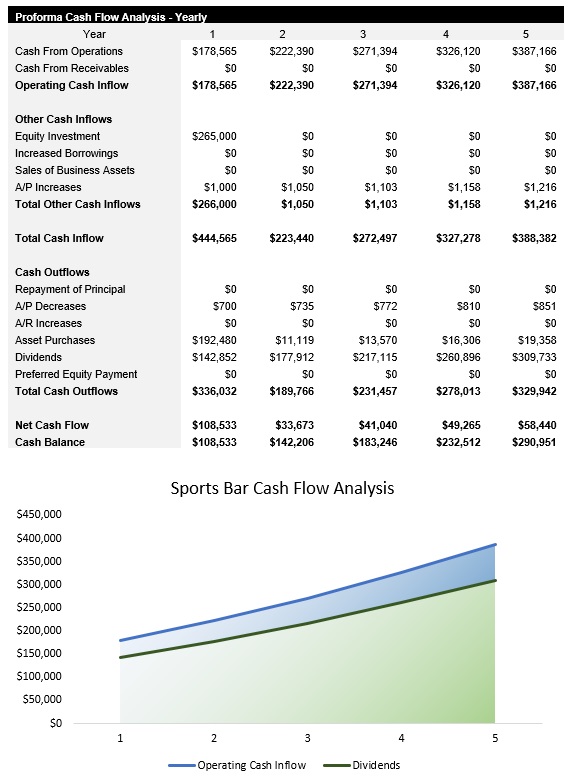
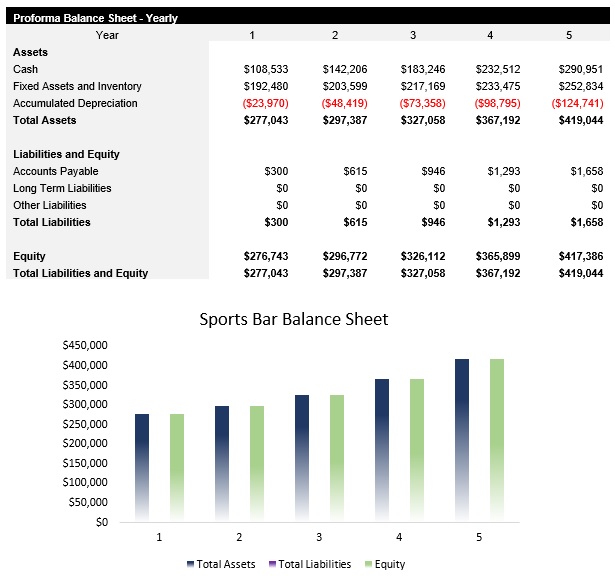
Now that the market and economic analysis is completed, we know transitioned into the development of the sports bar financial model. For all business plans that we develop, we take a five-year approach to this process. The finalized model includes a profit and loss statement, cash flow analysis, balance sheet, breakeven analysis, DSCR analysis, as well as other relevant business metrics that are applicable to sports bar industry. One of the things that we focus on very heavily when developing the financial plan is to ensure that economic viability is clearly showcased, which is done through a comprehensive sensitivity analysis.
Third, we develop the sports bar operations plan. Here, we provide an overview of the types of equipment and number of televisions that will be in the facility, the number of bartenders that need to be hired, front of house staff and kitchen staff matters, staff hiring procedures, hours of operation, and security related matter matters. This section of the sport bar business plan typically spans two pages to three pages.
Fourth, we developed the sports bar marketing plan. Of all the chapters, this is one of the more important aspects of the document given that it showcases the way in which the sports bar will be able to drive a significant amount of patronage. Most importantly, we discuss the use of a pre-launch marketing campaign so that the target market area and its residents are aware of the location development which typically takes anywhere from three months to six months. During this time, we discuss the use of multiple online strategies including ongoing posting on social media platforms to showcase the build out of the sports bar. This will create significant interest in the business, even prior to its grand opening. Beyond addressing pre-launch matters, we also focus on grand opening marketing as well as strategies that will carry out for the life of the business. This includes the use of ongoing promotions through social media, implementation of search engine optimization campaigns, event hosting, as well as traditional print advertisements.
Now that the core of the sports bar business plan is completed, we then focus our efforts towards the secondary chapters. This includes a risk analysis, SWOT analysis, key strategic issues, as well as an overview of the organization. As it relates to strengths, sports bars typically have controllable operating costs as a function of revenue. As released the weaknesses, this is a highly competitive industry and a sports bar must find unique ways to differentiate themselves from competitors in the market. For opportunities, the most common way that most sports are expand their operations is through the development of additional locations. For threats, outside of competition, inflation can cause the cost of revenue to increase.
At this point, we will have completed eight chapters and five appendices at the business plan. The final thing to do is finalize the sports bar executive summary. Here, we provide a full overview of how the business will operate, its target market, information about the founder, capital requirements, as well as other important aspects of the business so that it can be understood very quickly.