
The development of a sports facility business plan can be a challenging process given that there are numerous revenue streams that need to be addressed as well as complex matters related to the day-to-day operations of these businesses. Most sports facilities are large scale enterprises that require a significant number of employees as well as protocols in place for the ongoing maintenance of these locations.
The approach that we take when developing a sports facility business plan is rooted heavily in market research. This is primarily due to the fact that there are usually a number of competing facilities in any given market and a determination whether or not this will be an economically viable enterprise is absolutely imperative. As it relates to the market research, we first analyze the target market radius, which is usually 20 miles for a sports facility that is based in a suburban market. In more population dense areas, this may be a smaller target market radius, depending on the layout of the city.
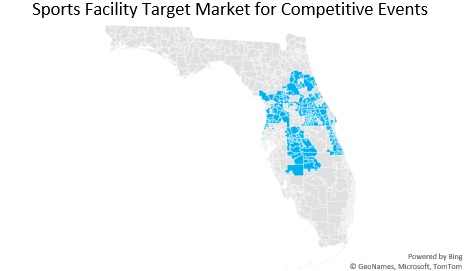
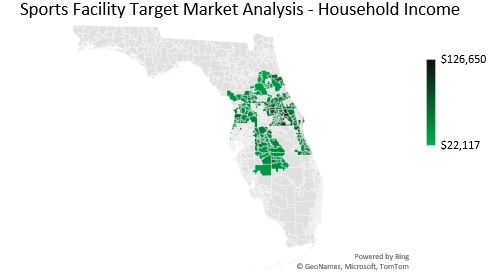
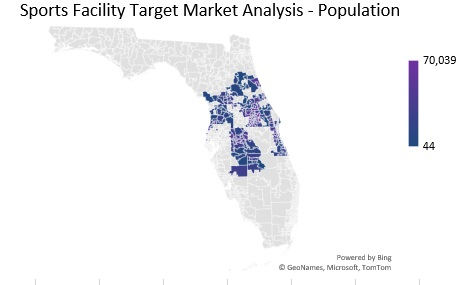
We analyze the population size, median household income, population density, home value, as well as numerous other metrics related to the target market. We also conduct an economic sensitivity analysis that reviews how the local economy reacts to changes in inflation, changes in GDP, changes in consumer spending, as well as changes in the prime interest rate. This allows us to gain deep insight as to whether or not the local economy will remain strong, even during an economic recession. Although many people view the use of the sports facilities is a necessity, an extremely severe economic climate can cause a membership loss. This is something that we fully account for in each sports facility business plan that we develop.
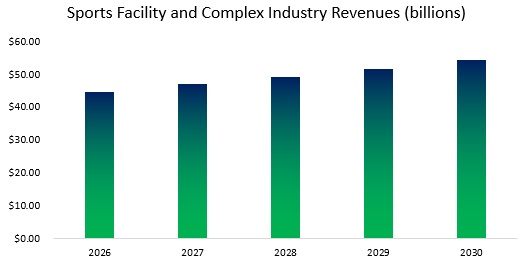
The analysis that we take for sports facility does not end at the target market. We also take a look at the industry as a whole in order to understand certain trends that may impact operations. This includes reviewing the industry revenue, industry employment, as well as other pertinent statistics, such as the compounded annual growth rate.
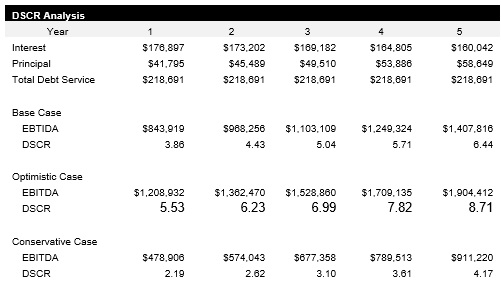
Once we have the market analysis completed the assumptions that we will use in hand, we then turn to developing the financial model. Here, we always develop a sports facility financial model over a five-year basis. The scope of the statements includes a profit and loss statement, cash flow analysis, and balance sheet. These are complemented with the break analysis, sensitivity analysis, business ratios, and DSCR analysis. In the event that private capital is going to be used, we also discuss the return on investment and the potential valuation of the sports facility.
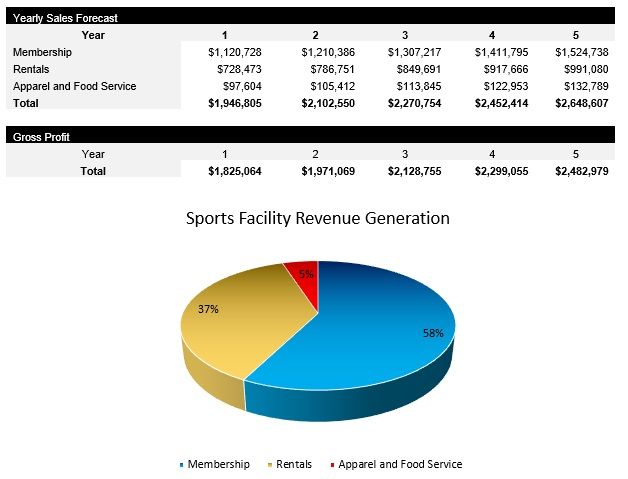
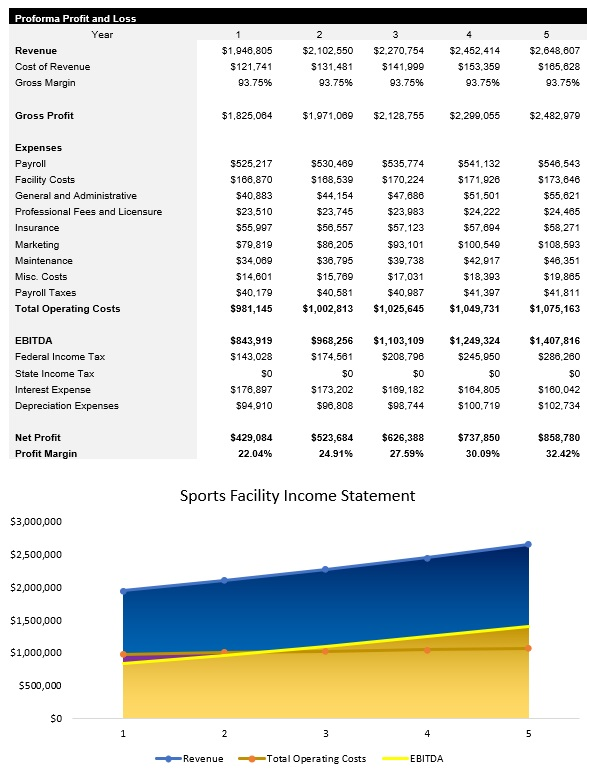
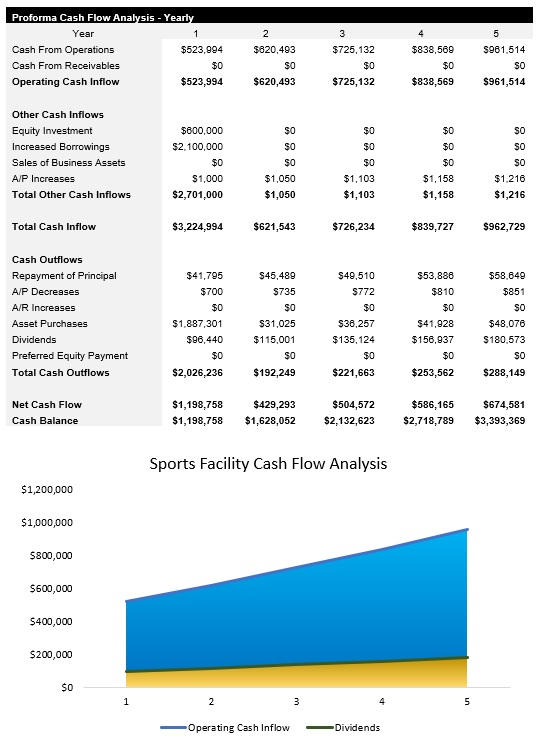
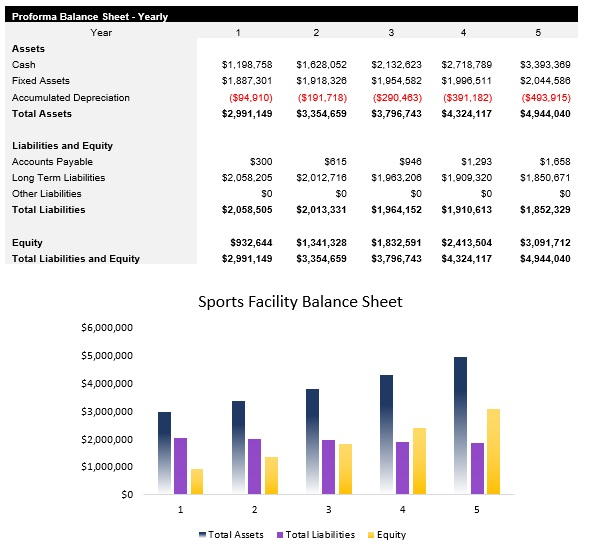
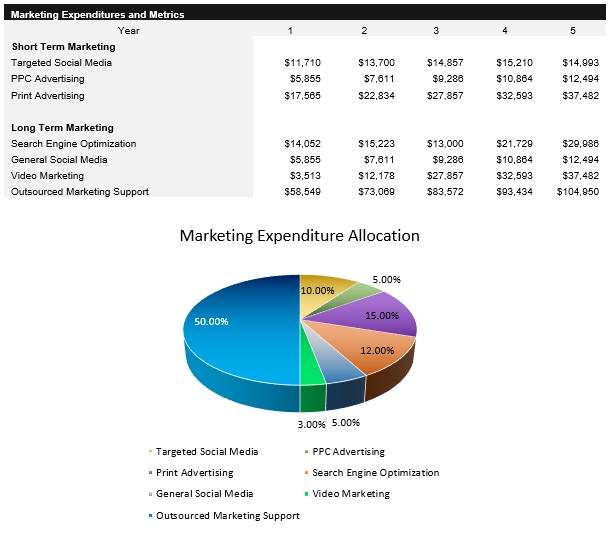
Now that the two primary chapters are complete completed, we then move into move in into the development of the sports facility marketing plan. Most importantly, we discussed the pre-launch marketing campaigns that will be employed during the development process so that residents within the market are fully aware of the location and its service offerings. This includes the launch of a proprietary website, aggressive use some social media, implementation of a local SEO campaign, and conducting direct outreach with fitness professionals within the target market. This pre-launch marketing approach that we take to the development of the marketing plan is instrumental for ensuring that there will be onboarding of members during the time when the facilities are being constructed. It also substantially reduces the risks associated with the development of the sports facility.
The fourth phase of this process is then the development of the operation section of the business plan. Here, we discussed the numerous revenue streams that are produced by any given sports facility, including membership, personal training, workshops, camps, sales of apparel, and food/beverage service. We also discuss matters related to human resources and employment through this section as well. The hours of operation and equipment that will be available for use is also discussed in this section of the sports facility business plan.
Now that the foundation of the business plan has been completed, we then move into the secondary chapters. This includes a SWOT analysis that outlines the strengths, weaknesses, and threats that are associated with this type of enterprise. We also conduct extensive analysis regarding risk, not only from a regional standpoint, but also from an industry standpoint as well. As noted above, the metrics that we use span a number of economic indicators to address these matters.
Now that the business plan’s primary and secondary chapters are complete, we now create these sports facility executive summary. Most importantly, we try to make sure that the executive summary spans no more than three pages. Here we provide an outline of the capital that is required to establish the enterprise, the snapshot of the anticipated financial results over a five-year period, a market analysis overview, and an overview of the operations. This provides a quick insight as to the rest of the business plan.