
Storage facilities are able to produce highly recurring streams of revenue for its owners. Over the past 20 years, the development of these businesses has become extremely popular as demand has grown significantly. Many individuals as well as businesses use storage facilities as a low-cost method of keeping their personal property safe. While these businesses do have moderately high upfront costs related to either startup or acquisition, they are able to operate with a significant degree of economic stability given the recurring nature of high margin revenue produced.
Our first step when developing a storage facility business plan is to conduct extensive market analysis regarding the population size, median household income, as well as the number of competitors in the market. This industry has become very commoditized, and there are numerous national level franchisees and storage facility systems that provide the services to the general public. One of the key focuses of our market analysis is to ensure that the target market is not oversaturated with other storage facilities. As it relates to conducting industry analysis, we take a broad-based approach to this in order to understand the trends and direction of the storage industry. Overall, the outlook for this industry is positive given that people continue to require these types of services on a monthly basis.
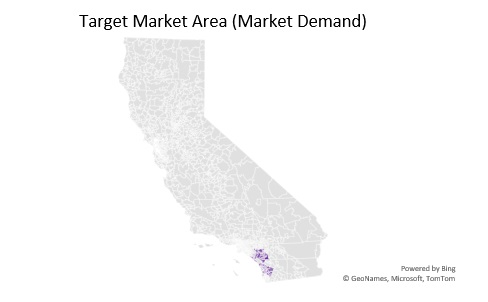
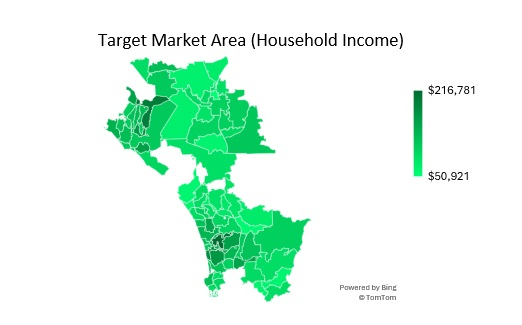
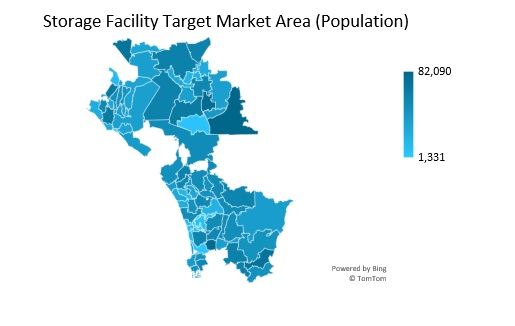
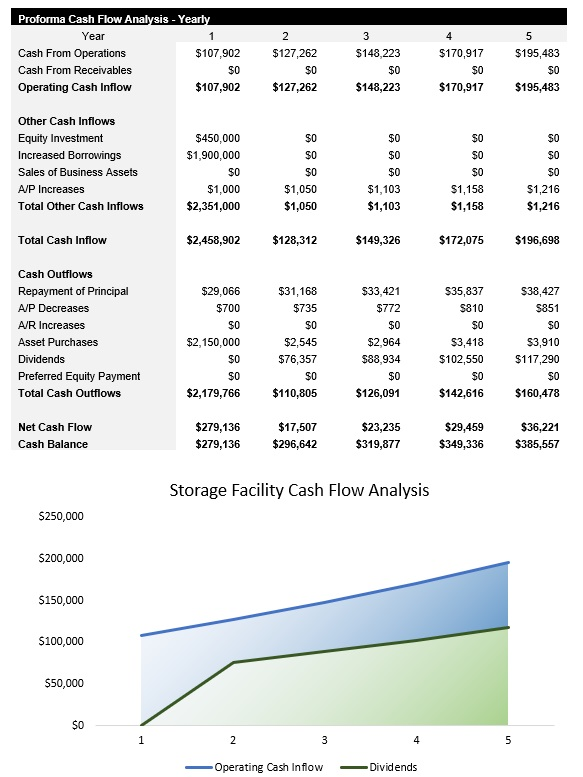
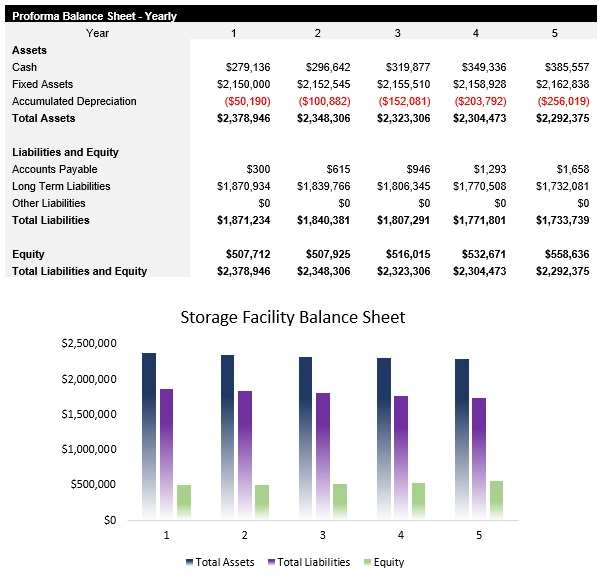
Once we determine the total addressable market (TAM) as well as the service obtainable market (SOM), we are able to develop a proper revenue profile for the storage facility. This allows us to form the basis of the profit and loss statement, cash flow analysis, balance sheet, breakeven analysis, and storage facility business ratios. As these businesses are often financed, we also include a DSCR analysis in order to showcase that the net operating income is typically 25% higher than the total debt service at minimum. This is typically the target that most lenders are seeking when providing capital specifically for a storage facility.
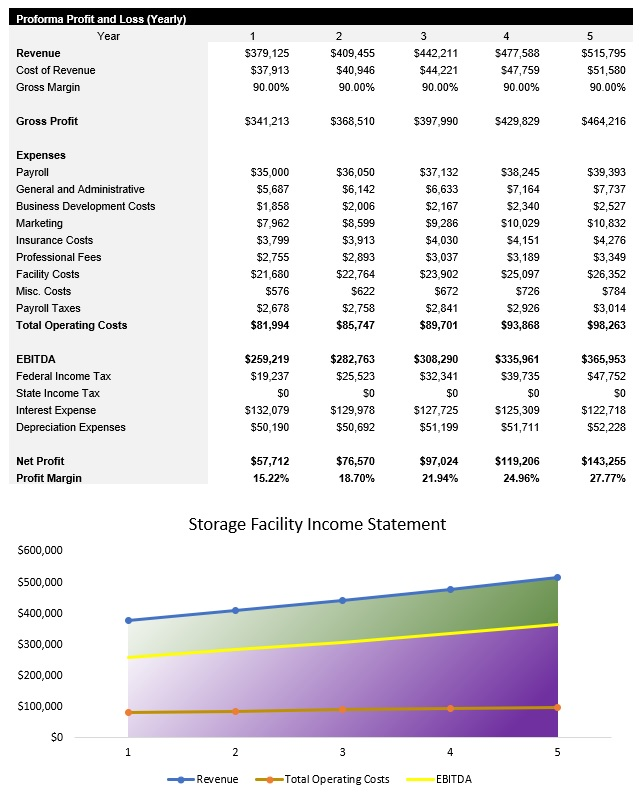
Additionally, we always include a use of funds tables that showcases how the funding that is being sought is going to be specifically allocated either for the development or the acquisition of a storage facility.
Once this section of the plan is completed, we then move into developing the storage facility marketing plan. Here, we discussed numerous strategies that will be employed including conducting extensive direct outreach with realtors that can provide referrals among people that are moving to and from the target market area. We also discussed the extensive use of a proprietary website that will undergo regional search engine optimization so that it can be quickly found when searches forced to storage facilities are conducted with an a geotargeted area. This type of marketing has become extremely popular among storage facility entrepreneurs given its efficacy. We also discussed the use of social media as this will increase brand visibility while concurrent contributing to social signaling.
Now that the three primary chapters have been complete completed, we then move into the operation section. Here we discussed the number of units that will be available, how many of these units will be climate controlled, billing practices, as well as matters related to entering the facility during off hours. We will also discuss the introduction of technology that will streamline many of the facets of operation for the storage facility as well as improving matters related to security. Generally, we include an analysis of the security protocols that are required including perimeter fencing.
Every business plan that we develop also includes a SWOT analysis. For a storage facility, the strengths are typically focused on the recurring income that has produced from ongoing rental rentals. As it relates to weaknesses, storage facilities, face significant local and national level competition. As it relates to opportunities, most storage facilities will include RV and boat storage in for the drive their revenues. As it pertains the threats, a very severe economic recession could impact ongoing demand.
We also always include a storage facility risk analysis as most readers want to see that this has been completed. The scope of this chapter focus is not only on the development or acquisition risk, but also addressing issues that may occur occurred during the course of normal business operations.
We then round the business out with the executive summary. When we develop an executive summary specifically for a storage facility, we focus very heavily on the economic stability of the enterprise, its ability to produce recurring revenue, in overview of the target market, as well as the experience of the founder.