
Although a competitive industry, vending machine operators are able to generate moderate streams of income from the ongoing placement and management of these machines throughout their target market area. These businesses have been around for hundreds of years, and they are popular among people that need a quick snack or beverage. The very low pricing point associated with purchasing vented goods typically makes these businesses reliable income centers even during economic recession. The primary challenge when establishing a vending machine operating enterprise is to find places where machines can be placed in high visibility areas. Whenever we develop a business plan specific for a vending machine operator, we focus very heavily on developing a marketing plan that centers around direct outreach in order to source high visibility locations that do not currently have a vending machine.
The approach that we take when developing a plan for a venting operator is the first conducting extensive amount of market research based on the anticipated target market radius. For a startup enterprise in this field, the target market radius typically is around 25 miles from the company’s headquarters. This allows for ease of maintenance among machines that are placed in malls, academic buildings, office buildings, as well as other high visibility areas. One of the things that we primarily focus on within the course of the market analysis is the population density as well as the median household income. In higher income areas, there has been an increase in the popularity of vended products that are healthier.
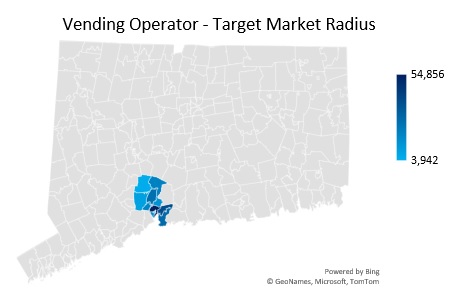
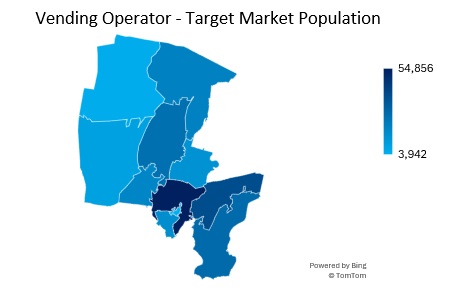
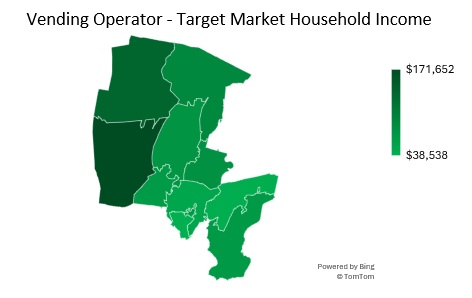
We also address trends within the vending machine industry, especially as a relates to the implementation of state-of-the-art technology. One of the major trends within the industry is to use internet connected vending machines so that ongoing monitoring of maintenance as well as inventory levels can be as retained in real time. One of the other major trends in industry is to provide vending machines that serve non-food products such as life essentials. When we engage a client for the development of this type of business plan, we develop an extensive matrix of the products that will be sold through each machine, as well as an anticipated gross profits per unit.
Once we established the parameters of the target market, we then go to work for developing the vending operator financial plan. The scope of this section of the business plan includes a profit and loss statement, cash flow analysis, breakeven analysis, balance sheet, asset acquisition, analysis, DSCR analysis, return on equity analysis, as well as applying appropriate business ratios to ensure that the company is operating within standard industry frameworks.
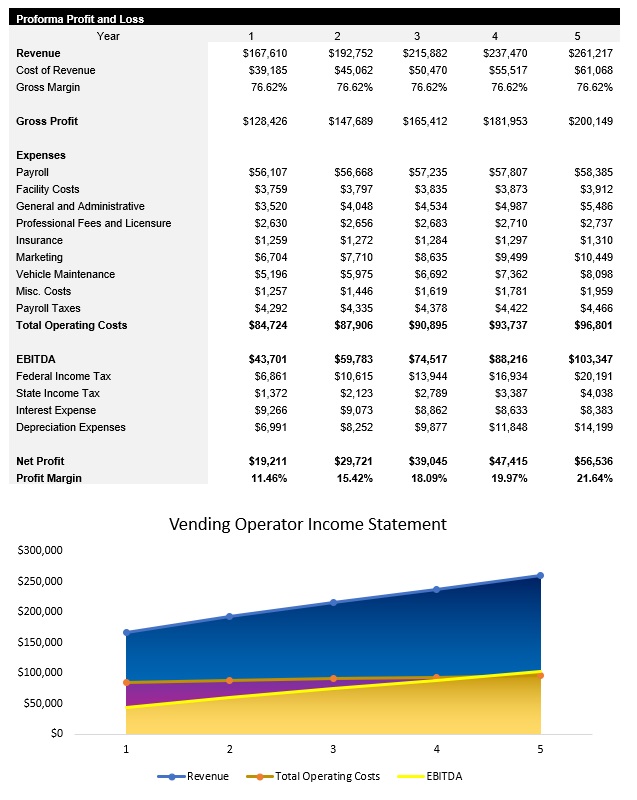
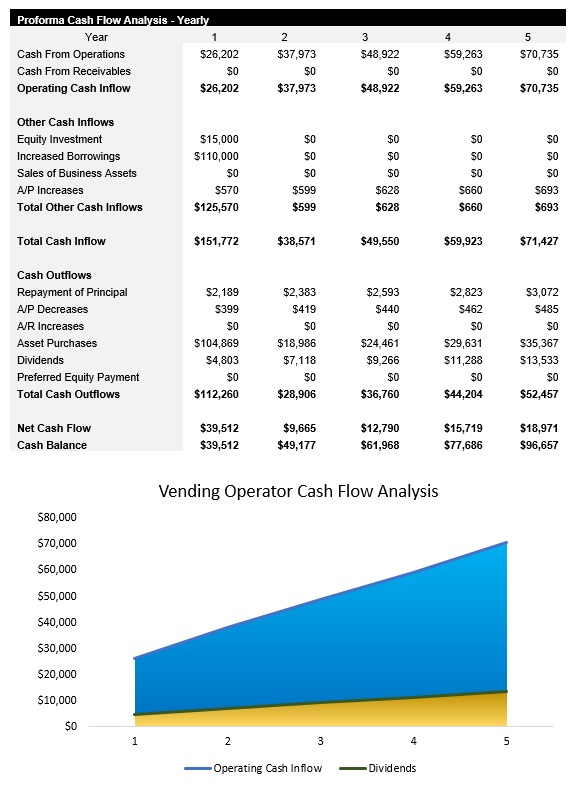
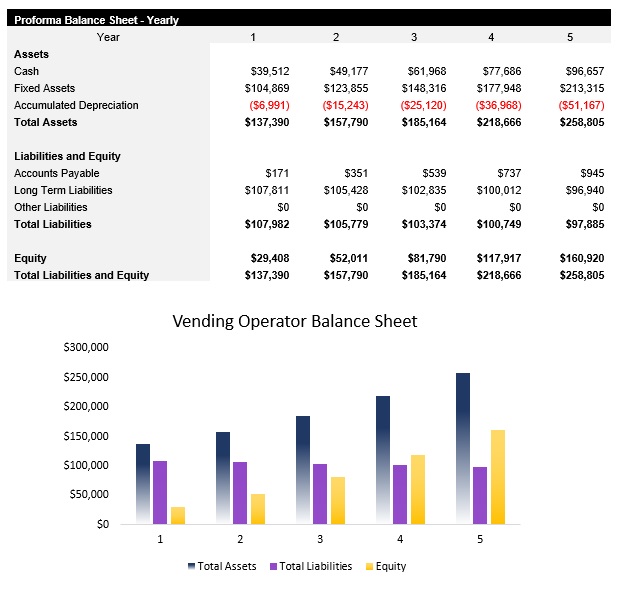
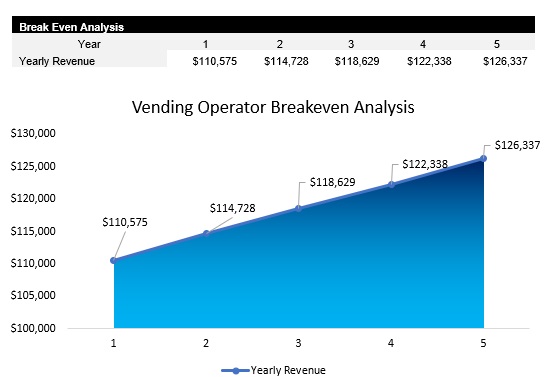
It should be noted that for the first year of operations, we develop a profit and loss statement on a monthly basis and then quarterly for years two through five. The same approach is taken to the cash flow analysis.
We then move onto one of the most important sections of the business plan, the vending operator marketing plan. In regards to marketing, while the vending machines themselves are consumer facing, the marketing that is used among these enterprises is specific for establishing ongoing relationship relationships with property management firms. It is no secret that vending machines are commonly found in large scale commercial facilities, college and university buildings, offices, and airports. The approach that we take when developing the marketing plan is a focus on direct outreach with these types of entities that will allow the business to place a vending machine at their location. A significant focus of the marketing messages is based around the monthly revenue that the property management firm will generate by allowing the business to operate its vending machines on site.
We then move into the development of the vending operations plan. Here, we discussed the types of products that will be offered, the number of machines that will be available at the onset of operations, the protocols and procedures regarding maintenance, as well as discussing the ways in which the business will expand over the first five years of operation.
After these primary chapters are completed, we then move into addressing other issues that are part and parcel of operating a vending machine enterprise. We developed a SWOT analysis that addresses the strengths, weaknesses, opportunities, and threats that are commonly faced. For strengths, vending machine operators are able to produce predictable revenues through a low-cost business. As it relates to weaknesses, this is a highly competitive industry and vending machine operators must work very closely with property management enterprises in order to place machines. For opportunities, the expansion of the target market radius is the primary way in which these businesses grow. Additionally, many vending machine operators will integrate machines that provide non-food items. For threats, outside of competition there are very few threats that are faced by vending machine operators.
Now that we have completed all of the primary sections of business plan, we then transition into developing the vending operator executive summary. Here, we provide a full overview of the business as it relates the products offered, the target market location, the startup budget, as well as important issues that need to be addressed at the onset of the document. We also include a five-year snapshot regarding the anticipated revenue and profits of the business based on the number of unit sales.